LIFE Natural Agro tests cleaner, circular-ready sprays that cut copper 58–100%, maintain mildew control, and valorize vineyard prunings
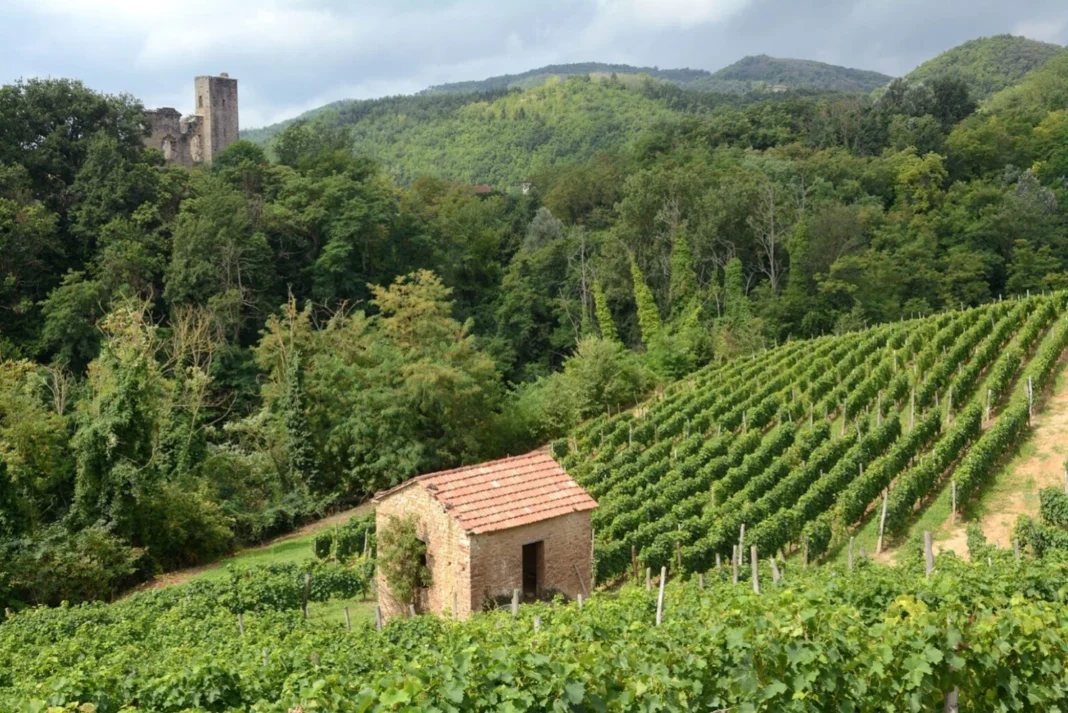
Among the vine rows where downy mildew sets the pace and treatments weigh on the soil, a new recipe is shifting the balance: essential oils on biocompatible carriers instead of copper. This is the heart of LIFE Natural Agro, a European project launched in 2023 that brings together universities, research centers, and companies to deliver cleaner, effective, and circular-ready formulations to the vineyard. From lab tests to the fields of Franciacorta, Trentino, Collio, Prosecco, Valpolicella, and Chianti, the data points to a clear path: cut copper use by 58% to 100% while maintaining competitive control of downy mildew—and unlock new value by upcycling pruning wood.
The LIFE Natural Agro project (LIFE-2022-SAP-ENV) began on 1 July 2023 and runs for five years, until 30 June 2028. It is part of the European LIFE Programme, which aims to promote sustainable solutions to reduce air, water and soil pollution and to encourage the reuse of agricultural by-products. The consortium brings together nine partners: seven Italian – Natural Development Group, University of Camerino, University of Bologna, Studio Associato VitePiù, Vinidea, Certiquality, and Entopan (associate partner) – one French, the Université de Reims-Champagne-Ardenne (URCA), and one Portuguese, the Instituto Nacional de Investigação Agrária e Veterinária (INIAV). This international collaboration combines scientific, innovative and production expertise to develop concrete solutions in support of sustainable viticulture.
Replacing chemical inputs
LIFE Natural Agro operates within the framework of European directives and the 2030 Agenda for Sustainable Development. The aim is to promote an environmentally responsible approach to viticulture.
The project seeks to develop innovative formulations based on natural active ingredients. This ingredients are capable of reducing and, where possible, replacing conventional chemical inputs such as copper, traditionally used to control fungal diseases of the vine – in particular Downy Mildew (Plasmopara viticola) and Grapevine Trunk Disease (GTD).
The new formulations combine a biocompatible carrier with essential oils as active ingredients, reducing environmental impact compared to conventional treatments. Furthermore, vine pruning wood treated with these formulations may be processed into valuable substances for use in nutraceutics, cosmetics and other natural antifungal products, thereby supporting the principles of the circular economy.
This innovation brings together agronomic efficacy, environmental sustainability and territorial value, with tangible benefits for winegrowing operations, including those of the Franciacorta appellation.
The most promising formulations
The project began in 2023 with preliminary trials to identify the most promising formulations. In 2024, field trials were launched under the supervision of a certified testing centre, using two formulations:
- TC2018 – containing copper (3.5%) and essential oil as active ingredients;
- ND23_56 – containing essential oil only as the active ingredient.
Initial results enabled the optimisation of the ND23_56 formulation, identifying the ideal concentration of active ingredient to ensure both efficacy and economic viability. This tuning phase led to the development of the new formulation ND24_55. It is entirely copper-free and based on a biocompatible carrier functionalised with essential oil – which demonstrated good activity against Downy Mildew (Plasmopara viticola) and promising early results against Grapevine Trunk Disease (GTD).
Copper reduction under real vineyard conditions
At this point, an important observation must be made. Copper is listed among the active substances under consideration for substitution (Regulation EC 2002/473). Since 2019, EU Regulation 2018/84 has further restricted its use to a maximum of 4 kg per hectare per year, calculated over a seven-year period. This is due to its accumulation in the soil and the contamination of water bodies resulting from prolonged application. Under certain conditions, such accumulation may lead to toxic effects on living organisms and detectable residues in agricultural produce.
However, the complete elimination of copper is not always straightforward, particularly in organic farming. The efficacy of antifungal treatments depends on a combination of climatic, pedological and varietal factors specific to each growing area.
For this reason, it is essential to assess the performance of the new formulations in relation to local pedoclimatic conditions. Where necessary, ND24_55 may be used in combination with reduced doses of copper, applied at the most appropriate phenological stages of the vine.
Field trials are carried out in collaboration with wineries strongly committed to sustainability and biodiversity, including those in Franciacorta. Climatic, agronomic and pedological parameters are continuously monitored to assess plant response and treatment efficacy under varying conditions.
Data collection and innovative parameters
Using a holistic approach, data collection included several parameters:
- Vineyard characteristics
- Soil characteristics
- Meteorological data
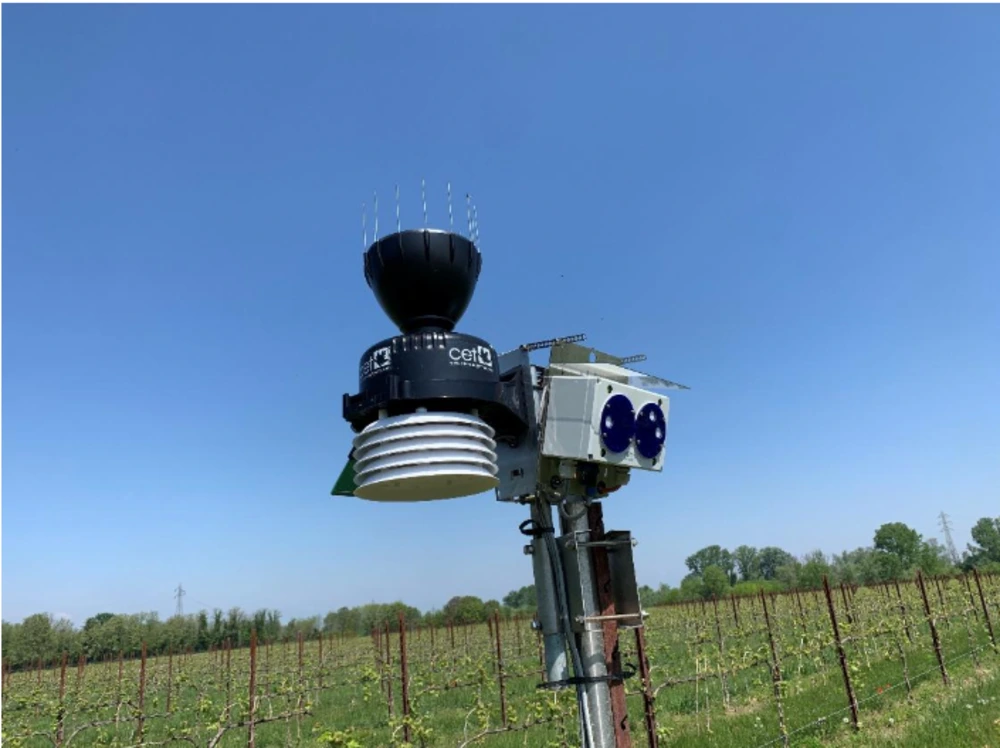
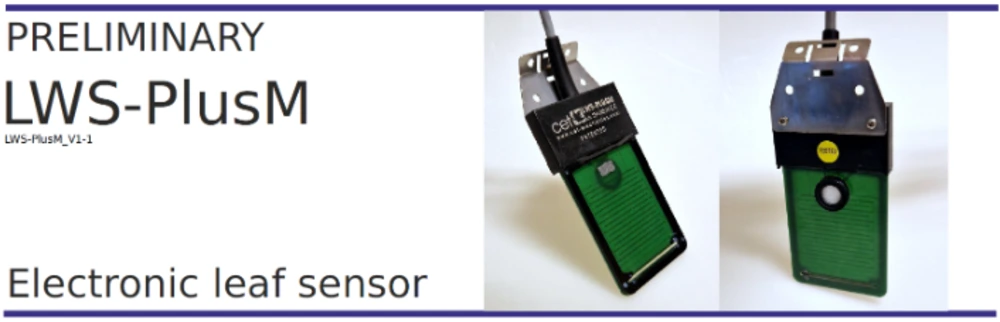
Meteorological data were recorded and transmitted by weather stations supplied by CET Electronics (Figure 1), installed within the vineyard perimeter to better reflect its microclimate. In addition to standard instrumentation, each station was equipped with two innovative electronic leaf sensors (LWS-PLUSM-02, Figure 2), capable of detecting leaf wetness, water runoff and microclimatic conditions (relative humidity and temperature) in the surrounding environment. One sensor was positioned outside the canopy and mounted on the weather station. The other was placed inside the canopy and mounted on the plant.
Field data are transmitted to the vite.net platform, provided by Horta srl, and processed by a disease forecasting model specifically designed for Downy Mildew.
A Decision Support System is currently being refined using the parameters recorded by the innovative leaf sensors.
Experimental results
During 2023 and the early months of 2024, formulations TC2018 (copper + essential oil) and ND23_56 (essential oil only) were tested in vitro at the Université de Reims-Champagne-Ardenne (URCA). Both demonstrated good activity against Downy Mildew and against the four main fungal pathogens responsible for Grapevine Trunk Disease: Neofusicoccum parvum, Eutypa lata, Fomitiporia mediterranea and Phaeomoniella chlamydospora.
Subsequently, Vite Più conducted field trials across six Italian winegrowing areas, each characterised by distinctive pedoclimatic conditions. These trials led to the refinement of the new formulation ND24_55, confirming its efficacy against both Downy Mildew and the fungal pathogens associated with Grapevine Trunk Disease.
Results obtained across six estates
Trials were conducted against Plasmopara viticola across multiple prestigious cultivars and appellations, including:
- Chardonnay in the Franciacorta DOCG
- Teroldego in Trentino-Alto Adige
- Friulano in the Collio DOC
- Glera in the Conegliano Valdobbiadene Prosecco DOCG
- Corvina in the Valpolicella DOC
- Sangiovese in the Chianti Superiore DOCG
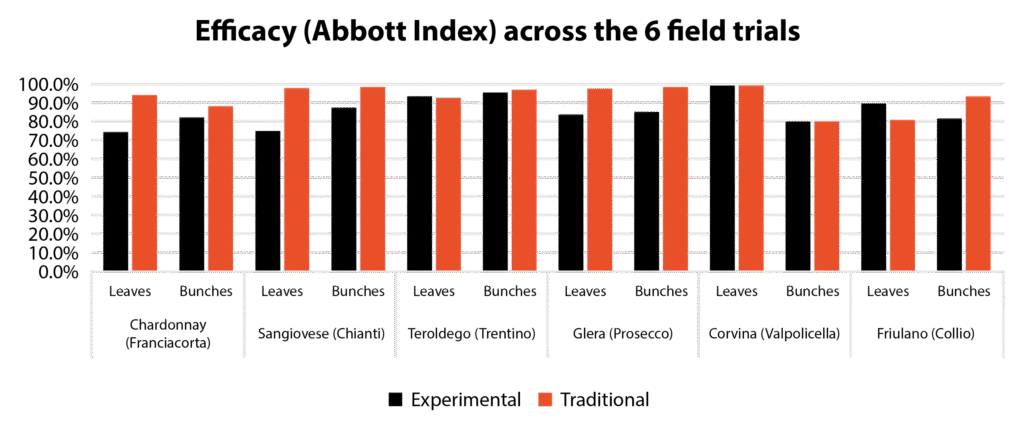
Based on the six trials conducted across north-central Italy, ND24_55 demonstrated promising efficacy against Downy Mildew. Its performance was compared with standard copper-based protocols. The efficacy differential between the standard and experimental treatments ranged from 0% to 13.7% (see Figure 3).
Moreover, the Abbott efficacy index for the six trials using the experimental formulation ranged from 75% to 100% on leaves and from 81% to 97.7% on clusters (see Figure 3).
Copper reduction in plant protection
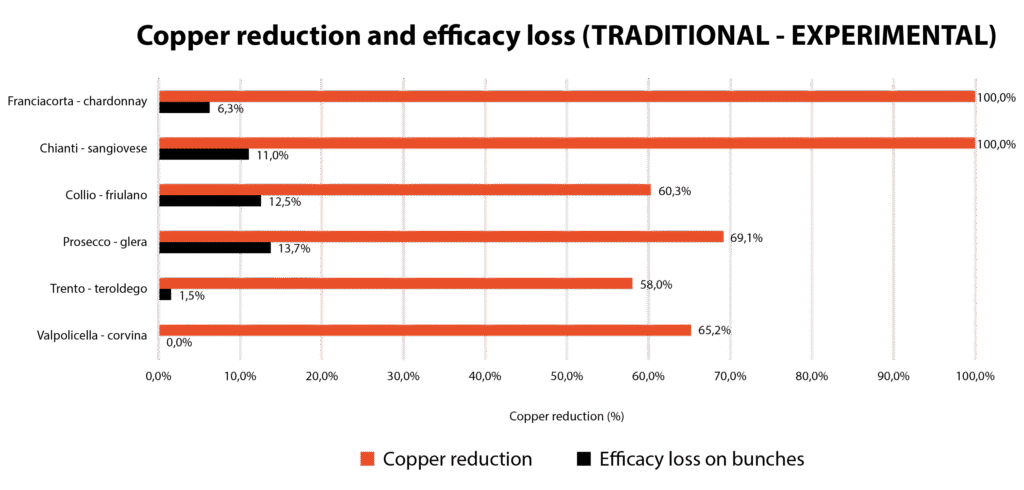
In the Franciacorta and Tuscany trials, copper was completely eliminated from the Downy Mildew control programme, while in areas with higher pathogen pressure the experimental formulation was used alongside a reduced dose of tribasic copper sulphate. Overall, the quantities of copper applied per hectare were reduced by between 58% and 100% compared to the standard protocol. This reduction resulted in a slightly lower efficacy on clusters under the experimental protocol compared to the standard, with a difference ranging from 0% to 13.7%, as shown in Figure 4.
Vine pruning wood as a resource
As mentioned above, vine pruning wood will be valorised as a resource rather than treated as waste. Natural active substances can be extracted from this plant material for use in nutraceutics, cosmetics and the development of natural pesticides.
This activity, coordinated by the University of Camerino (UNICAM), aligns fully with the EU Circular Economy Action Plan, an integral part of the European Green Deal, which aims to shift production and consumption from a linear to a circular model.
The project demonstrates that it is possible to reduce waste, generate new value-added products and promote a more sustainable viticulture, with concrete benefits for local territories and winegrowing businesses. This is particularly relevant for those in Franciacorta, which are committed to protecting biodiversity and the environment.
Moreover, the reuse of vine pruning wood – by avoiding its burning in the field – contributes to reducing CO₂ emissions and limiting the environmental impact of vineyards. This practice represents a concrete example of agricultural sustainability. It also aligns with the principles of the circular economy, transforming plant residues into useful, low-impact resources.
After the first two years of experimentation – conducted in the laboratory, in greenhouse conditions and across multi-site vineyards in Italy, France and Portugal – the LIFE Natural Agro project has successfully developed innovative formulations effective against both Downy Mildew and Grapevine Trunk Disease.
These studies have led to the definition of ND24_55, a fully copper-free formulation. It represents a significant step forward towards more sustainable and environmentally responsible agricultural practices.
Analysis of the data collected confirms that climatic conditions and soil characteristics play a fundamental role in treatment efficacy, highlighting the importance of an adaptive and site-specific approach.
The project demonstrates how innovation, sustainability and territorial enhancement can be effectively integrated, providing winegrowers – in particular those in Franciacorta – with practical tools for a modern, competitive and environmentally conscious viticulture.