How AI enables faster, more accurate identification of hereditary neuromuscular conditions. The CoMPaSS-NMD project
In Europe, the diagnosis of rare diseases is in a state of perpetual limbo. Traditional healthcare systems must not only contend with the difficulties of a public system already in crisis, but also with the biological complexity of such conditions. An example of this are hereditary neuromuscular diseases, defined as HNMD. A heterogeneous group of conditions, of which Becker or Duchenne muscular dystrophy are examples, that manifest with varying clinical symptoms, including progressive muscle weakness and dystrophy. Although, being hereditary, significant mapping of the genes involved in these diseases has been carried out, more than half of patients remain without an accurate molecular diagnosis.
The European project CoMPaSS-NMD (the acronym for Computational Models for new Patients Stratification Strategies of Neuromuscular Disorders), funded by the Horizon Europe program of the European Commission, enters this critical scenario with an objective and an innovative proposal: to increase diagnostic capacity for these diseases and to redefine protocols by integrating artificial intelligence. The project is coordinated by Professor Rossella Tupler of the University of Modena and Reggio Emilia. Several clinical centers of excellence located in Italy, France, Finland, Germany and the United Kingdom, which are part of the ERN-RND network, i.e. the European Reference Network for Rare Neurological Diseases, collaborate.

Addressing the complexity
“Diagnostic odyssey” is the unofficial term used to describe the delay in reaching a diagnosis. This period of time, in addition to being a significant expense for the public healthcare system, also represents a source of deep discomfort and psychological suffering for the patient. The delay may be due to external problems, but also and above all to the difficulty of accurately processing complex data.
Hereditary neuromuscular diseases, in fact, require an approach that goes beyond simple clinical observation and genomic data tabulation. Indeed, as is often the case for complex genetic diseases, similar symptoms can arise from distant mutations, or the same mutation can lead to the manifestation of radically different phenotypes. Precisely because of this complexity, the treatment pathway is optimized by grouping patients with similar biological and clinical characteristics into the same therapy. However, the numerous variants of HNMD make even this procedure difficult. This is where the CoMPaSS-NMD project comes in. The large amount of clinical data can be subjected to artificial intelligence which, acting as a catalyst and thanks to the advanced computational models used by the project, returns an evidence-based and supportive reading that can assist the decision-making phase of physicians in defining the diagnosis.
Integrated data and AI
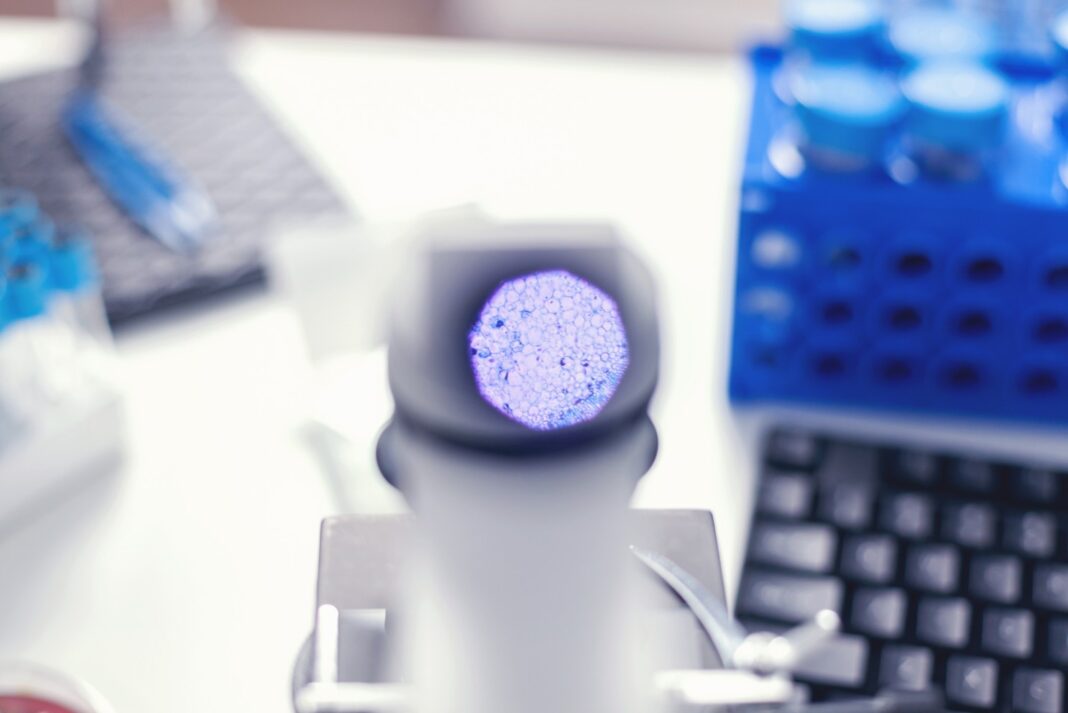
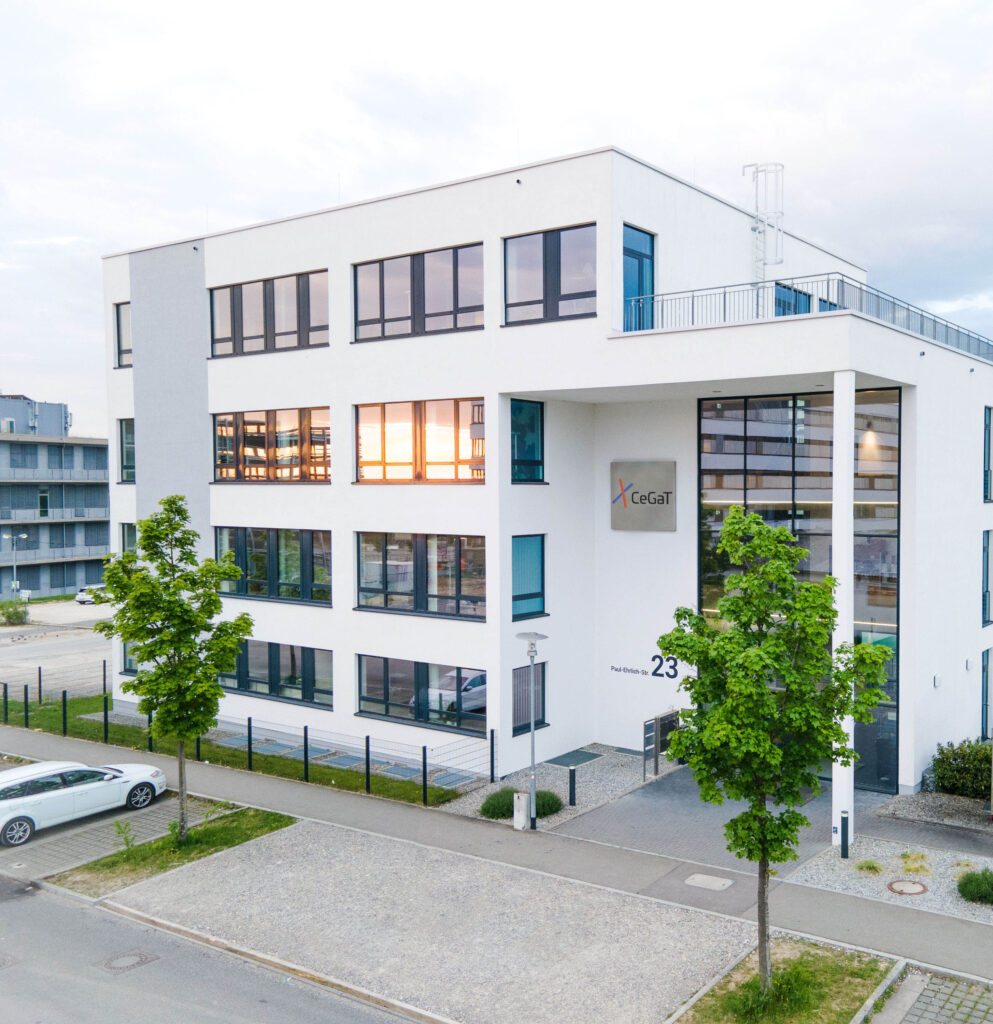
The integration of AI into the process makes it possible to investigate all medical areas considered to generate a complete and precise patient profile, starting from genomic data. Indeed, the project’s collaboration with partners such as CeGat in Germany enables whole genome sequencing, allowing for the identification of any rare mutations that cannot be identified through traditional genetic testing. In parallel with genome analysis, the project utilizes MRI, muscle magnetic resonance imaging, and muscle biopsy. These two analyses allow for the characterization of both the state of the muscles and tissues, providing a detailed histopathological picture of cellular alterations. The collection of these images allows them to be submitted to AI, which can thus develop new descriptors specific to HNMD, making it possible to correlate specific types of tissue damage with specific mutations.
Standardising patient data
The processing of genomic data together with histological image data then passes through specific machine learning algorithms. The CoMPaSS-NMD project has in fact implemented SOP, Standard Operational Procedures, and HPO, Human Phenotype Ontology.
This allows for the transformation of qualitative descriptions into quantitative and standardized data, a fundamental procedure in statistics, enabling and facilitating the comparison of patients managed by different centers, as well as the continuous coherent development of learning models for AI. The collected data is then archived in a digital system, called the Electronic Structured Clinical Report Form, which currently gathers information from approximately 500 patients involved in the project.
Machine learning and disease prediction
The technological component that enables the activities of the CoMPaSS-NMD project to take place is handled by partners specialized in the field of data analysis and medical informatics, such as the Silesian University of Technology in Poland and Fincons Group in Switzerland. They develop machine learning algorithms capable of managing large volumes of multidimensional data, applying specific cluster and “super-cluster” techniques to identify patients with similar characteristics of interest.
The training of these models is carried out on a volume of pre-existing and validated data as new patients are recruited into the clinical study. In addition to model averaging for classification systems, a distinctive element of the technological component is the development of statistical regression models that directly relate genetic variants to the results of MRI and biopsy. This is particularly relevant because it allows for the investigation of a possible prediction of how the disease will progress, a fundamental and revolutionary aspect not only for diagnosis but also for improving prognosis and planning timely therapeutic interventions.
Reducing the cost of diagnostic delay
The application of AI in the diagnosis of HNMD, as probably with other diseases, could represent the solution to the unsustainable situation that national healthcare systems are facing. As mentioned earlier, diagnostic delay leads to an inappropriate use of medical resources, and a lengthening of timelines whose consequences impact the management of the disease not diagnosed in a timely manner. According to the EveryLife Foundation, the avoidable costs per patient would range between $90,000 and $500,000, most of which are spent on frequent hospitalizations, repetition of tests, and treatments for misdiagnosed conditions. These costs increase in the case of a rare disease.
What awaits us from here on
The CoMPaSS-NMD project therefore aims to reduce inefficiencies in the medical diagnostic sector for HNMD, providing a paradigm that can not only simultaneously process multi-modal data (clinical, imaging and genetic), but also redirect them for a correct procedure that supports physicians. The project’s expectation is to increase the rate of correct diagnoses by 30%. The tangible final result of this work will be, for users, the CoMPaSS-NMD Atlas Platform, i.e., an application based on artificial intelligence that can provide diagnostic and clinical characterizations as precise as possible. The data from this platform will be made publicly available to the public, in accordance with the European Union’s FAIR principles.
The application will be like a digital map of HNMD, an unprecedented repository in terms of data volume, validated by AI, which will also allow for the provision of official guidelines for patient management, all based on the stratification of collected and processed data. The impact of this platform on research in Europe will be significant, precisely due to the possibility of connecting different clinical centers, from the largest to the smaller ones.
The use of AI in the healthcare sector will require a new generation of professionals, capable of integrating medicine, bioinformatics and data analysis. The CoMPaSS-NMD project has therefore launched the YIT program, Young Investigator Training, and the CoMPaSS-NMD Autumn School. These are integrated training paths specific to clinical practice and computational technologies. Participants learn to use standard tools, such as HPO, and to understand how stratification algorithms work.
Ethical questions
However, there are concerns. Despite the anticipated potential, and despite the use of artificial intelligence now being widespread, perhaps too much so, its introduction into the healthcare sector raises important ethical questions. The CoMPaSS-NMD project addresses this issue by organizing dedicated workshops and public debates on AI ethics, informed consent, and patient data management. Transparency is fundamental: patients must know perfectly how their personal information will be used and what the current limitations of the algorithms are.
The CoMPaSS-NMD project certainly represents an important initial example of European efforts in the diagnostic-healthcare sector and of interest towards a group of rare diseases. The integration of intelligent systems and advanced algorithms brings us closer to a new way of finding solutions to relevant problems that seemed insurmountable with the resources we had alone, such as the tangible improvement of patients’ quality of life and economic efficiency due to the reduction of avoidable costs. However, it also confronts us with ethical and logistical challenges of a new nature, such as the training of professionals in increasingly multi-disciplinary and specialized fields, and the ethical stance on the widespread use of intelligent tools.
References:
- Schoser, B. (2023). Editorial: Framing artificial intelligence to neuromuscular disorders. Current Opinion in Neurology, 36 (5), 424–426.
- Nuredini, A., Savarese, M., Santorelli, F. M., & Tupler, R. G. (2025). Empowering clinicians with artificial intelligence in hereditary neuromuscular disorders: Training the next generation through the CoMPaSS-NMD Young Investigator Training program and the CoMPaSS-NMD Autumn School workshop report. Acta Myologica, 44 (2).
- Project website: https://compass-nmd.eu/about/