A major EU-backed project to deliver more accurate, less invasive detection
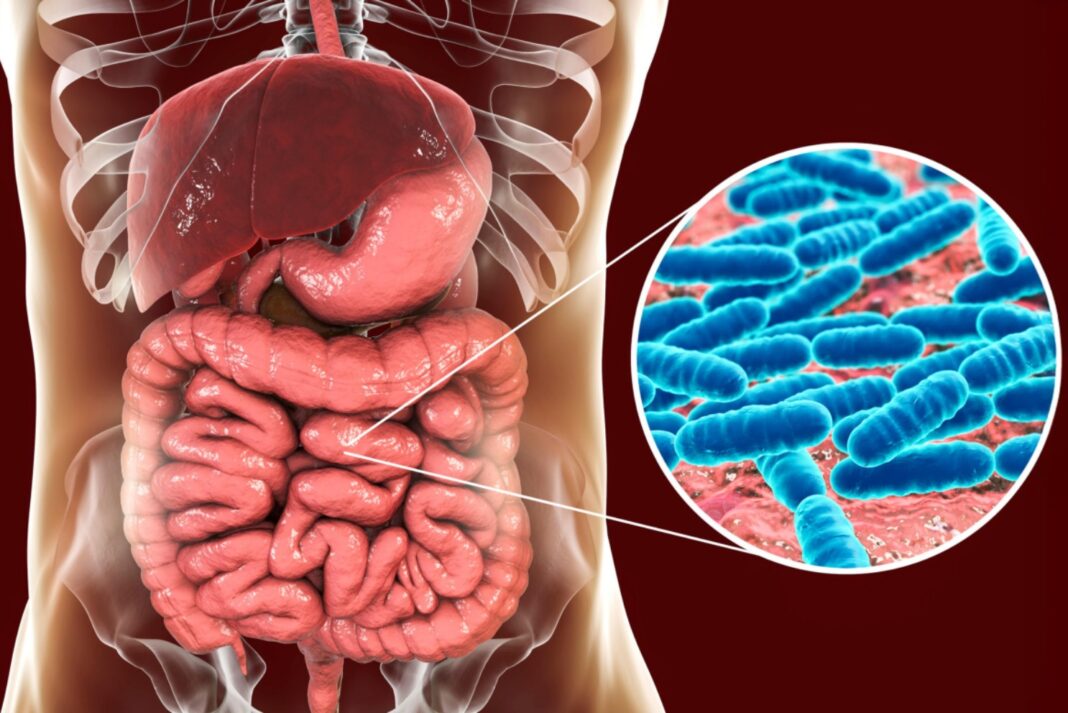
Every year, hundreds of thousands of Europeans receive a life-altering diagnosis. But what if a simple stool sample, analysed by artificial intelligence, could predict with unprecedented accuracy who truly needs an invasive procedure — and who does not? A major EU-backed initiative is doing exactly that, by harnessing the power of the gut microbiome to transform colorectal cancer screening across the continent.
The Microb-AI-ome project, a Horizon Europe-funded consortium, has partnered with Ireland’s national bowel screening programme, BowelScreen, and its technology partner, Viatel Technology Group, to develop more accurate, efficient, and less invasive screening methods.
Colorectal cancer remains a significant health and economic challenge across Europe. As the second leading cause of cancer deaths in the continent, it led to over 360,000 new cases and approximately 161,000 deaths in 2022 alone. The disease costs the European economy billions of euros annually in healthcare expenditure and lost productivity.
The standard pathway for detection typically involves a faecal immunological test (FIT) to determine the need for a colonoscopy—a procedure that, while effective, is both expensive and invasive. In current practice, 37.4% of FIT-positive patients who undergo a colonoscopy are found to have a normal result or non-neoplastic lesions like haemorrhoids, giving the test a specificity of 62.6%. The Microb-AI-ome project aims to increase this specificity by at least 20 percentage points, to over 83%, by integrating metagenomic microbiome analysis into the screening process.
A federated approach to Big Data
Running from 1 April 2023 to 31 March 2028 with a total budget of nearly €6 million, the project’s core objective is to develop a novel computational stratification technology. This technology will use AI to analyse metagenomic microbiome data, enabling what the consortium terms “microbiome-enhanced precision medicine” for colorectal cancer.
A primary challenge the project addresses is the fragmentation of microbiome data across numerous national registries, often hindered by strict privacy regulations. To overcome this, Microb-AI-ome is establishing the first privacy-preserving federated big data network in colorectal cancer research. Instead of moving sensitive data to a central location, the project integrates isolated national databases into a single international federated network. This structure ensures that no sensitive patient data leaves the secure confines of local databases while still allowing for the classification of clinical cancer phenotypes. The network currently covers metagenomes from over 5,000 individuals screened for the disease, with an expected total of 100,000 by 2026.
Ireland’s role: partnership and data collection
BowelScreen, Ireland’s national bowel screening programme, is a key participant in this international research effort. The programme has facilitated patient enrolment through three research hospitals across Ireland, where participants provide stool samples for microbiome analysis. To manage the data, BowelScreen collaborated with Viatel Technology Group, which served as its technology partner. Viatel developed a bespoke, cloud-based data management solution for the Irish data repository, leveraging Microsoft Azure technology.
«The platform we have devised with Viatel will allow us to analyse a huge volume of metadata generated from participants’ stool samples to make it interpretable as a signal to say the person is at risk, or is not at risk», stated Professor Pádraic Mac Mathúna MD FRCPI, Clinical Director of BowelScreen Ireland.
Professor Mac Mathúna highlighted the potential impact of the research: «This research could pave the way for a more accurate and efficient screening process that supports early detection and prevention of bowel cancer and reduces unnecessary colonoscopies, ultimately improving outcomes for screening participants across Europe».

Security, compliance, and scalability
Security and compliance were paramount in the platform’s development. The system is fully compliant with Irish legislation and GDPR standards, ensuring the highest levels of patient confidentiality and data protection. The Microb-AI-ome platform anonymises all sensitive information and stores it in secure cloud databases, ensuring a broad and diverse dataset can be collected from volunteers without compromising their privacy.
James Finglas, Managing Director of Viatel Digital Services, described the solution as «game-changing for the potential use of AI in population-based cancer screening. It analyses millions of data points per patient to identify an individual’s risk of pre-cancer changes or bowel cancer. Consequently, this technology may identify those who need a colonoscopy, creating positive outcomes for patients».
He further noted the importance of the collaboration, stating, «This is a tremendous example of how AI can be adopted in a real and meaningful way. A lot of people are talking about AI right now, but we’re immensely proud to be effecting change in our work to get the most out of Microsoft’s AI solutions».
Professor Mac Mathúna echoed the value of the partnership, commenting: «Viatel has the experience and expertise to develop what we need. It was really beneficial to have that collaboration between Microsoft and Viatel to be able to generate this platform for us».
A structured path to implementation
The Microb-AI-ome consortium combines expertise in colorectal cancer treatment, microbiomics, artificial intelligence, software development, and privacy protection to bridge the gap between data privacy and big data in international medical research. The project is structured around six core areas: creating a federated database network; developing and validating federated AI models; data collection and management; generating evidence-based guidelines; and conducting legal and ethical assessments. Dedicated work packages for exploitation, dissemination, and project management support these efforts to ensure sustainability beyond the project’s five-year runtime.
The consortium is composed of leading European partners, including the University of Hamburg (Germany), which acts as the coordinating institution; University College Cork (Ireland); Mater Misericordiae University Hospital (Ireland); GNOME DESIGN SRL (Romania); TP21 GMBH (Germany); RESEARCH INSTITUTE AG & CO KG (Austria); the Institut National de Recherche pour l’Agriculture, l’Alimentation et l’Environnement (France); and Assistance Publique Hopitaux de Paris (France).
References:
- Probul, N., Huang, Z., Saak, C. C., Baumbach, J., & List, M. (2024). AI in microbiome-related healthcare. Microbial Biotechnology, 17(11), e70027.
- MacCann, R., et al. (2025). Associations between the gut microbiome, inflammation, and cardiovascular profiles in people with human immunodeficiency virus. The Journal of Infectious Diseases, 231(4), e781–e791.
- O’Toole, P. W. (2024). Ageing, microbes and health. Microbial Biotechnology, 17(5), e14477.