They are increasingly indispensable, but are we truly ready to support their energy demands?
Every byte, every feature, every click rests on a physical architecture: vast industrial complexes with their own dense energy and operational ecosystems. It’s their environmental footprint – magnified by sheer proliferation – that raises the real concern. Land consumed for construction, energy drawn from the grid, water extracted, and every phase of the facility’s life cycle: all of it presses hard on local resources, directly and indirectly. And all of it is bound up with the rise of artificial intelligence, itself a voracious, fast-growing energy consumer. Understanding the full life cycle of a data center – and above all the true scale of its impacts – is therefore essential to weighing what comes next: operational efficiency and the non-negotiable demand for sustainability.
Land, energy and water pressure
The most evident impact? Land consumption. In 2024, in Italy alone, according to the monitoring system of ISPRA’s SNPA (National System for Environmental Protection), net land consumption reached 78 square kilometers of natural surface loss in a single year. Data centers are driving this pressure, not only because of their size, but also due to the need to sit near high-voltage energy infrastructure. We have already discussed in other articles the high electricity and water consumption required by data center facilities.
Although newly built complexes are increasingly paired with photovoltaic panels to supplement energy demands, a data center’s requirement is so high it needs a grid connection capable of supporting loads exceeding 100 MW; local solar alone is rarely enough, especially where winter solar radiation is reduced. The energy issue is not a secondary problem – it is an expanding chasm. According to the IEA (International Energy Agency), global electricity consumption in this sector could double within four years, reaching an estimated 945 TWh – a figure comparable to Japan’s national energy demand.
Water is another aspect of indirect consumption, partly overlooked yet fundamental: it remains the primary medium through which heat generated by servers is dissipated into the environment. WUE (Water Usage Effectiveness) measures this: the global industry average is around 1.8 liters per kWh, but the figure varies greatly with cooling technology and climate. Closed-loop systems that reuse water can bring it down to 0.19 liters per kWh, unlike less efficient facilities that lose up to 2.5 liters per kWh to evaporation.
The role of AI on total emissions
Energy consumption has progressively increased alongside the refinement of digital performance, and the advent of AI marked a major leap in demand, precisely because of the complexity of its operations and its now-global use. Training language models requires the largest number of GPU-accelerated servers, the most power-hungry kind, creating a highly dense IT infrastructure.
Let’s make a comparison to understand: in data centers, energy consumption is evaluated per rack, the modular unit housing the servers. A traditional rack consumes 3 to 5 kW per year, while one dedicated to training AI reaches 10 kW annually.
Aside from the operational problem of supply, this growth has direct implications for energy security and price trends. A rebound effect has already emerged: by requiring less energy per calculation, cost decreases – but the use of AI is exploding so much that it cancels out those savings. It’s the same paradox as a fuel-efficient car driven more often, ultimately costing as much as one with normal consumption, if not more. The power performance of next-generation data centers must also meet sustainability targets and energy supply demands that can no longer come entirely from fossil-fuel-based power plants.
AI’s water and cooling footprint
AI also expands the water footprint of data centers compared to traditional computing systems. Training GPT-3 required approximately 5.4 million liters of water; a medium-length AI conversation costs about half a litre every 10 to 50 responses. The water footprint of global AI use is projected to reach 6.6 trillion liters by 2027 – figures difficult to imagine, yet this pressure shows no sign of slowing, because everyone uses AI today.
To reduce consumption, systems are moving toward fan-based cooling (which still draws electricity, especially at full load) or “immersion cooling”, while cooling towers, which release hot water vapor into the atmosphere, are now considered obsolete. Evaporation towers do not worsen the greenhouse effect, since they release only water vapor and heat, not CO2. Still, large data centers can generate warm local microclimates whose consequences vary depending on the surrounding environment.
Indirect impacts: critical materials and e-waste
The most dramatic indirect impact concerns the materials used in construction – not so much the building shell as the hardware components, made from rare minerals and energy-intensive materials with precise characteristics. Manufacturing a single server draws on electricity, quality structural material such as steel alloys and plastics, and tiny parts of dozens of critical elements, whose extraction often falls into geopolitical imbalances.
These “rare earth” mines are concentrated in a few zones, not widely distributed: silicon metal, copper, gallium, germanium, arsenic, indium. Each is sought after for characteristics that make it indispensable to server operation. Gallium and germanium serve as high-speed semiconductors; copper handles heat exchange; aluminum dissipates it. Hard drive motors and memory cards rely on even more complex materials: neodymium, a powerful magnet also found in smartphones and wind turbines; praseodymium, used in an alloy with magnesium; and dysprosium, valued for its magnetic properties in EV motors, lasers and nuclear reactor control rods, thanks to its ability to capture neutrons. Platinum and tantalum also feature.
According to a 2025 USGS report, demand for these minerals tripled between 2014 and 2024, precisely due to the growth of data centers and their workloads. Extraction mines carry their own territorial impact and, like any finite resource, will eventually run out – the digital transition itself could slow due to rare-earth depletion as early as 2028. These materials are also difficult to dispose of. The real disposal problem at decommissioning is not the building but the technological component: massive volumes of e-waste, containing both precious materials like copper or silver and potentially hazardous substances, in quantities proportional to the number and size of the data centers.
E-waste and replacement cycles
Nature estimates that generative AI’s expansion could produce up to 5 million tons of e-waste per year by 2030. Rare earths are hard to recover, present in minuscule traces or bound to other materials, making recycling economically unattractive – despite Italy’s Decree-Law 84/2024, which pushes recycling and bans landfill disposal. A complete analysis of every impact a data center generates across its whole life, not just current operation, is therefore vital for proper management of both facilities and environment; some industry leaders, such as Microsoft, have already developed methodologies to monitor them.
The average lifespan of the building itself is about 30 years; the technology inside is far shorter-lived. Server components are typically replaced every 3 to 5 years, stretched to 6 at large tech companies like Google and AWS. What actually limits a server’s life is almost never hardware failure but cooling efficiency: an aging server needs more energy to stay cool, until replacement becomes unavoidable. Operators try to extend that life through software optimization, constant workload tuning and predictive monitoring.
What can be done
Data centers embody the tension of a world racing toward digitalization, driven by AI, while urgently needing to reverse consumption and anthropogenic pressure on natural ecosystems. The entire performance universe of the cloud is inextricably linked to its consequences in the physical world. This is an impact that extends well beyond sealed soil, reaching loads on the power grid, mineral extraction, the atmosphere, and the resilience of local watersheds.
Regulatory evolution must move quickly to define the boundaries within which the industry can operate, creating constraints that limit resource depletion as much as possible. AI presents a peculiar paradox: it generates consumption but also offers tools to optimize it, through predictive maintenance models and algorithms for efficient grid management.
European regulation and grid pressure
In Europe, something is moving. At the outset the industry was self-regulated and fragmented; now a new, richer body of legislation is rapidly replacing the old rules. The first driver is the EU Energy Efficiency Directive (2023/1791): article 12 standardizes sustainability reporting for each data center with IT power of 500 kW or more, sent annually to the European Database on Data Centers, with exceptions for defense and civil-protection facilities. Publicly disclosed indicators include Power Usage Effectiveness (PUE), Water Usage Effectiveness (WUE), Energy Reuse Factor (ERF), and Renewable Energy Factor (REF) – part of the Data Center Energy Efficiency Package, a common EU rating scheme meant to make operations transparent for customers and municipal planners alike.
The rapid development of data-center hubs around London, Dublin, Amsterdam and Paris has already rebalanced the geography around them: vacancy rates dropped sharply, and grid congestion, land scarcity and political resistance followed. Something is changing here too: because of congestion risk, the Irish Commission for Regulation of Utilities (CRU) now imposes a Maximum Import Capacity (MIC), forcing some projects to look elsewhere.
The Regeneration by the Industry
Along with these political, environmental and geographical pressures, developers are increasingly expressing interest in redevelopment. A brownfield site converts faster than a greenfield one, thanks to pre-existing grid connections, substations and building shells – cutting land use, embodied carbon and energy demand, in line with the EU’s green deal criteria. Data4 is investing billions of euros to transform 33 hectares in Escaudain, France, into a 700 MW AI campus; nearby, Hauts-de-France is becoming an “AI Valley”, helped by proximity to the FLAP fiber corridor, lower land costs and France’s low-carbon nuclear power. Germany’s Rhine-Ruhr corridor follows suit, between Cologne and Düsseldorf on an old coal mining site with pre-existing grid interconnections.
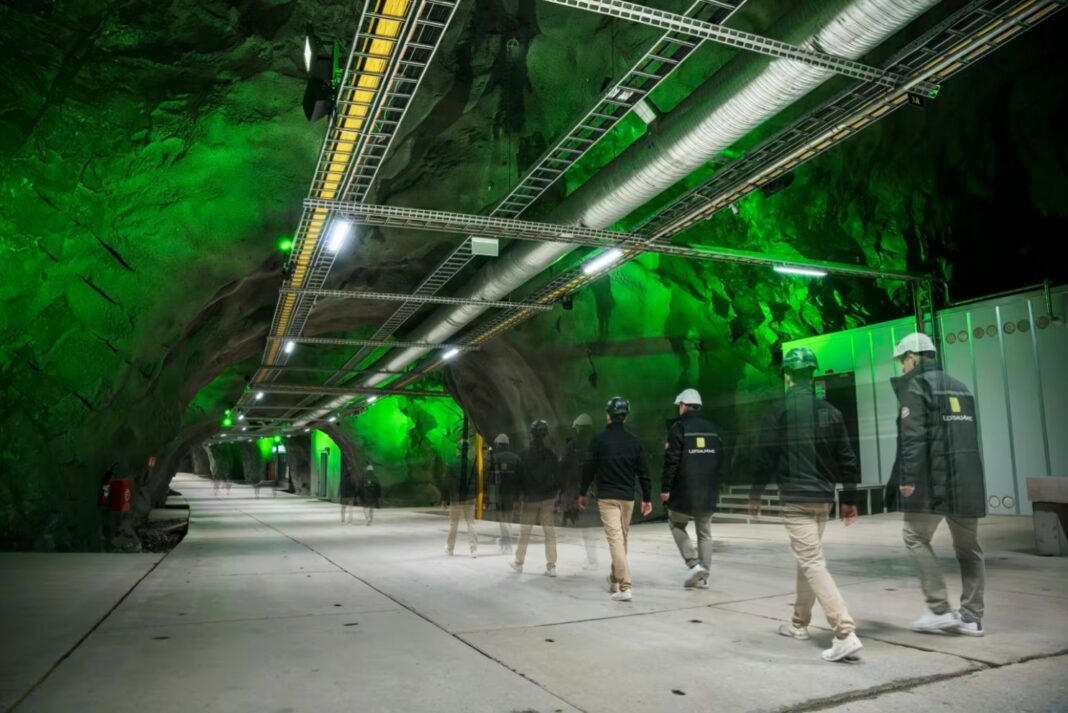
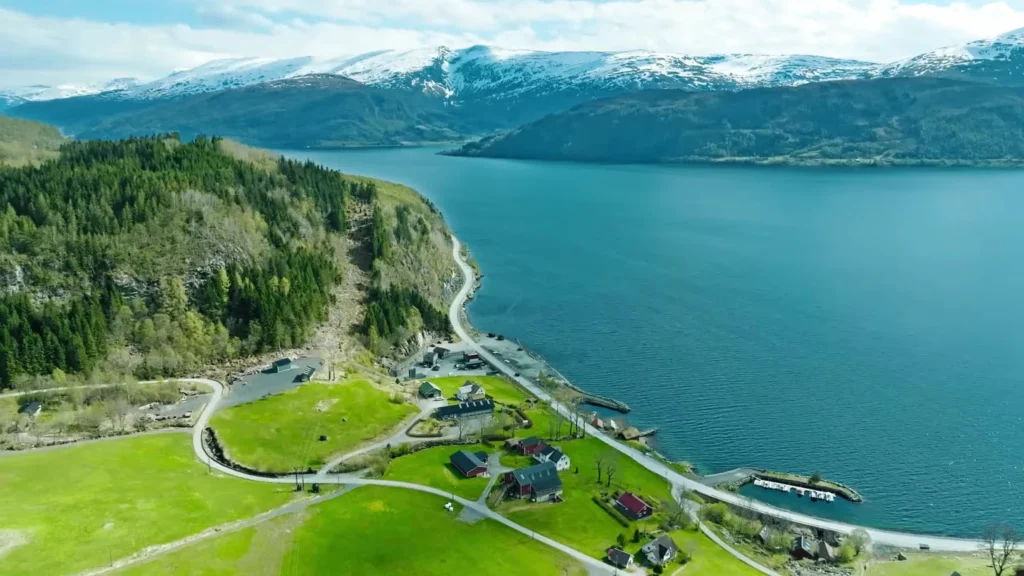
Developers are also building vertically rather than horizontally, since traditional heat-rejection equipment and air cooling become obsolete at high server densities. Underground repurposing is a radical alternative that eliminates land consumption and helps with heat control: the Lefdal Mine Data Center in Norway, 60 meters underground inside a mountain, provides natural protection from electromagnetic pulses, needs minimal building material and is completely invisible in the landscape.
The solutions and strategies are many and varied. The long-term success of data centers in Europe will depend on a coordinated approach between developers and agencies – integrated directly into local water and energy systems, mindful of each area’s needs and geography. The data center of the future must not merely be a resource-consuming infrastructure, but an integrative facility built on the principles of the circular economy and decarbonization. Will we do it? We will see.