The energy transition between technological maturity, new industrial challenges, and an increasingly decisive regulatory framework for businesses
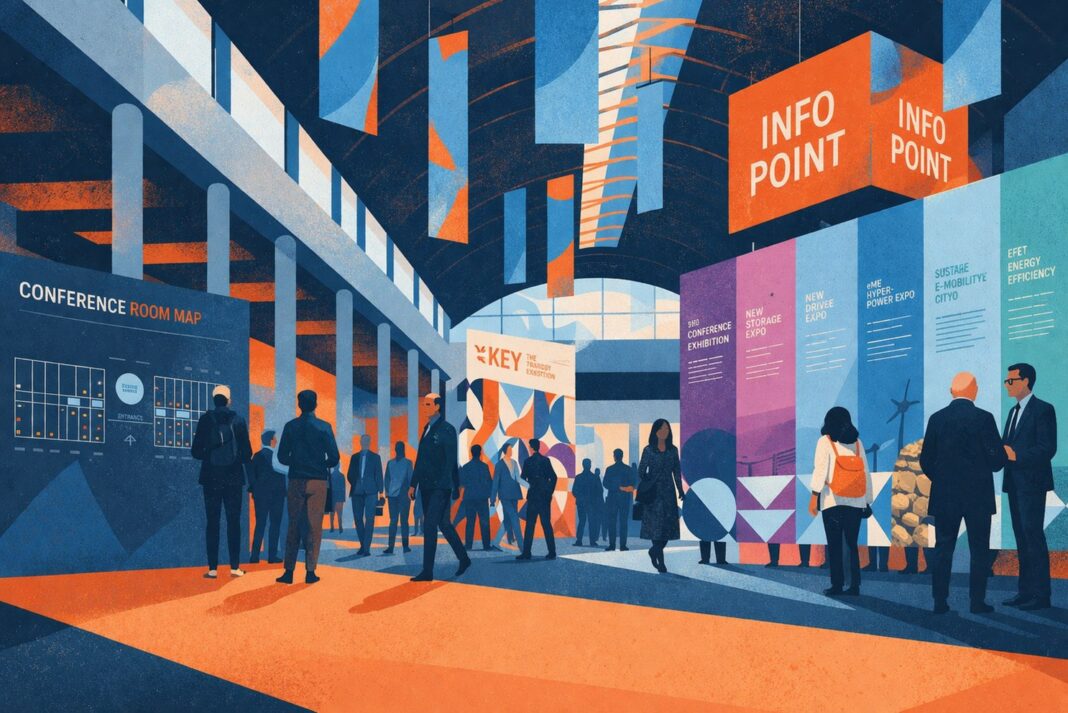
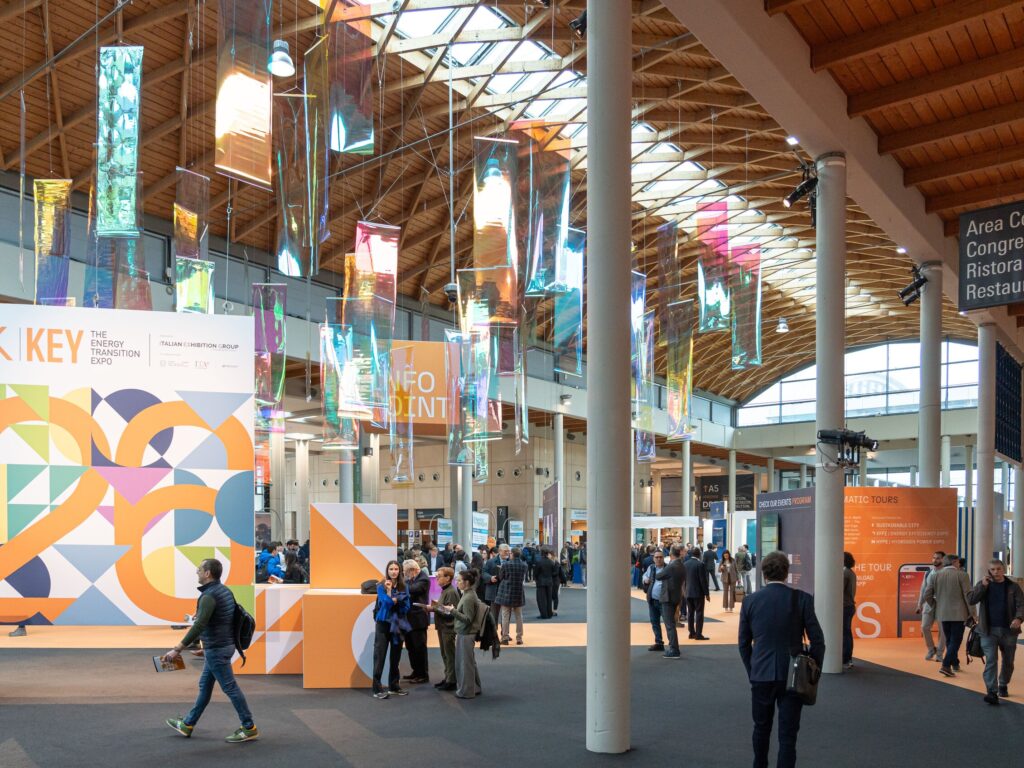
KEY – The Energy Transition Expo, held from March 4th to 6th at the Rimini Expo Centre, confirmed itself in 2026 as one of the most important events for concretely understanding the evolution of the European and Mediterranean energy market. The event, organized by Italian Exhibition Group, occupied almost the entire Rimini exhibition district, extending over 125,000 gross square meters and 24 pavilions, and clearly conveyed the image of a sector in full growth, driven by an ever-stronger demand for technologies, plants, skills, and models capable of supporting the energy transition in an increasingly complex industrial, infrastructural, and regulatory context. The figures for this edition speak for themselves: a +10% increase in total attendance, with a +9% increase from abroad.
The clearest impression gained from the visit was that of a trade fair that grows year after year not only in terms of exhibitors and visitors, but also in its ability to represent the variety of the market. Alongside the richness of the exhibition offering, the quality of the conference program should be emphasized, which complemented the institutional moments with a qualified presence of experts, technologists, trade associations, and regulatory specialists.
This is not a given in the Italian trade fair landscape and helped make KEY 2026 a particularly useful observatory for those in industrial companies who need to make investment decisions, evaluate new partners, or understand the evolution of the regulatory framework.
A diversified market, explored by theme
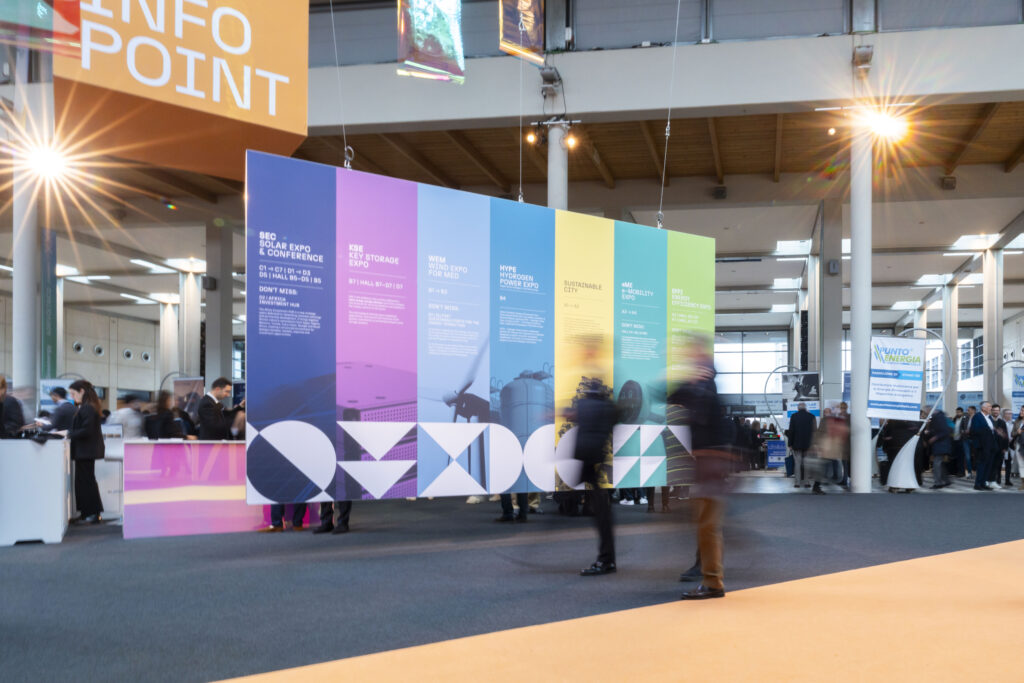
Various thematic areas showcase an increasingly multifaceted market. The structure of the event revolved around its now well-established thematic areas: photovoltaics, wind power, hydrogen, energy storage, energy efficiency, e-Mobility, and the Sustainable City. Running in parallel was also a new edition of DPE – International Electricity Expo, dedicated to power generation, transmission, distribution, safety, and electrical automation. It was organised in collaboration with the Associazione Generazione Distribuita (federated with ANIMA Confindustria) and the ANIE Federation.
Among the largest areas was SEC – Solar Expo & Conference, which concentrated a vast array of offerings dedicated to photovoltaics in all its forms, from residential to utility-scale, through to industrial applications and agrivoltaics. The growth in space dedicated to EPC contractors, fixing structures, mounting systems, Operation & Maintenance activities, and financial services revealed a sector that has now reached significant maturity and is consolidating across the entire supply chain.
In the WEM – Wind Expo for MED area, wind power was represented in its various configurations, from onshore to offshore, down to mini-wind and Renewable Energy Community projects. Also of particular interest was the focus on Su.port – Sustainable Ports for Energy Transition, which drew attention to the role of ports as logistical hubs for dock electrification, cold ironing, the assembly and maintenance of floating offshore wind farms, as well as for hydrogen storage and transport.
HYPE – Hydrogen Power Expo brought the focus back to hydrogen as a vector for decarbonizing hard-to-abate sectors—those industrial segments where emission reduction is most challenging, such as steelworks, cement plants, glassworks, refineries, and heavy transport. Present here were technologies for hydrogen production, compression, storage, distribution, and use, alongside engineering companies, analysis and measurement systems, certification bodies, and financial services.
Storage, efficiency, and grid stability
If we were to summarize the keywords of KEY 2026, among the most prominent would certainly be energy efficiency, regulations, and storage. Energy storage itself appeared as one of the most cross-cutting and mature themes of the entire fair, because the growth of renewable sources makes the ability to stabilize the grid and enhance the value of energy produced during peak times absolutely central.
In KSE – Key Storage Expo, the offerings included equipment for static storage in residential, commercial, industrial, and utility-scale applications. Alongside the highly prevalent lithium batteries, solutions related to thermal storage and pumped hydro storage systems were also visible. For visitors from the industrial sector, the point is clear: without efficient storage, the integration of renewables remains partial, whereas with properly sized storage systems, it becomes possible to reduce the average cost of energy, increase self-consumption, mitigate peaks, and improve operational resilience.
Significant attention was also dedicated to the EFFI – Energy Efficiency Expo area, which focused on themes of consumption electrification, cogeneration, trigeneration, micro-cogeneration, heat pumps, geothermal energy, solar thermal, and energy management systems. For energy-intensive industries, which now consider energy a strategic variable and no longer just an accessory cost, this was one of the most interesting areas of the entire event.
A notable absentee: AI
One of the most interesting aspects to emerge from the visit, however, was also one of the most unexpected. Unlike what happens in many other technology trade fairs, at KEY 2026 the theme of artificial intelligence remained relatively marginal in exhibitors’ communication. Although it was present in some conferences, particularly in the event dedicated to Artificial Intelligence “in support of the decarbonization of the built environment”, references to AI in the exhibition stands appeared overall weak, almost absent as a narrative and commercial lever.
This observation is even more striking considering that the software offering was extensive and often absolutely enriched by Artificial Intelligence. In fact, the fair featured platforms for system design, simulation tools, solutions for fluid dynamics and thermodynamic analysis, sizing software, tools for civil and industrial design, and applications for collecting and analyzing data from various sensors.
A strongly product-oriented fair
Despite the extensive and varied software offering that emerged, it was observed that the sector is still taking its first steps towards the adoption of more mature and integrated tools. In particular, the concept of the digital twin applied to energy assets or buildings still appears to be in the definition phase, with room for development to fully express its potential as a unified and dynamic model.
Similarly, an evolutionary path is still underway for Building Management Systems (BMS), which could in the future establish themselves increasingly as intelligent orchestration platforms – not only for control, but also for optimized management of energy, maintenance, and operations. In summary, if on the one hand the energy transition was widely featured, on the other the digital component seems to be proceeding at a slightly more cautious pace, hinting at ample room for innovation in future developments.
A solid and mature supply chain
This picture also emerged in the general layout of the exhibition offering. Many companies brought technologically advanced products to the fair, capable of effectively responding to increasingly complex performance, regulatory, and safety requirements. Inverters, batteries, fixing systems, specialized software, monitoring devices, and solutions for conversion and protection: the offering was rich and of high quality, a sign of a solid and healthy supply chain.
What can perhaps be glimpsed as the next evolutionary step is a more decisive shift from a component-based logic to a system-based one. For the industrial world, which faces integrated challenges such as efficiency improvement, self-production, or decarbonization, being able to count on partners capable of connecting different technologies, managing data, ensuring safety, optimizing the grid, and navigating the regulatory and financial landscape becomes central.
From this perspective, the fair depicted a market with very solid technical foundations, which now seems ready to take a further step: transforming product excellence into increasingly complete and integrated solutions, capable of organically responding to the complexity of projects.
Regulations, data centers, and the cost of energy
The centrality of the regulatory framework emerged very clearly during the KEY Energy Summit, where the study “Energy Transition, Between Global Scenarios, Technologies and Governance” conducted by Althesys, TEHA Group, was presented. The discussion, which took place in the presence of the Minister of the Environment and Energy Security, Gilberto Pichetto Fratin, addressed issues of great relevance for the industrial system, from infrastructure to electricity market governance, right through to the growing role of data centers and emerging technologies.
One of the most interesting pieces of data concerned data centers themselves: in Italy, requests for grid connection have reached 69 GW, while in 2024 data centers accounted for less than 2% of national electricity demand; according to Snam-Terna 2024 forecasts, by 2035 they could account for between 7.4% and 12.7% of final electricity consumption.
This is data that directly affects the industrial world, because it signals the emergence of a new structural energy demand, destined to compete for grid capacity, continuity of supply, and infrastructural quality. The debate also brought up the issue of the possible decoupling of the gas price from the single national electricity price, a technical but strategic question, because it concerns how the cost of gas continues to influence the final price of electricity even in a system aiming for greater penetration of renewables.
PPAs, renewables, and contractual models for industry
Another fundamental topic for the industrial audience was that of PPAs – Power Purchase Agreements, i.e., long-term contracts for the purchase of energy, increasingly used to provide economic stability to renewable plants and self-generation programs. In practice, many operators and many ESCOs use models where a plant, for example photovoltaic, is installed on industrial roofs or company premises without the company having to bear the entire initial investment directly, obtaining in return energy supply, greater cost predictability, and valorization of available spaces.
The theme appeared central because PPAs represent for many companies one of the most concrete ways to address energy price volatility and accelerate decarbonization without immobilizing excessive capital. At the same time, during technical discussions, the need emerged for a stable and coherent regulatory framework, capable of not slowing down an instrument that can prove decisive for the competitiveness of Italian industrial sites.
NIS2 and critical infrastructure security
An area that found more space in the 2026 edition than in the past and which directly concerns industrial companies and plant operators is the security of critical infrastructures. The energy sector is in fact among those most involved in the application of the NIS2 directive, the European framework that has strengthened cybersecurity obligations for essential and important entities. For the energy world, this means greater attention to risk governance, operational continuity, protection of OT and IT systems, incident management, accountability, and supply chain security.
At the fair, this regulatory evolution translated into a presence of advanced systems for security, both physical and digital. From video surveillance for production sites and transmission infrastructures to software platforms for access control, data protection, network monitoring, and defense of industrial digital architectures, the offering clearly showed that the energy transition can no longer be separated from security. The more the level of interconnection of plants grows, the more the need to protect them as critical assets increases.
Energy sources: renewables, gas, and (perhaps) nuclear
During KEY 2026, there was extensive discussion of the various energy production sources. Green sources, from wind to photovoltaic to hydroelectric, were represented by numerous companies specialized in the design and supply of dedicated technologies. In parallel, however, the theme of gas also remained present, addressed both on a market level and on a regulatory level, in relation to measures being implemented to curb the impact of price hikes on bills.
The technical debate also brought up the idea that any short-term choices on the cost of energy must avoid slowing down structural investments in renewables. In some conferences, discussion also surfaced on the possible role of nuclear power in the future energy mix, a sign that the issue is no longer perceived as an absolute taboo, even though it remains evident that large plants or small modular reactors cannot represent an immediate response to industry’s current needs.
A useful observatory for those who must decide
Overall, KEY Energy 2026 conveyed the image of an industrial sector in strong evolution, driven by investments, regulatory pressure, and a growing need for efficiency. For those operating in businesses, the message is clear: the energy transition is today a concrete process, already underway, with mature technologies in various areas and with a market that is growing rapidly. At the same time, the digital transition supporting energy appears still less uniform and less integrated than would be desirable. For this reason, the real opportunity of the coming years will concern not only the diffusion of new plants or new components, but the ability to connect energy, data, security, automation, software, and contractual models in a truly industrial vision.