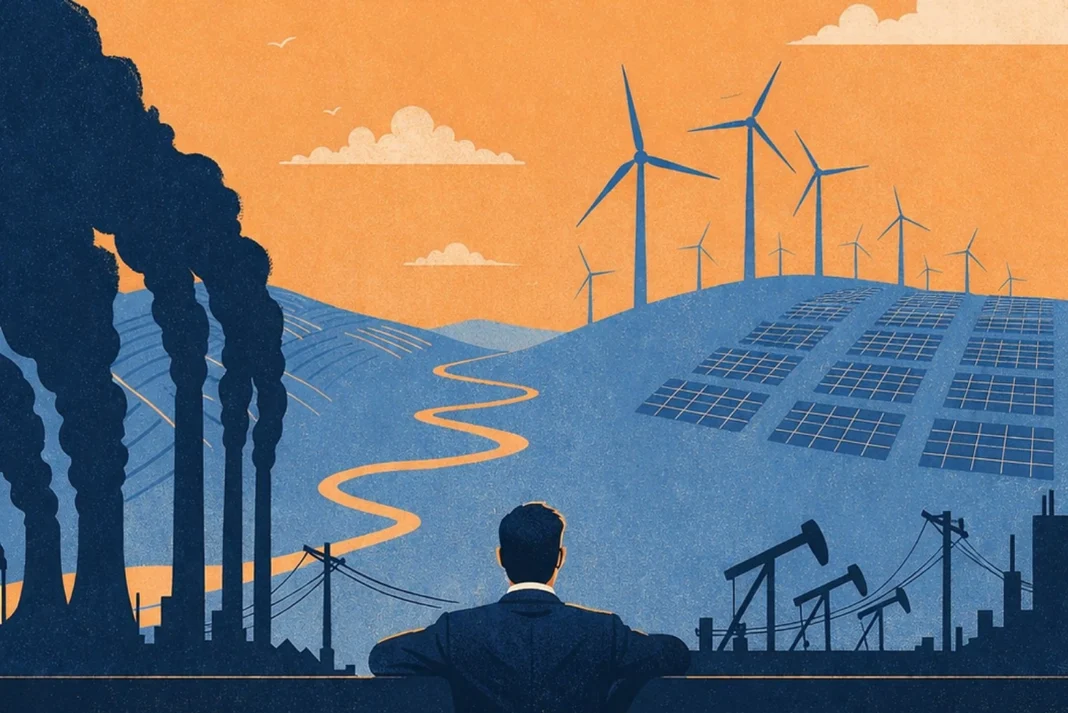
To tackle strategic innovation delays, the continent needs mission-oriented industrial policy and global cooperation
Europe’s energy transition has evolved from an environmental priority into a central pillar of the European Union’s economic and geopolitical strategy. Designed to reconcile sustainability, competitiveness, and energy security, it was presented not as a constraint on growth but as a new engine for innovation, job creation, and technological leadership.
With the launch of the European Green Deal, this ambition took shape as a transformative project: making Europe the first climate-neutral continent by 2050 while reshaping its development model. Subsequent crises — from the pandemic to the war in Ukraine — further strengthened political commitment to decarbonization, framing it as both an economic recovery strategy and a response to geopolitical instability.
Yet ambitious narratives must be matched by results. Have current policies strengthened the competitiveness of Europe’s energy system? And can the growing emphasis on strategic autonomy in critical clean energy technologies provide an effective response to rising geopolitical tensions in an increasingly fragmented global economy?
The vulnerable state of Europe’s energy system
Despite notable progress in decarbonization and declining energy intensity — especially since 2019 —Europe’s energy system faces mounting structural weaknesses. By 2025, CO₂ emissions in the Eurozone are projected to be around 20% lower than a decade earlier, largely due to the shift from coal and gas to renewables in power generation. Yet primary energy consumption has fallen by only 6%, and reductions across end-use sectors — industry, transport, residential, and services — remain limited. Much of the recent decline reflects temporary factors, such as mild winters and record-high energy prices, rather than structural efficiency gains.
A broader assessment based on the European Commission’s Energy Union indicators confirms this fragility. Compared to ten years ago, the pace of adjustment required to meet the revised 2030 targets has sharply increased. Annual CO₂ reductions must now average 7% (versus 2% in 2015), final energy consumption must decline by more than 3% annually (versus 1%), and the share of renewables must rise by over 3 percentage points per year — double the pace required a decade ago.
Economic indicators paint an equally challenging picture. Since 2015, the trade balance in low-carbon technologies has deteriorated, energy prices for households and businesses remain historically high following the 2022 peaks, and energy-intensive industries — including steel, chemicals, paper, and non-metallic minerals — are in deep crisis. In 2024, their output fell to its lowest level in three decades, nearly 20% below that of three years earlier.
Clean-Tech autonomy cannot fix Europe’s structural weaknesses
Amid partial progress, persistent rigidities, and growing vulnerabilities, Europe is confronting the erosion of the external conditions that supported its post–Cold War growth model—stable trade relations, affordable energy, and security guarantees. This shift has intensified concerns over industrial decline and the risk of missing the growth opportunities associated with clean-tech manufacturing.
Limits of Europe’s strategic autonomy agenda
The crises of 2020 and 2022 exposed important limits in the EU policy response. Public spending largely focused on cushioning energy bills rather than accelerating investment in low-carbon technologies or structural transformation. By contrast, the United States and China strengthened their clean energy innovation strategies and industrial competitiveness. Without a similarly forward-looking approach, Europe risks falling behind both in meeting its 2030 climate targets and in securing technological leadership.
In recent years, the EU has responded by reviving industrial policy under the banner of “strategic autonomy.” Through initiatives such as the Net-Zero Industry Act and the Critical Raw Materials Act, it has introduced domestic production targets for key clean technologies in order to reduce external dependencies and secure strategic value chains. However, it remains unclear whether this strategy can truly revitalize the European economy while contributing effectively to global decarbonization.
The climate trilemma and Europe’s technological lag
The growing emphasis on autonomy reflects a view of global interdependence as increasingly conflictual rather than cooperative. Yet the energy transition is shaped not only by geopolitical rivalry but also by structural constraints. The traditional “energy trilemma” is now compounded by what Dani Rodrik has termed the “climate trilemma”: the difficulty of advancing global decarbonization while preserving social cohesion in advanced economies and supporting development in emerging ones. A strategy focused primarily on domestic production risks narrowing the solution space even further.
The energy crisis has also revealed a deeper structural issue: Europe’s technological lag. Beyond dependence on imported energy, the shock exposed the fragility of an industrial base still heavily concentrated in energy-intensive sectors and relatively weak in science-driven and digital industries that underpin long-term productivity growth. Technological sovereignty cannot be achieved through uniform production targets if the broader innovation ecosystem remains fragmented and uneven across Member States.
At its core, the current approach reflects what Paul Krugman once described as a “competitiveness obsession” — a tendency to frame economic strategy as a race to be won in specific industries. In this view, success is measured by domestic production shares rather than by productivity growth and allocative efficiency. Yet competitiveness alone cannot substitute for rebuilding innovation capacity, nor can strategic autonomy resolve a challenge that is inherently global. Policies aimed at protecting domestic industry — through reshoring, selective subsidies, and rigid production targets — may strengthen internal support, but they also risk slowing technology diffusion and increasing tensions with emerging economies. Balancing decarbonization, social cohesion, and global development ultimately requires a more cooperative framework than strategic autonomy alone can provide.
From strategic autonomy to a cooperative, mission-oriented industrial policy
A more effective European energy transition requires linking climate objectives to a broader transformation of the industrial system. This means moving beyond a narrow focus on autonomy and reconnecting climate and energy goals with the structural evolution of Europe’s productive base through a mission-oriented industrial policy.
Mission-oriented industrial policy as strategic direction
Missions provide clear strategic direction while leaving room for experimentation, innovation, and multiple technological pathways. Rather than privileging specific sectors or technologies, they address major societal challenges, while horizontal policies sustain investment in innovation capabilities across the economy.
Such an approach must be grounded in a realistic assessment of Europe’s position in global value chains. Domestic production targets alone are insufficient. The EU should concentrate on areas where it holds comparative advantages, while allowing green goods and services to be produced where they can be delivered most efficiently. This anchors industrial policy in a cooperative logic: strengthening domestic capabilities where Europe is competitive, while coordinating with global partners to avoid duplication, enhance efficiency, and support shared climate objectives. Instead of focusing narrowly on domestic leadership, the EU should contribute to expanding the global clean economy and secure a fair share of its value for Europe (Hausmann and Ahuja 2023).
Where comparative advantages are clearly limited, a more flexible strategy may be preferable to rigid targets. Rather than attempting to replicate entire value chains, the EU could pursue partnerships with foreign players — “derisking by embracing” — by building strategic alliances and offering market access. This “location over ownership” approach would keep production within Europe regardless of ownership structure (Tagliapietra and Trasi 2024).
What emerges, then, is a cooperative framework in which strategic competition is considered only after optimal positioning within global value chains has been identified and achieved through coordination. Industrial policy must acknowledge the growing interdependence of energy, industry, and trade. Tensions between energy security, industrial competitiveness, and openness imply that well-calibrated trade policy is essential for a successful clean energy transition (IEA 2024).
Rethinking green industrial strategy beyond rigid targets
Recognizing that Europe lacks the renewable resource base to sustain large-scale zero-carbon, energy-intensive production, a credible green industrial strategy must go beyond decarbonization targets. It requires rethinking what should be produced, how, and where—taking into account resource constraints, technological capabilities, and long-term resilience. This may entail leveraging the expansion of the global clean economy to reinforce sectors where Europe already demonstrates strength, such as environmental and energy services, which are becoming increasingly central to the transition. At the same time, policymakers should identify mature clean technologies that warrant targeted support to enhance competitiveness and secure strategic niches.
Within this framework, public intervention plays a catalytic role: driving innovation, facilitating industrial upgrading, and creating markets in areas of genuine European advantage. Rather than relying on rigid benchmarks or attempting to “win” a global green race through domestic-only targets, the Union can pursue a coherent strategy that aligns energy, industrial, and trade policies. By grounding industrial policy in a realistic appraisal of strengths and constraints, Europe can strengthen productivity and innovation while preserving openness and avoiding counterproductive protectionism.
Building a strategic and innovation-driven EU growth engine
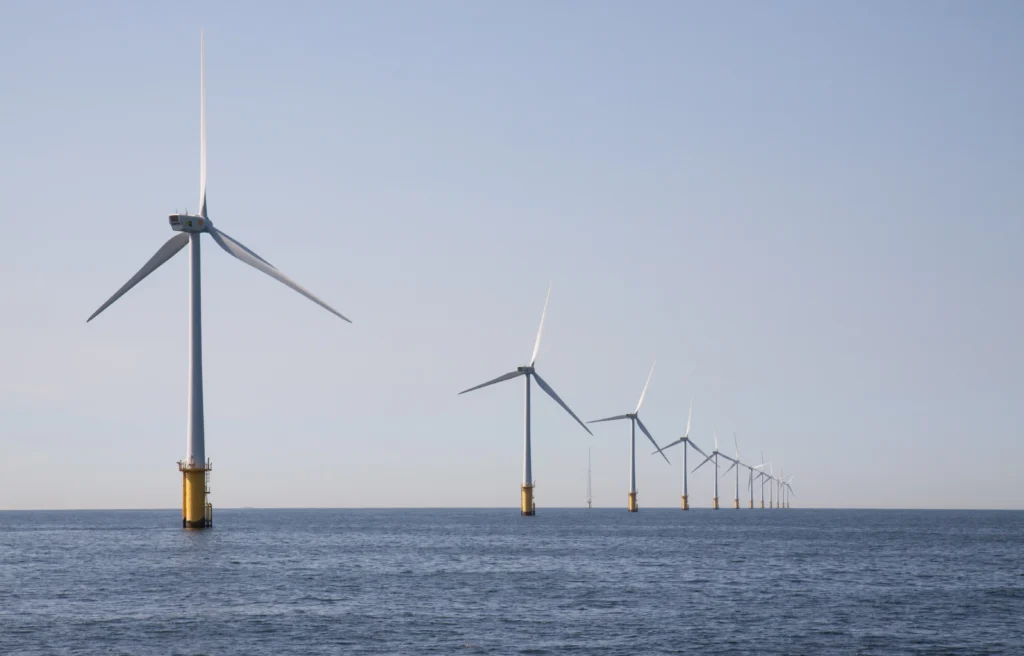
Locked into energy-intensive production and dependent on imported energy, Europe faces a strategic choice: pursue incremental decarbonization or reshape its industrial model to secure long-term competitiveness. The challenge is not only technological — whether existing sectors can be decarbonized— but structural. It concerns the viability of an industrial system exposed to persistently higher energy costs in an increasingly competitive global economy. A credible strategy therefore requires reassessing Europe’s production model in light of comparative advantages, technological capabilities, and systemic resilience.
A permanent, debt-funded EU facility could transform the energy crisis into a growth engine
This implies rebalancing the industrial base: shifting away from sectors where high energy costs erode competitiveness toward higher value-added activities — such as environmental and energy services, advanced manufacturing, and digitally integrated industries — where innovation can generate durable strategic advantages. Such a shift is essential if Europe is to escape the “medium-tech trap” that has confined it to mature sectors and limited the transformative impact of public R&D.
Yet this transformation remains difficult under the current scale and philosophy of EU economic governance. Existing competitiveness initiatives are modest relative to the magnitude of the transition, while fragmented instruments and slow funding cycles reflect caution at a time that demands strategic ambition. As a result, public investment falls short of what is needed to revitalize Europe’s productive system.
Financing the transition as a growth strategy
A structural response would require establishing a permanent European energy transition facility—financed through common debt and inspired by Next Generation EU—designed as a lasting fiscal instrument rather than a temporary measure. Such a facility should operate in close coordination with Horizon Europe and related innovation programmes, linking mission-oriented investment directly to research, scale-up, and industrial deployment. Without this alignment, Europe risks remaining trapped in incremental innovation while global competitors move ahead with systemic transformation.
Crucially, Member States must also be granted adequate fiscal space to support this shift. A more flexible interpretation of the Stability and Growth Pact—potentially through a “golden rule” excluding EU-agreed strategic investments in the energy transition and R&D from deficit calculations—would align fiscal governance with long-term competitiveness goals. This is not fiscal leniency, but strategic coherence: if the Union aims to combine decarbonization with competitiveness, its fiscal framework cannot continue to constrain industrial transformation.
Without such reforms, Europe’s green ambitions may collide with its own governance architecture. With them, however, the energy transition could become the foundation of a renewed European growth model—innovation-driven, strategically resilient, and embedded in a cooperative vision capable of shaping the global energy transition.
This article is an excerpt from a chapter of the annual report European Public Investment Outlook (EPIO) – edited by Floriana Cerniglia (CRANEC – the Centre for Research in Economic Analysis and International Economic Development of Università Cattolica del Sacro Cuore, Milan) and Francesco Saraceno (OFCE–Sciences Po Paris) – whose 2025 edition is devoted to the energy transition.
References
Ahuja, K., and Hausmann, R., 2025, “Industrial Policy for Competitiveness in the Energy Transition”, in Grabbe H. and Tagliapietra S. (eds), Green Intersections. The Global Embedding of Climate Change in Policy.
Cerniglia F., and Saraceno F. (editors), 2025, More with More: Investing in the Energy Transition. 2025 European Public Investment Outlook, Open Book Publishers.
Draghi, M., 2024, The Future of European Competitiveness. Brussels: European Commission.
Hausmann, R., and Ahuja, K., 2023, “A More Globally Minded European Green Industrial Policy”, in Tagliapietra S. and Veugelers R. (eds), Sparking Europe’s New Industrial Revolution. A policy for Net Zero Growth and Sustainable Development Forum 2022 Issue Note.
IEA, Government Energy Spending Tracker, https://www.iea.org/data-and-statistics/data-tools/government-energy-spending-tracker-policy-database.
Krugman P., 1994, Competitiveness: A Dangerous Obsession, Foreign Affairs.
Mazzucato, M., 2021, Mission Economy: A Moonshot Guide to Changing Capitalism. London: Allen Lane.
Rodrik, 2024, A New Trilemma Haunts the World Economy, Project Syndicate, Sep 9, 2024, https://www.project-syndicate.org/commentary/new-trilemma-of-climate-change-global-poverty-rich-countries-middle-classes-by-dani-rodrik-2024-09.
Saraceno, F., 2017, “When Keynes goes to Brussels: A New Fiscal Rule for the EMU”, Annals of Fondazione Luigi Einaudi, 51(2), pp. 131-57.
Tagliapietra et al., 2023, Rebooting the European Union’s Net Zero Industry Act, 22 June 2023, https://www.bruegel.org/policy-brief/rebooting-european-unions-net-zero-industry-act.