Ceppi: «We shouldn’t seek the optimum, but diversity. AI is a chance to look at reality more holistically, not to solve every problem»
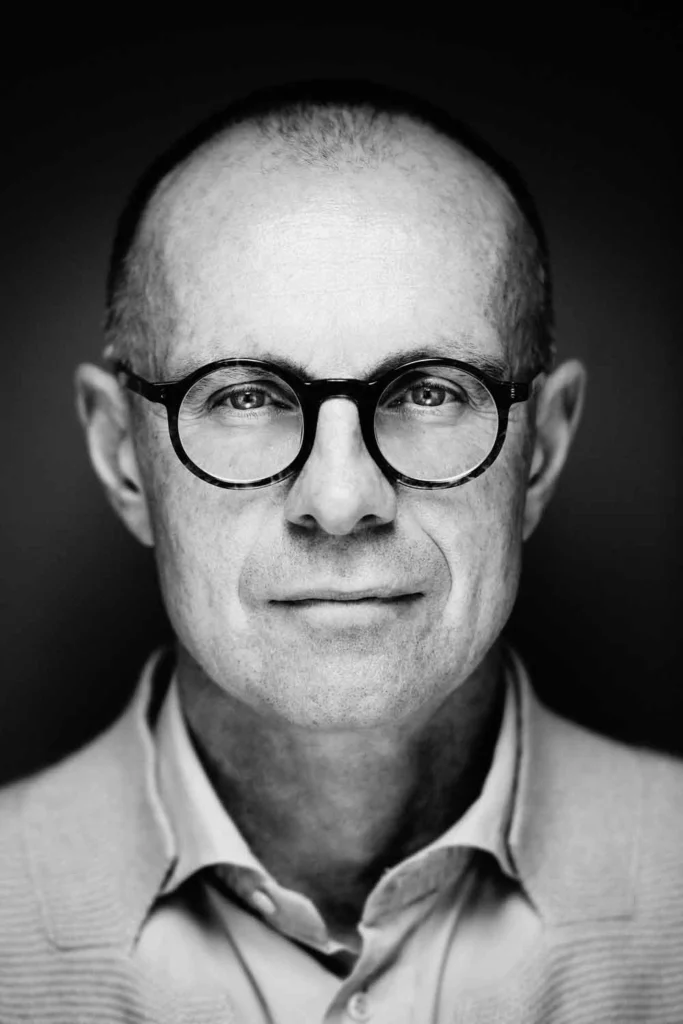
Architect and designer Giulio Ceppi is a professor at the Politecnico di Milano and previously taught at the Schools of Architecture in Genoa, Turin, and Rome. In 2005 he founded the Master’s in Business Design at Domus Academy, where he also coordinated the Research Center until 1997. He is among the founders of Schola Italica and a board member of the ADI Design Museum in Milan. His work focuses on sensory design, sustainable innovation, design for all, and systemic scenarios. He has served as Senior Consultant at Philips Design and, in 1999, founded Total Tool, a visioning and design strategy firm with offices in Milan and Buenos Aires, where he is Creative Director. With him, we discussed automated factories, AI, and the designer’s role today. Here’s what he told us.
What role can design play in an increasingly automated factory?
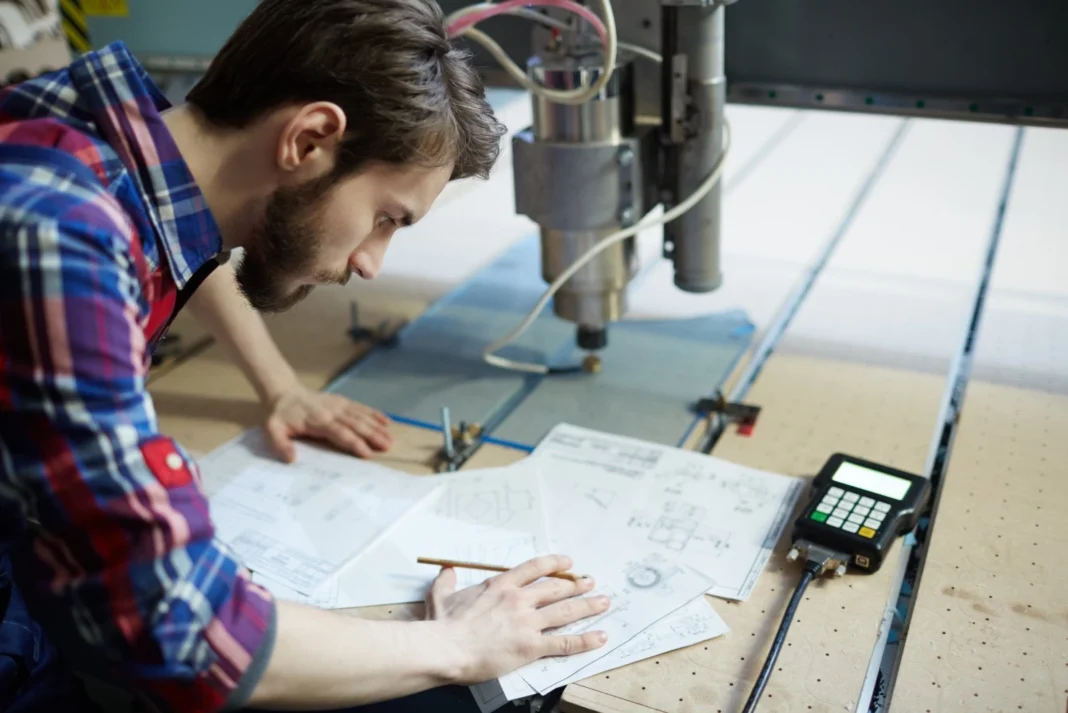
Disciplines that study human–machine interaction—within the broader field of interaction design—have their own history. In recent years, they’ve expanded on the psychological as well as the ergonomic front. In Italy, starting with Olivetti, we’ve approached these themes in a more “Latin” way, if you will—less rigid than the Anglo-Saxon stereotype. Add User Experience Design and Design for All, and design enables us to understand the richness of the human–machine relationship and, as a result, improve environments, processes, and interactions. The more the factory is automated, the more important design becomes, because we cannot neglect the human side. We can start from machine and line design, but increasingly we focus on how humans and machines work together in the same environment. This applies in factories and beyond. In this sense, design doesn’t just improve the product—it also improves industrial processes themselves.
Does a separation still exist between those who design and those who produce?
Today this question is tied to additive technologies: production is increasingly flexible and less dependent on the logic of seriality and large numbers. Even in more traditional processes, for reasons of environmental sustainability that are now non-negotiable, it’s difficult to create successful products without knowing the production processes. Bridging the two moments is increasingly important. In the emerging business model, those who design, those who produce, and those who communicate must be aligned. Communication can’t just “stick on” something downstream that isn’t there. For any product or service today, you have to tell how you conceived it, made it, and brought it to market: compared to the past, there is complete osmosis and fluidity between designing and producing, both technically and culturally.
Does AI risk standardizing products, or can it increase design diversity?
AI operates on objective registers—data, algorithms—and at the level of production processes it enhances mass customization and product personalization. In machine management, it increases production flexibility. Today it’s still mainly used to optimize a notion of perfection, to solve problems and always find the optimal solution. But solutions—as well as problems—constantly change over time. To avoid homogenization of ideas and products, I believe we need a different approach. We should consider AI as a tool that helps manage the becoming of things—an essential element—rather than as a means to reach a standard we delude ourselves will last forever. AI can help us manage dynamism and change, and tackle diverse logics. At an industrial level, this is the intelligent use: don’t seek the optimum—seek diversity.
From this perspective, how does AI change a designer’s work?
For designers, AI is a powerful tool that must be understood and managed. It doesn’t replace skills; it integrates them. There’s great excitement about speed, but also the specter of being dethroned in creativity or decision-making. In design there are multiple phases—research, analysis—beyond the spark of the idea or intuition. AI can help us better understand the quality and soundness of processes, and visualize ideas, but in my view it struggles to truly originate them.
And are companies really ready to manage this new balance between designer and AI? Are they ready to integrate data and intuition?
If designers must learn to integrate AI into their work, the same holds for companies: can they balance what is measurable with what by definition is not? AI works on what exists: it assembles prior data and information; it starts from a measurable culture. Intuition, by contrast, is subjective, hard to quantify, and bound up with courage: you have to trust yourself and follow gut feelings. The history of Italian design is built on intuition, courage, and personal choices—elements far from AI’s usual behavior. That courage today risks being lost, because AI connects in ways that are undoubtedly powerful yet often banal: the risk, otherwise, is flattening. The future lies in integrating the two dimensions. Right now, I see companies in a contradictory phase: on one hand they use AI to optimize; on the other, when a creative decision is needed, they use it like jam—to borrow Italo Calvino’s image—ladled out by the spoonful. But, as Calvino noted, creativity to be valid—like jam—needs bread and butter, a base of conviction and rationality. The same applies to AI which, among other things, isn’t purely rational: it can be creative, but in an uncontrollable way. That’s why creativity has to be governed within a process.
What are we not understanding about AI?
What we’re missing today is that, like all technologies, AI must be looked at critically. Take photography: in the 19th century, painted portraiture was supplanted within a decade by the notion that photography represented reality better. Today photography is no longer reality; it isn’t objective proof, not even in court. This is to say that how we perceive technologies changes quickly.
AI is a brainframe, a non-neutral technological system we often inhabit without awareness. As Derrick de Kerckhove reminds us, today’s technologies are super-prostheses that profoundly modify our relationship with reality. There’s also a local dimension: Tomás Maldonado said that in Italy we often live in “emotional bubbles” around technologies. Italians are a particular people—perhaps more prone to love–hate swings on one topic or another, as happened with nuclear power, for example. This too eludes us: we are living through an emotional phase, not yet a critical one.
Finally, we shouldn’t forget that AI is one form of intelligence. But there are other intelligences—plant, animal—from which we must learn. AI is a product of our way of being on the planet, perhaps a chance to look at reality more holistically. We cannot think the future as represented by AI will solve every problem. It may help us become more aware, but we face a bifurcation toward AI: those who will be swept along, and those who will use it more consciously. The future is not written in the algorithms.