Hydrogen is often discussed in terms of production and end use, from electrolysers to fuel cells. But between these two ends of the value chain lies a critical step that determines whether hydrogen can be delivered safely, efficiently and at scale: compression. This is the area in which SAFE SpA has built a distinctive industrial position.
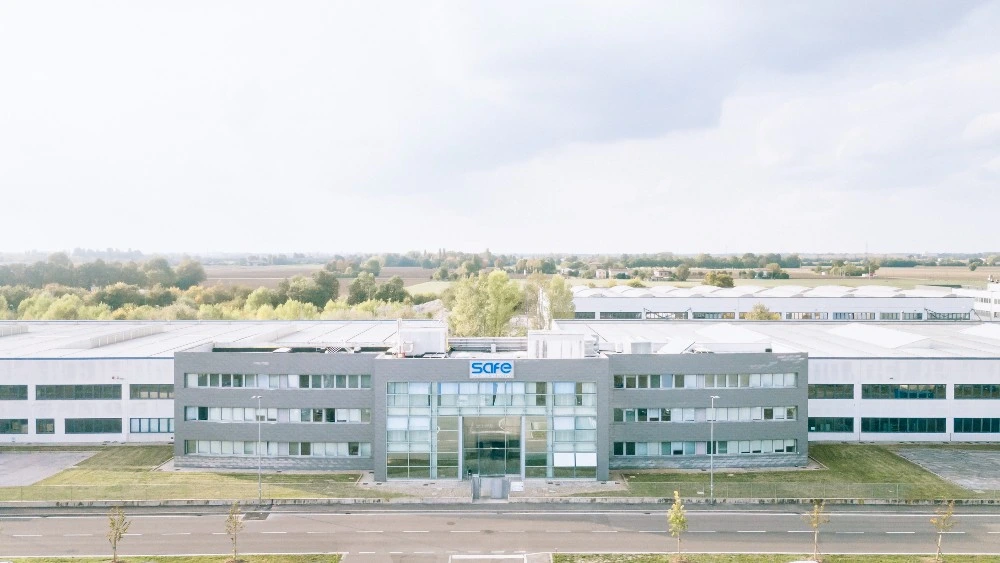
Founded in 1975 in Italy’s Emilia-Romagna region, SAFE has spent 50 years engineering gas compression systems. What began with compressed natural gas for mobility has evolved into a multi-gas platform spanning natural gas, biomethane and hydrogen.
At Hannover Messe 2026, SAFE will showcase its hydrogen solutions in Hall 11, Hydrogen + Fuel Cells, Stand C08/1. The company’s participation reflects a clear market position: hydrogen is no longer a future promise, but an industrial reality that requires reliable and scalable infrastructure.
Advanced technologies: hydrus and SW H2 compression platforms
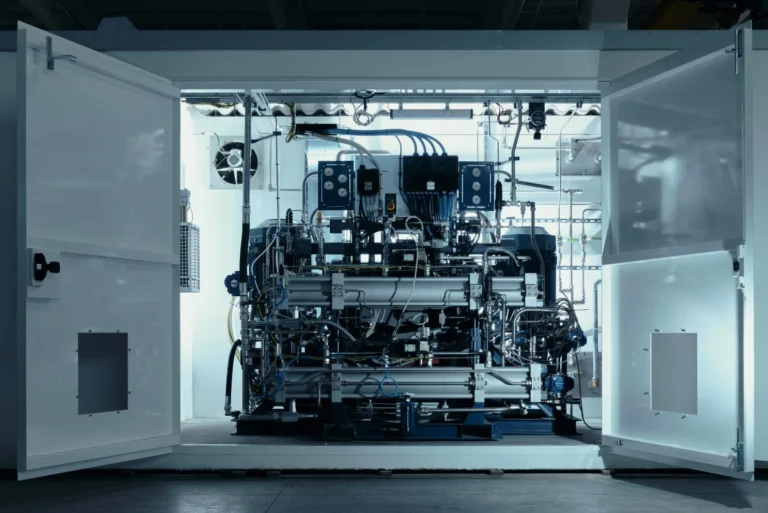
At the centre of SAFE’s presentation there are two hydrogen compression platforms: Hydrus and the SW H2 Series. Hydrus, the company’s advanced hydraulic hydrogen compressor, offers maximum flexibility and operates at pressures up to 1,000 bar. Its oil-free architecture helps guarantee gas purity, while its compact and configurable design makes it suitable for multiple applications, including industrial hydrogen compression, trailer filling and refuelling stations.
The SW H2 Series is SAFE’s mechanical compression solution for high flow rates and continuous operation. It specifically serves applications requiring low suction pressure, such as downstream electrolysers.
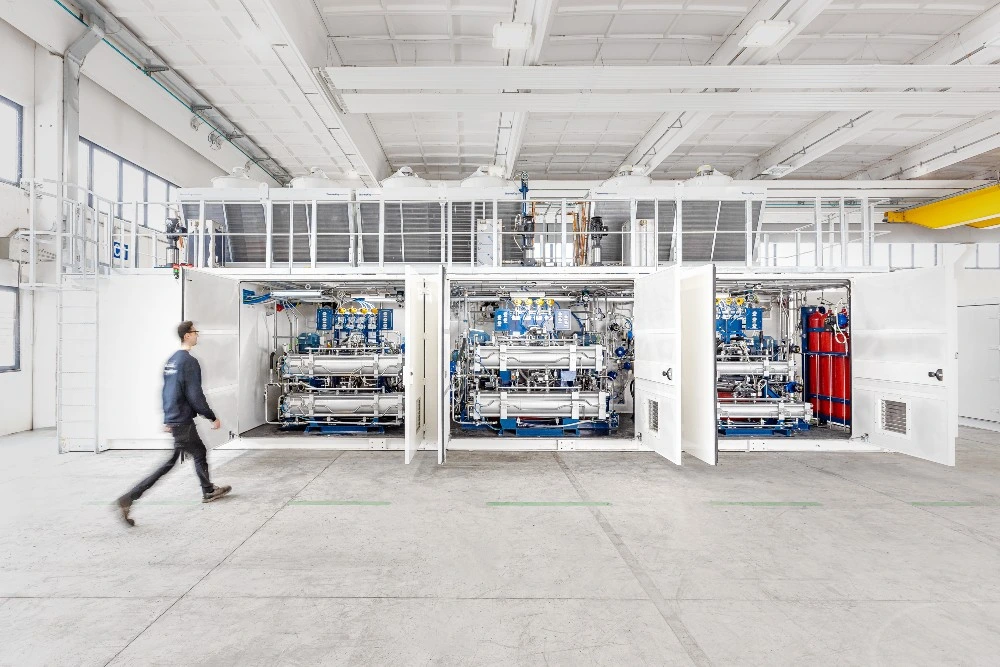
Available as complete packaged systems, both product lines can be integrated with storage, cooling, safety devices, control systems and remote monitoring.
This ability to supply complete compression islands is one of SAFE’s key differentiators. Rather than offering standalone components, the company acts as a system integrator across the hydrogen value chain, supporting production integration, high-pressure storage, virtual pipeline solutions, hydrogen refuelling stations and selected grid injection applications.
Case Study: green hydrogen infrastructure in action
A recent example is the La Isla project in Dos Hermanas, Seville, developed together with SAFE’s Spanish partner Gas Eco H2. There, SAFE contributed its hydrogen compression expertise to a refuelling infrastructure linked to a broader green hydrogen ecosystem. The project demonstrates the company’s capability to integrate compression and storage technologies into real operating environments.
SAFE’s approach to hydrogen is based on industrial realism: solutions that are technically robust, scalable and ready for deployment. With decades of experience in gas compression and a portfolio designed for practical applications, SAFE continues to position itself as a strategic partner for the development of hydrogen infrastructure.
Visitors to Hannover Messe 2026 can meet SAFE’s technical and commercial teams at our stand.
Our experts will showcase tailored solutions for industrial hydrogen projects, mobility, and distribution infrastructure.
Hannover Messe 2026 | Hall 11 – Hydrogen + Fuel Cells | Stand C08/1
From CNG leadership to biomethane and hydrogen solutions
With a solid industrial heritage and a global footprint, SAFE has established itself as a leading reference in the gas compression sector, building over time a technological platform capable of evolving in step with energy markets. A long-standing leader in CNG, the company has progressively expanded its scope, transferring its know-how to strategic areas such as biomethane and hydrogen, which represent key pillars of future industrial growth.
“SAFE has long been recognised as a global leader in the CNG segment, with a comprehensive presence across all major applications: refuelling stations, fixed and mobile systems, PRMS, dispensers and highly integrated complex solutions,” explains Riccardo Bagagli, CTO of SAFE.
“This positioning has never been based on a single product, but rather on the ability to meet very different regulatory, environmental and operational requirements, depending on the country and the customer.”
Alongside its core business in compressed natural gas, SAFE has recorded strong structural growth in the biomethane and hydrogen sectors in recent years, gaining significant market shares and steadily increasing volumes. The result is a company with a long-term industrial vision and a concrete technological platform designed to make the energy transition industrially viable.ì
A technological platform built on field experience
SAFE’s strength lies in its ability to transform decades of application experience into standardised yet highly configurable solutions, designed by expert system integrators who define all the building blocks of the compression island.
“Our technological platform is based on solutions derived from the traditional market, but optimised as complete systems: not just the compressor, but the entire compression island,” Bagagli emphasises. “This is how we position ourselves today, both in biomethane and hydrogen.”
SAFE’s portfolio includes mechanical compressors, hydraulic compressors and hybrid configurations, capable of handling a wide range of gases – from methane to hydrogen, as well as CO₂, ammonia and other technical gases – and adapting to very different requirements in terms of pressure, flow rate and service continuity.
“The first discriminating factor is always the type of gas,” the CTO explains. “Once this is defined, we design the plant architecture: a single unit or multiple compressors, series configurations for large pressure ratios, or parallel layouts to ensure redundancy, operational continuity or higher flow rates.”
From compressor to plant: the value of integration
SAFE does not limit itself to machine selection, but supports customers in defining the entire system.
“Thanks to a dedicated team of application engineers, we often guide the customer well beyond the selection of the compressor,” Bagagli continues. “Storage systems, cooling systems, auxiliary services, operating logics: our added value lies in the ability to design and operate the plant as a single, integrated system.”
This approach finds its fullest expression in hydrogen refuelling stations, where SAFE delivers complete solutions including compression, storage, chillers and control systems. “The real value is not simply connecting piping and electrical panels, but defining the operating logic of the plant – what we could call the ‘brain’ of the station.”
One of the defining features of SAFE’s engineering approach is modularity, understood not as rigidity, but as a synthesis of internal standardisation and customer-specific customisation.
“With an installed base of around 9,000 units, we have developed solutions over time for every subcomponent,” Bagagli explains. “A compression station consists of many modules, each of which can be configured by selecting from options that have already been studied and validated.”
The result is a solution that appears highly customised externally, while internally relying on consolidated standards, with tangible benefits in terms of reliability, delivery times, manufacturing and quality.
“Modularisation allows us to remain flexible towards the customer while being efficient internally: production, testing and supply chain operations work on known elements, with optimised lead times and processes.”
Biomethane: portfolio expansion and integrated screw-based solutions
In the biomethane sector, SAFE has progressively expanded its technological portfolio by complementing its long-standing expertise in reciprocating compressors with a range of solutions based on screw technology, particularly suited to primary compression and applications requiring continuous operation and high flow rates.
These solutions are offered as complete SAFE packages, in containerised and plug-and-play configurations, in which the screw compressor is integrated into an engineered system including container, skid, cooling systems, electrical panels, control logics and plant philosophy developed by the company.
“To fully address the biomethane market, we have broadened our range of solutions by integrating different compression technologies within our packages,” explains Riccardo Bagagli. “This allows us to leverage the efficiencies and know-how developed over the years across all plant modules, offering customers a reliable, industrial-grade solution that is easy to integrate.”
This approach enables SAFE to cover a wider range of applications, combining screw compressors and reciprocating compressors in hybrid architectures where required, while maintaining a single system logic and a single technological partner for the end customer.
Service and aftersales as a strategic lever
Service represents one of the pillars of SAFE’s business model, not only in terms of customer support, but also as a driver of technological development.
“Maintenance is essential both to ensure operational continuity for our customers and for the sustainability of our business,” Bagagli states. “We have a dedicated team of field service engineers who handle installations, maintenance activities and provide valuable feedback to product development.”
Feedback from the field thus becomes an integral part of the innovation process: “Service is the first interface with R&D. It is from the field that we understand whether a solution performs as expected or whether it needs to be improved or optimised.”
Global presence and evolving markets
SAFE currently operates through a global sales and service network, combining a strong European presence with increasingly structured activities in South America, Africa and the Far East – regions considered strategic for the company’s future development.
“Markets are changing rapidly and require different approaches,” explains Bagagli. “Alongside Europe – where France, the UK and Eastern Europe are driving CNG and hydrogen – we are strengthening our presence in South America, Africa and the Asia-Pacific region, markets with very attractive growth dynamics for both biomethane and hydrogen.”
In this context, SAFE complements its industrial and commercial presence with active participation in major international trade fairs as a tool for technological dialogue with local markets. Upcoming events include Hyvolution Chile, scheduled to take place in Santiago in September 2026, with a focus on hydrogen applications, and Bioenergy Indonesia, to be held in Jakarta in July 2026, dedicated to biomethane solutions.
“Being present at localised exhibitions allows us to capture the specific needs of individual markets and to bring already industrialised solutions that can be adapted to different regulatory and infrastructural contexts,” Bagagli concludes. “This is fully aligned with our vision: growing organically by following real industrial opportunities.”
SAFE thus confirms its position as a global industrial player, capable of combining technological depth, engineering flexibility and long-term vision, positioning itself as a strategic partner for gas compression in the energy transition, well beyond European borders.