Veerbo, the technology that gives you more energy while reducing consumption
Over the past few decades, the restaurant and hotel sector has undergone a major transformation. Professional kitchens and laundries have progressively moved away from gas and now rely almost entirely on electricity. This shift has improved efficiency, safety and working conditions, but it has also created new challenges.
Hotels and restaurants now have to manage an ever-growing number of electrical appliances. At the same time, distribution networks cannot always provide higher levels of power. The result? Load peaks, higher energy bills and additional tariff costs linked to power demand. Above all, limited power availability can prevent businesses from expanding the services they offer to guests.
More than twenty-five years ago, this scenario led to the creation of Veerbo Srl – GmbH. Professionals from the hotel supplies and technical assistance sectors founded the South Tyrolean company. Today, Mauro Bianchi and Klaus Schwitzer, CEO, Energy Manager and Project Manager, lead Veerbo and describe its origins as follows:
“We immediately understood that the future of professional kitchens and laundries would be electric. The issue was not only the cost of energy, but also the power available. Hotels were growing and the number of machines was increasing, but the grid could only provide so much. So we developed hardware and software systems that manage loads intelligently, reduce consumption and ensure continuity of service.”
Invisible savings for staff, real savings for the business
The principle behind Veerbo’s solutions is simple to explain, although technically complex to implement: not every machine needs to operate at maximum power at the same time.
Veerbo’s system “communicates” with equipment throughout the facility. This includes ovens, fryers, industrial washing machines, saunas, heat pumps and EV charging stations. In real time, the system decides which appliances require priority and which can temporarily reduce their power draw.
Rather than switching machines off, Veerbo manages them intelligently. During peak hours, for example, the system can prioritise the kitchen over the laundry. Laundry cycles can slow down slightly without staff noticing any difference.
The same principle applies to thermal inertia. An oven retains heat because it is an enclosed chamber, even when its heating elements stop working for a few minutes. A fryer, by contrast, needs constant heat to maintain the quality of the food.
“Every machine behaves differently,” Bianchi explains, “and our software understands that behaviour. We can reduce consumption without compromising the work of chefs and operators. They do not notice any difference, but the hotel saves energy.”
How the system works: from PLC to remote control
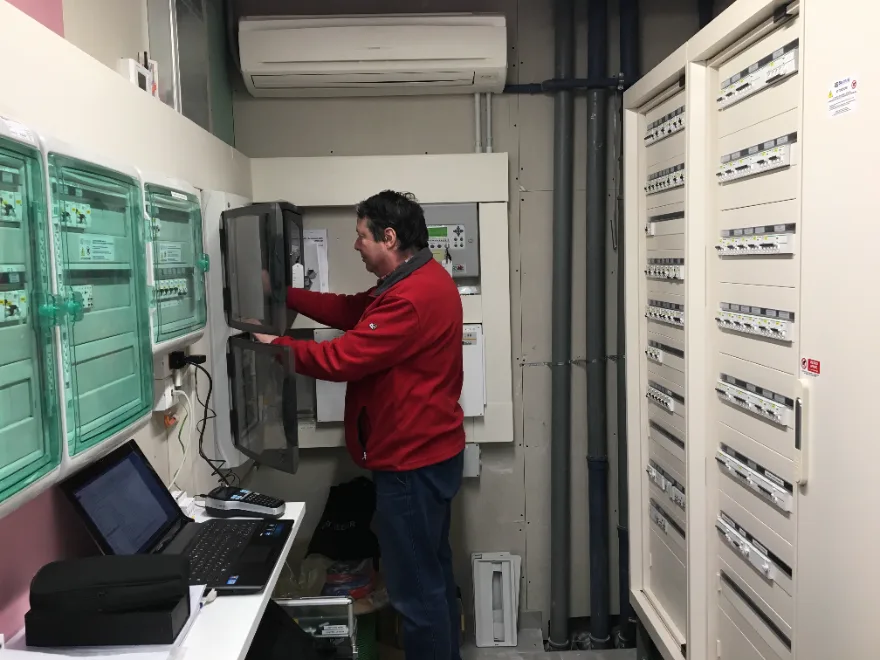
From a technical perspective, Veerbo installs an industrial PLC and connects it to a network of actuators across the different areas of the facility. Each actuator communicates with the electrical equipment and receives instructions from the PLC. The PLC continuously processes consumption data and adjusts energy use accordingly.
Veerbo can customise the system according to the size and needs of each facility. A small restaurant may have 10 to 12 machines to manage, while a large hotel may have 80 or 90.
The team calibrates each installation individually. Once installation is complete, Veerbo carries out commissioning and configures the specific control parameters.
All installed equipment also connects to Veerbo’s servers. This provides two main advantages:
- customers can monitor consumption through a web portal or dedicated app, with constantly updated data, charts and reports;
- Veerbo can remotely monitor system performance, adjust parameters, update the software and respond to anomalies.
As a result, customers know that Veerbo constantly monitors the system. They do not need to devote internal time or resources to routine system maintenance.
“Many competitors sell a device and then leave the customer on their own. We continue to support them. We provide an ongoing monitoring service, update parameters remotely and check power quality. We can also intervene in the event of fluctuations or harmonics. Some customers contact us after 15 years simply to upgrade the hardware because the software continues to work perfectly.”
KillerWatt Shadow® and E-Logi Controller®: two systems, one philosophy
Veerbo has developed two dedicated solutions to meet the needs of facilities of different sizes.
KillerWatt Shadow® targets large hotels and healthcare facilities. Like a “shadow”, it constantly analyses consumption and optimises energy use according to the actual workload throughout the day.
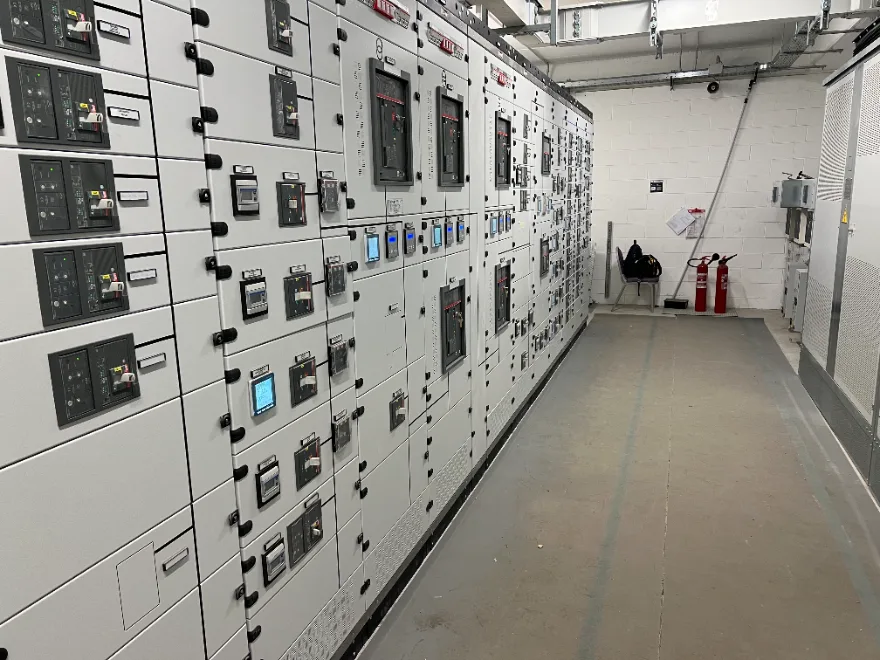
The system does more than reduce consumption. It also measures, stores and analyses data, giving customers a clear and immediate overview of their energy use.
E-Logi Controller® applies the same approach to small and medium-sized facilities. The system also operates in the background and determines how much energy the facility actually needs at any given moment. In this way, it reduces waste and optimises load peaks.
The two systems share the same operating principle but differ in scale. A restaurant with only a few machines can use a compact system. A large hotel with dozens of appliances, however, requires a broader and more complex architecture.
Tangible results: the Venice case
Venice provides a particularly significant example, as its electricity distribution networks have historically faced major constraints.
Veerbo has installed its systems in hotels with more than 100 kW of installed power. Thanks to intelligent load management, these facilities can operate with contracted power levels that are more than 50% lower.
This approach has produced clear results. Hotels have reduced their contracted power by 50% and achieved savings of up to 10% on their energy bills in relation to the kWh consumed. Continuous power quality monitoring provides an additional benefit.
Beyond savings: sustainability and growth
Energy optimisation does more than reduce costs. It also helps companies lower their environmental impact and contribute to sustainability goals.
Veerbo’s systems also fit fully within the Industry 4.0 framework. They combine process automation with digital monitoring and control.
“Hotels never stop growing,” Bianchi points out. “Every year they add new services, from saunas and spas to larger laundries. We enable them to expand without risking blackouts or unsustainable energy bills. Growth is possible, but it has to be managed intelligently.”
A unique technology recognised internationally
Veerbo’s model has also gained recognition beyond Italy. Today, the company operates in Austria, Germany, Switzerland and Spain. Several studies have also confirmed the distinctive nature of its technology.
Veerbo describes its software as “self-learning”. For twenty years, it has analysed equipment consumption patterns and learned from them. In this sense, the technology anticipated what we now call artificial intelligence applied to energy management.
With KillerWatt Shadow® and E-Logi Controller®, Veerbo gives restaurant and hotel operators a simple tool for managing energy more efficiently. Staff hardly notice it, while managers gain greater control over costs and consumption.
The result is a system that supports business growth while reducing waste, controlling energy use and making the future of hospitality businesses more sustainable.