Hy.CoMM project develops clean hydrogen construction and mining machines
Heavy-duty construction and mining machinery are among the most challenging applications for zero-emission powertrains. High loads, long duty cycles, harsh environmental conditions, and tight economic constraints have limited the adoption of diesel alternatives. While battery-electric solutions have proven their performance and robustness in everyday use in many mobile applications, including passenger cars or city buses, their limited operating times remain a significant barrier for heavy machinery.
Fuel cell technology offers a promising approach to address these limitations. Except for some individual machine or vehicle prototypes, however, such applications are hardly in practical use. In the Hy.CoMM project, a dedicated consortium of European research and industry partners have joined forces to demonstrate that fuel cell systems can operate under the demanding conditions of construction and mining machinery. They can also become market-ready in the near future.
Who is behind Hy.CoMM?
The aim of the application-oriented research project Hy.CoMM is to apply hydrogen-based electromobility. It also aims to support the market ramp-up in the field of mobile, hydrogen-powered, electric construction and mining machines and hydrogen infrastructures for municipal and industrial use.
Hy.CoMM kicked off in 2023 and is carried out by eight partners under the coordination of the Fraunhofer Institute for Transportation and Infrastructure Systems IVI in Dresden, Germany.
Five research partners (Fraunhofer IVI, HyCentA Research GmbH, ICM – Institut Chemnitzer Maschinen- und Anlagenbau e.V., Institute of Automotive Engineering at TU Graz and Virtual Vehicle Research GmbH) and three company partners (Car Systems Scheil GmbH Co. KG, IMK engineering GmbH, and MUNIQ Design) are cooperating in the project with a total funding of ca. 7 Mio. €.
Funding is provided via the Clean Energy Transition Partnership with support from the regional funding agencies Austria Research Promotion Agency (FFG) and the Saxon State Ministry for Science, Culture and Tourism (SMWK).
From proof-of-concept to pre-series production
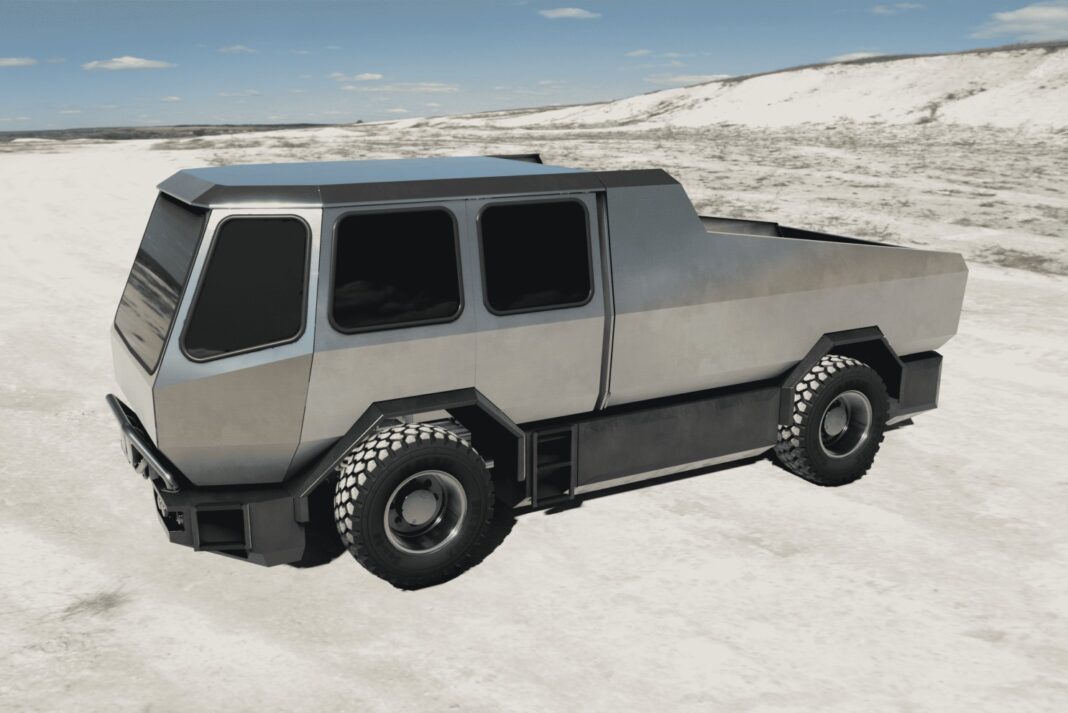
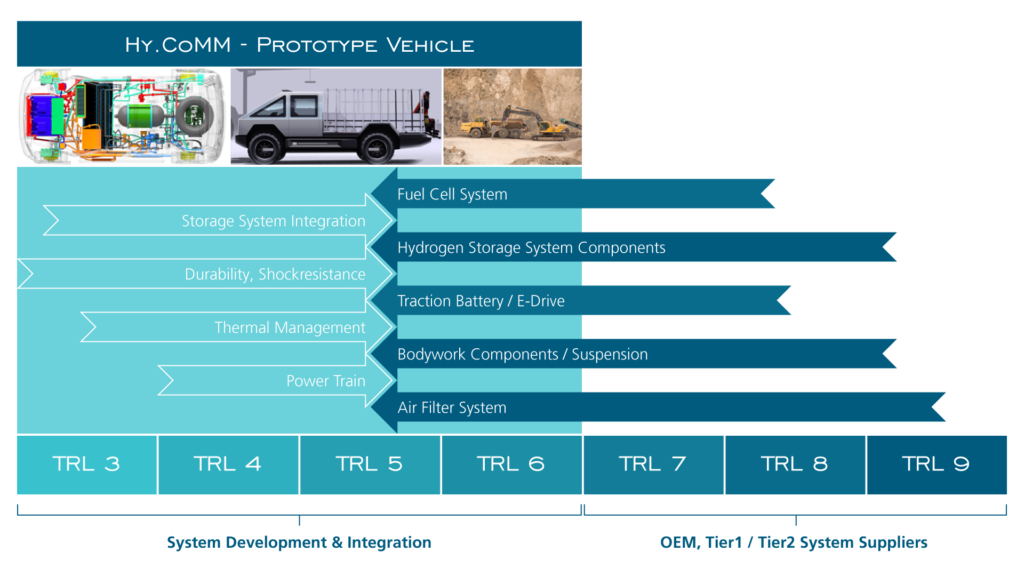
On its three-year mission, Hy.CoMM willbridge the gap between the demonstration of functionality and the targeted development towards pre-series production. To achieve this, a TRL 6 functional fuel cell-powered construction and mining machine prototype vehicle with an appropriate compatible refueling station is being developed. The goal is to establish a basis for future market uptake, including modular system designs, operational data, and safety concepts.
The project covers the areas of component and system development as well as the integration to demonstrate the applicability of the technology in the specified use case including enhancement of efficiency, robustness and lifetime, especially regarding the harsh environmental conditions. In addition, the project demonstrates the potential to lower the greenhouse gas footprint, harmful exhaust emissions and noise.
Hy.CoMM key innovations include combining fuel cells with batteries and electric drive systems, tailoring hydrogen storage and supply systems to mobile machinery, designing components for durability under dust, vibration, and temperature stress. Digital monitoring for performance, lifetime, and predictive maintenance is also implemented. The approach integrates simulation-based drivetrain development, component-level research, system engineering, and multi-stage validation. The project develops detailed energy management strategies, hybridization levels, and thermal management concepts through simulation. This is followed by hardware development including system layouts, cooling circuits, hydrogen routing, and structural integration. A mobile hydrogen refueling station has also been designed to enable reliable fueling cycles under daily operational conditions. The demonstrator will undergo stationary testing before moving into real-world validation in mining environments.
Designing a high-performance hybrid powertrain for a challenging use case
The project has made significant progress in developing a fuel cell prototype vehicle tailored to the demanding conditions of mining and construction applications. Early results highlight its focus on durability, energy efficiency, and thermal management. These aspects help tackle environmental challenges while demonstrating the potential of emission-free propulsion systems. Built on a scalable “skateboard” platform, the vehicle will offer flexibility for various superstructures while maintaining a standardized driver’s cabin. Despite packaging constraints of the platform design, the simple and robust structure ensures high functionality and manufacturability.
With a comprehensive safety concept aligned with industry standards, hydrogen-specific risks, such as leakage, are addressed. Environmental factors, such as high dust loads observed during initial measurements at the Styrian Erzberg mining site, guided further investigations into filter technologies suitable for the Hy.CoMM use case. Thermal management has also emerged as a critical challenge, given the limited packaging space. Optimized cooling system designs have demonstrated that the requirements can be met. Improvements in coolant temperature and radiator depth offer potential for higher efficiency and longer fuel cell service life.
Digital modeling of PEM fuel cells for performance and durability assessment
A key outcome of the research is the development of a digital model of a PEM fuel cell stack. PEM fuel cells (Proton Exchange Membrane Fuel Cells) can significantly extend the operational capabilities of electric vehicles, especially when combined with batteries. They enable longer operating times, greater flexibility, and higher availability – especially for vehicles with demanding duty cycles or limited downtime. With the developed model, it is possible to predict how the system behaves under realistic driving and load conditions. Not only electrical performance but also fuel cell ageing effects and membrane hydration are considered. Both of these are critical for durability, efficiency and reliability.
Using this model, the researchers analyzed a wide range of real-world load and driving profiles. With these results, they were able to determine how large the fuel cell system needs to be for the given applicatio. They also determined how quickly it can respond to changing power demands and how different operating strategies influence long-term degradation. These insights directly informed the design of the prototype vehicle, in which the PEM fuel cell and battery will work together as a hybrid energy system. The fuel cell provides a steady supply of energy over long periods, while the battery handles power peaks and energy recuperation. As a result, the vehicle will be able to operate for extended periods without long charging breaks, while maintaining zero local emissions and low noise levels.
Entering the prototyping phase
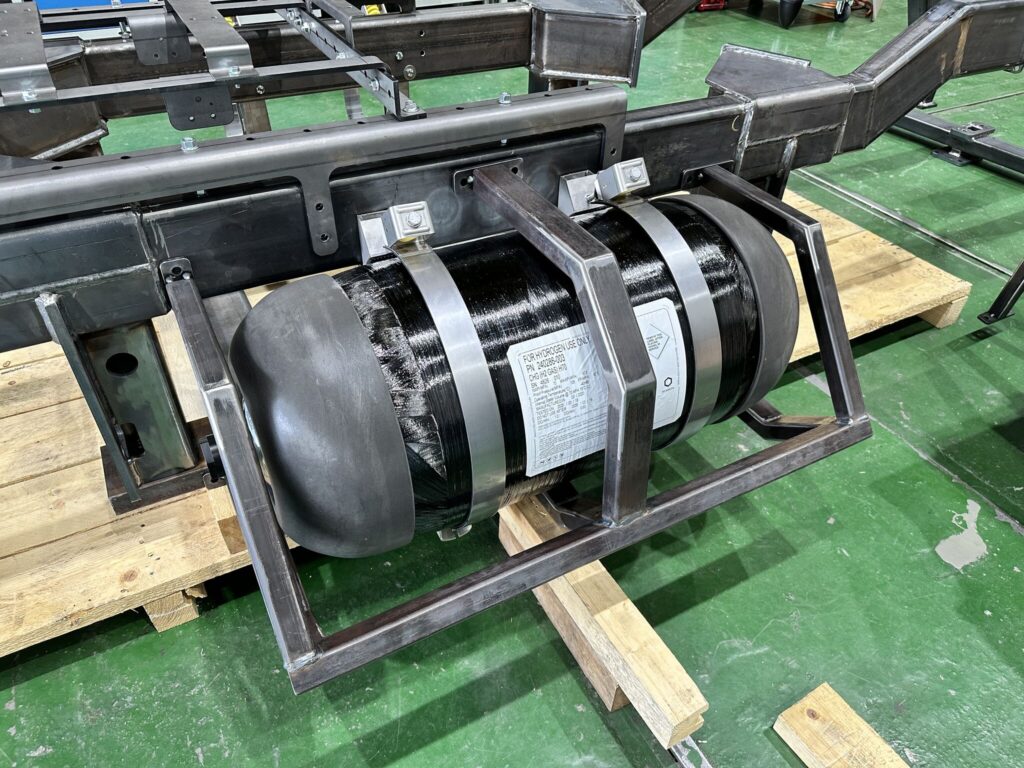
Two years into the project, Hy.CoMM has reached a key milestone: the transition from concept to physical prototype build-up. After months of detailed engineering, CAD modeling, design reviews, and component specification, the core conceptual work has been completed. Powertrain layout, hydrogen supply system, cooling strategy, and control architecture have been translated into manufacturing-ready designs.
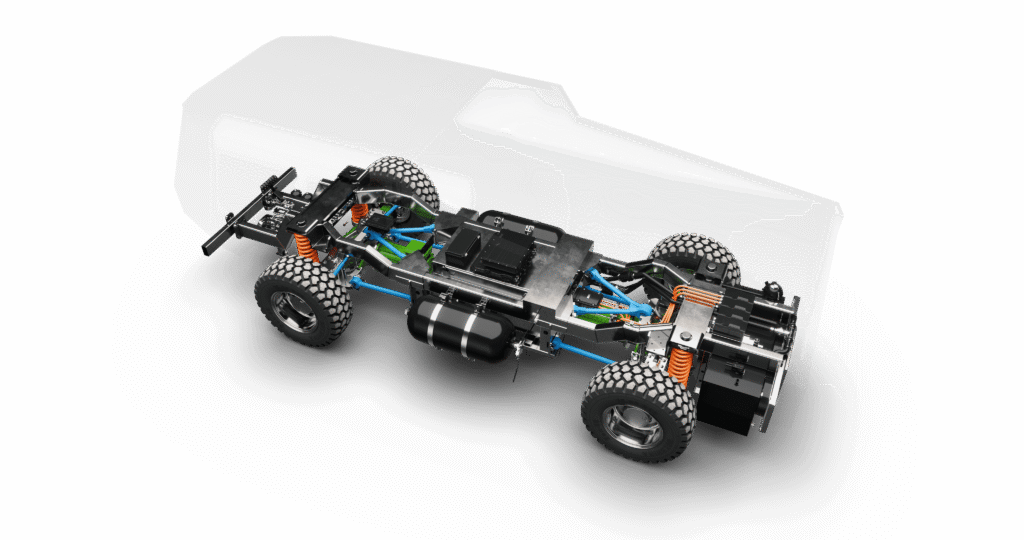
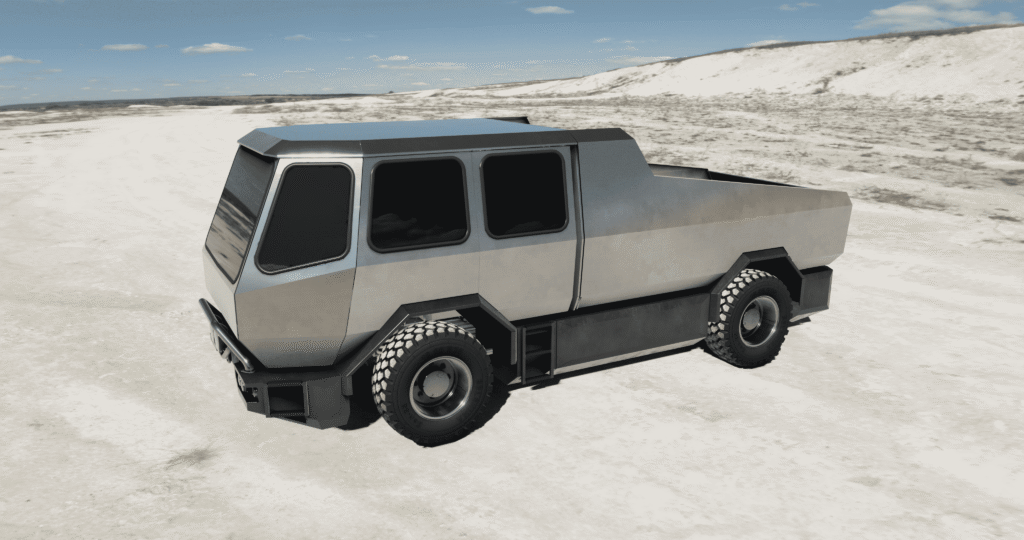
For the final project year, the key milestones ahead are the commissioning of the prototype, extensive test bench campaigns, and field tests under real operating conditions.
A boost for fuel cell powered vehicles in construction, mining and beyond
The Hy.CoMM project is helping make hydrogen-powered vehicles and machines scalable and adaptable for a wide range of users, from industry and suppliers to academia and society. End users in construction, mining, forestry, agriculture, and municipal services benefit from zero-emission solutions. These solutions deliver performance and comfort comparable to conventional vehicles, while reducing noise and environmental impact.
Manufacturers in Germany, Austria, and Switzerland gain from collaborative development and knowledge exchange, with technology that can be adapted to diverse mobile machinery and specialized vehicles. Academic partners benefit from a foundation for further research. The results are shared via publications, conferences, and networks like the Clean Energy Transition Partnership.
Altogether, findings and data gathered in Hy.CoMM will help reduce reservations and pave the way for the adoption of hydrogen-powered vehicles in construction and mining applications. In the long term, the project thus contributes to the EU’s clean energy transition goals.
References:
- Website https://www.hycomm-project.de/
- Zinner, C., Weber, M., Ufert, M., Lechleitner, D., Hofstetter, M., Lechner, B., Doppler, C., Grimm, M., & Lenk, M. (2025). Fuel Cell Vehicle for Mining and Construction Environment. In 46th International Vienna Motor Symposium Österreichischer Verein für Kraftfahrzeugtechnik.
- Singaravelan, T., & Ufert, M. (2024). A dynamic multi-physical proton exchange membrane fuel cell stack surrogate model with empirical ageing. In T. v. Unwerth & W.-G. Drossel (Eds.), Tagungsband: Fuel Cell Conference Chemnitz FC3 2024 (pp. 282–300). Wissenschaftliche Scripten.