
0,00 EUR

No products in the cart.

Home Blog

Surgeons’ sense of touch with robotic fingertips

New tech aims to restore tactile feedback in keyhole procedures

Modern surgery has gone from long incisions to tiny cuts guided by robots and AI. In the process, however, surgeons have lost something vital: the chance to feel inside the body directly. Without palpation, it becomes harder to detect tissue abnormalities during an operation. A group of surgeons and engineers across Europe is now trying to bring back this vital aspect of surgery.

Working within an EU-funded research collaboration called PALPABLE, they are developing a soft robotic “fingertip” that can sense how firm or soft tissue is during minimally invasive and robotic surgery. The research runs until the end of 2026, with a first prototype expected to be tested by surgeons around March 2026.

By combining optical sensing, soft robotics and AI, the team is designing a probe that mimics the way a fingertip presses and feels during surgery. It would gently probe organs and create a visual map of tissue stiffness, displayed on a screen to guide surgeons as they operate.

Losing the surgeon’s touch

For many surgeons, the loss of direct touch has been one of the quiet trade-offs of modern surgery. «We started 30 years ago with open surgery and using our fingers», said Professor Alberto Arezzo from the University of Turin, Italy. He specialises in minimally invasive and robotic surgery and mostly treats patients with colorectal cancer. «Then we moved into the era of keyhole surgery, which reduced tactile feedback because we began to use long instruments», he said.

From the 1990s, keyhole surgery became increasingly common, allowing surgeons to operate through small incisions with the help of a camera. Patients benefited from less trauma, shorter hospital stays and faster recovery. But this came at the expense of physical touch. That matters because tumours often feel different from healthy tissue – stiffer, less pliable or irregular – important differences that experienced hands can detect.
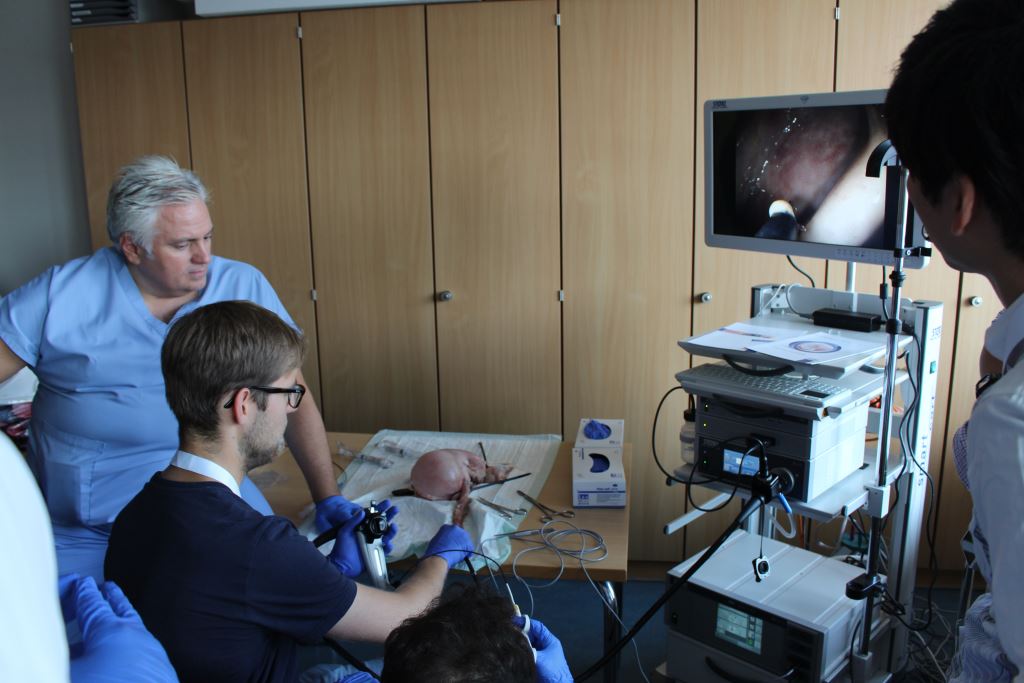
Prof. Alberto Arezzo (on the left) – supports hand-on Flexible Endoscopy

Finding tumour margins

When operating on cancer, surgeons walk a fine line: remove too much tissue and function may suffer; remove too little and cancer may remain, and then spread again, requiring more surgery. 

«We don’t want to do that. We want it done in one shot», said Dr Gadi Marom at Hadassah Medical Centre in Jerusalem, one of the clinicians involved in the research, who specialises in minimally invasive and robotic surgery on patients with stomach and oesophagus diseases. 

This is where sensing technology could help. By translating physical contact into visual information, such as a colour-coded map showing softer and firmer areas, surgeons could regain a functional equivalent of touch. «With a new instrument, we want to be able to determine the margins around a tumour», said Marom.

Using light to feel

To do that, engineers on the team are turning to light. The probe they are developing contains fibre-optic cables embedded in a soft, flexible tip. When pressed against tissue, the tip deforms and the light travelling through the fibres changes.

«A silicone dome presses against soft tissue, allowing us to map both the direction and the magnitude of the applied force», explained Dr Georgios Violakis at Hellenic Mediterranean University in Heraklion, Crete. Those tiny shifts in light intensity and wavelength are then translated into information about tissue stiffness.

From light signals to tactile maps

In the lab, the team has already built and calibrated early versions of the soft membrane and light-based sensors, with partners contributing across the system. Queen Mary University of London (UK) is helping design and refine the membranes, the Fraunhofer Institute (Germany) is developing the functional films, while Bendabl (Greece), Tech Hive Labs (Greece) and the University of Essex (UK) are advancing the software needed to visualise stiffness and tactile maps. The prototype will be validated in lab tests before it is used on patients.

The fibre‑optic cables are each about the width of a human hair. Similar sensing technology has long been used to detect small movements in large structures such as aircraft, skyscrapers and nuclear reactors. Here it is being applied on a much smaller scale to detect subtle differences in human tissue. 

«For touching organs inside an anaesthetised patient, the device needs to be both highly accurate and high resolution», said Professor Panagiotis Polygerinos, a soft robotics researcher at Hellenic Mediterranean University. «Something like this might have been possible sooner, but the technology would have been far more expensive and less precise, making it impractical for clinical use». 
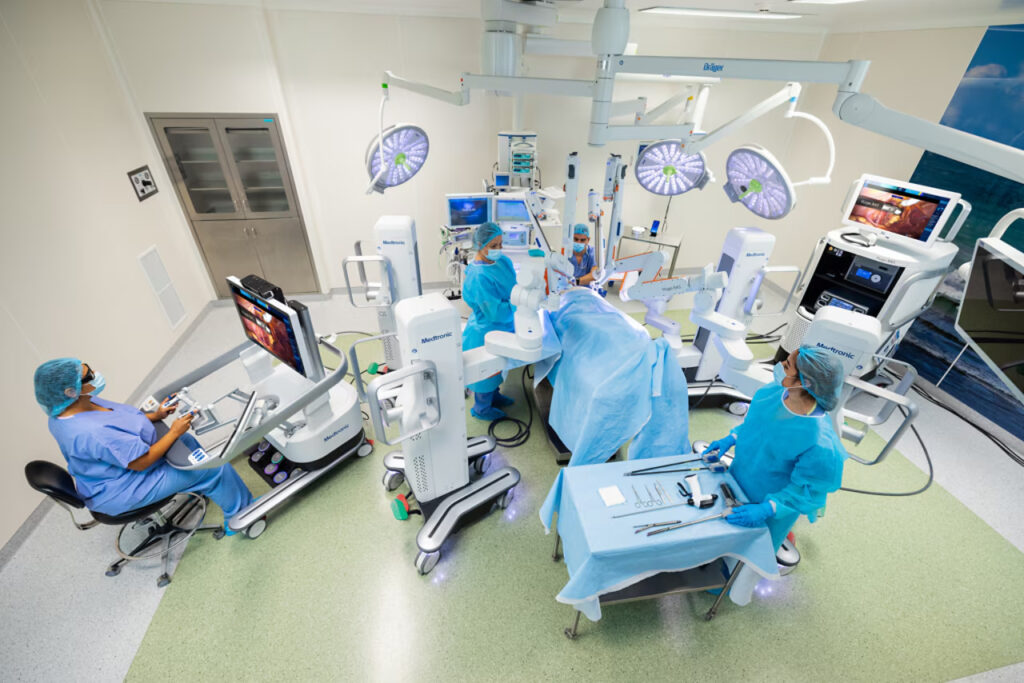
Robotic-assisted minimally invasive surgery in progress (representative image); highlighting theloss of direct tactile feedbck that new technologies aim to restore hans-on Flexible Endoscopy

Bringing touch to robots

As surgery grows increasingly robotic, the loss of tactile feedback is becoming more pressing – and restoring a sense of touch even more vital. «When I operate with a robot I have the advantage of 3D vision», said Marom. «And I don’t have to stand for the entire surgery». That matters in long procedures, such as removing a patient’s oesophagus, which can take up to eight hours. Robotic surgery also raises new possibilities. Marom hopes it may eventually allow surgeons, in carefully selected cases, to remove small tumours from the oesophagus without removing the entire organ.

But there is a downside. «In robotic surgery, tactile feedback is largely absent», said Arezzo. «That’s why this work is so important». Both surgeons believe robotics will continue to expand in operating theatres, but only if surgeons are given better sensory information.

«Sooner or later, I believe the vast majority of surgeries will be robotic», said Arezzo.

For Marom, working closely with engineers has been essential. «I am exposed to soft robotics and many new technologies», he said. «I see how new instruments can be developed».

«The bottom line is that we will be able to give better care to our patients», he added.

This article was originally published in Horizon, the EU Research and Innovation magazine
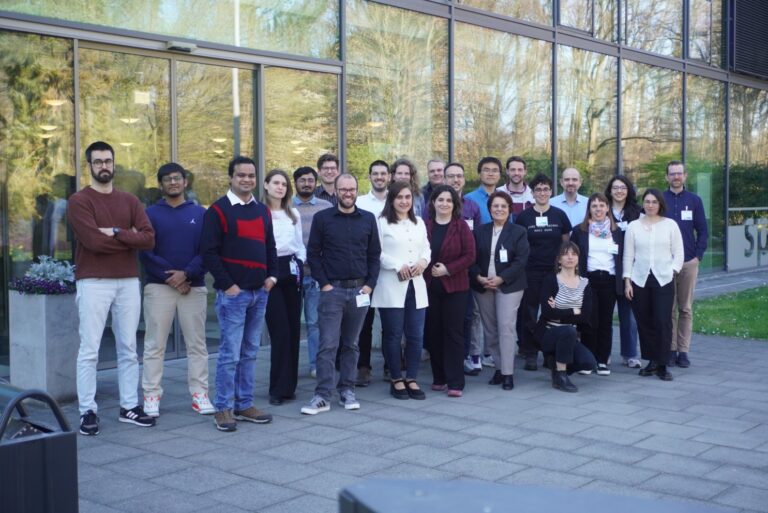
Advanced sensors for self-repairing batteries 

An early warning system in energy storage could help electric vehicles drive further, for longer, and with less environmental impact

The battery bottleneck in electric mobility

Batteries are one of the biggest speed bumps on the road to mass electric vehicle (EV) adoption. But what if they could not only last longer, but also repair themselves? That is the vision driving researchers like Johannes Ziegler and Liu Sufu, who are working to make it a reality. EV sales in Europe are surging, up 20% in February compared to the same month in 2024. EVs are essential for electrifying our transport and reducing planet-wrecking carbon emissions, but their journey is not without challenges. 

Most EVs rely on lithium-ion batteries, similar to those in our phones, but much larger and more complex. An EV battery contains tens of kilograms of valuable metals – lithium, nickel, and copper – and must last over a decade, matching the expected lifespan of an EV. 

The PHOENIX Project: a self-healing breakthrough

To tackle this challenge, a team of researchers has joined under the EU-funded PHOENIX initiative, aiming to develop self-healing batteries. Their goal is to extend battery life, make them safer and reduce the need for new battery metals. 

«The idea is to increase battery lifetime and reduce its carbon footprint, because the same battery can repair itself so that fewer resources are needed overall», said Ziegler, a materials scientist at the Fraunhofer Institute for Silicate Research ISC in Germany.

In 2023, the EU identified 34 materials as critical, including battery metals such as lithium, nickel, copper and cobalt. Researchers named the PHOENIX project after the mythical bird that rises from its own ashes – a fitting symbol of the rebirth and renewal they hope to achieve in battery technology.

And the stakes are high. EU legislation requires all new cars and vans sold from 2035 onwards to generate zero emissions. The aim is to significantly cut greenhouse gas emissions from the transport sector. For that to happen, electric cars will need better batteries.

Sense and trigger

When batteries age, performance fades

Anyone who owns a smartphone knows the frustration with batteries: after a few years, their lifetime plummets. The same issue plagues EVs, just on a larger scale. This happens because repeated charging and discharging over time degrade parts of the battery.

Scientists from Belgium, Germany, Italy, Spain and Switzerland are collaborating to design sensors that detect changes within a lithium-ion battery as it ages, and trigger the battery’s self-healing when needed. 

The aim is to double the lifetime of the batteries and, by extension, the life of EVs.

Today, battery management systems (BMS) – the brains of a battery – monitor the voltage and temperature of a battery to ensure it does not overheat and cause safety problems. «Currently, what is sensed is very limited in general temperature, voltage and current. In addition to providing an estimation of the remaining energy availability, it ensures safety», said Yves Stauffer, an engineer at the Swiss Centre for Electronics and Microtechnology (CSEM), an innovation centre that develops disruptive technologies. Stauffer leads the BMS research.

From sensing to self-healing

The PHOENIX team aims to go further by introducing advanced sensors and triggers. Some of them will detect when the battery expands, others will generate a heat map, and some will watch for dangerous gases such as hydrogen or carbon monoxide. All these sensors will provide an early warning system for battery health. When the battery’s brain decides repair is needed, healing is activated. This could mean squeezing the battery back into shape, for example, or applying targeted heat to trigger self-repair mechanisms inside.

«The idea is that under thermal treatment, some unique chemical bonding will bounce back», said Sufu, a battery chemist at CSEM who also works on PHOENIX.

Another self-healing approach uses magnetic fields to break up dendrites – branching metallic structures that form on battery electrodes during charging and can cause short circuits and failures.

Size matters

PHOENIX researchers also aim to increase the range of EVs and reduce the size of batteries. 

«We’re trying to develop next-generation batteries with higher energy density», said Sufu. That means an EV would require a smaller battery, which would make it lighter and allow it to drive further on a single charge.

One strategy is to replace graphite, the material used in pencils, with silicon, which sits somewhere between metals and non-metals. This is not widely adopted in today’s commercial batteries, partly because silicon is less stable and its volume can expand up to 300% during charge and discharge, Sufu said. With silicon inside, a battery would have to be able to survive these drastic changes or repair itself. 

In March 2025, a new batch of sensor prototypes and triggers was developed and shipped to partners for testing on battery pouch cells – flexible, lightweight, and flat lithium-ion batteries. However, while loading a battery with sensors is great for providing information on its health status, it also adds to the cost. The team is therefore identifying which technologies deliver enough benefit to justify the cost of EVs.

Whichever approach prevails, it will enable future EVs to last longer and drive further, with safer, more compact, and less resource-intensive batteries. Extending battery life will also reduce the carbon footprint of EVs, offering a win-win for both consumers and the environment. «It is exciting to prolong the lifetime of batteries and work on EVs», said Ziegler. «It is all about bringing the parts together».

Reference:

This article was originally published in Horizon, the EU Research and Innovation magazine.

More info: phoenix-smartbatteries.eu

Why it matters for industry

This initiative promises batteries that are safer, longer-lasting, and less resource-intensive. The potential benefits are for electric vehicle manufacturers, energy storage systems, and all sectors relying on battery tech. By combining sensing, repair, and intelligent control, PHOENIX aims to reduce waste, lower lifecycle costs, and improve performance.