Two Coordination and Support Action calls are now open, targeting digital health innovation and regulatory capacity building
In a major push to combat some of the world’s most pressing health challenges, the Global Health EDCTP3 Joint Undertaking has announced a significant funding package for 2026. With up to €147 million earmarked for research and innovation, the initiative will support new projects tackling tuberculosis (TB), lower respiratory tract infections, HIV, and the growing threat of infectious diseases fueled by climate change. «At a time when global funding is under increasing pressure, Global Health EDCTP3 continues to invest in research and innovation for those who need it most», said Dr Michael Makanga, Executive Director, Global Health EDCTP3. «Sustained collective effort – he added – is essential to address the multiple challenges that infectious diseases continue to pose to global health security. I am deeply grateful to the European Union, our contributing partners, and member countries for supporting us in this endeavour».
New funding opportunities on the table
The Global Health EDCTP3 Work Programme 2026 outlines a diverse portfolio of funding streams designed to address critical gaps in global health research. Central to the programme are four Research and Innovation Action (RIA) topics. These are focused on developing next-generation TB drugs, improving the prevention and management of lower respiratory tract infections, advancing comprehensive strategies for HIV and its co-infections, and confronting the intricate nexus between climate and health. The calls for these topics closed in early March 2026.
In a strategic move to maximise impact, the four RIA topics have been designated as “global collaboration actions”. This designation is designed to leverage co-investments from partner organisations and enable large-scale clinical studies. Applicants for these topics will be evaluated against two additional award criteria in the second stage, which assess the co-funding contributions they have secured from other sources.
In parallel, two Coordination and Support Action (CSA) calls have been launched to bolster the research ecosystem from the ground up. Consortia are invited to submit their full proposals for these CSAs by a single-stage deadline of 2nd September 2026.
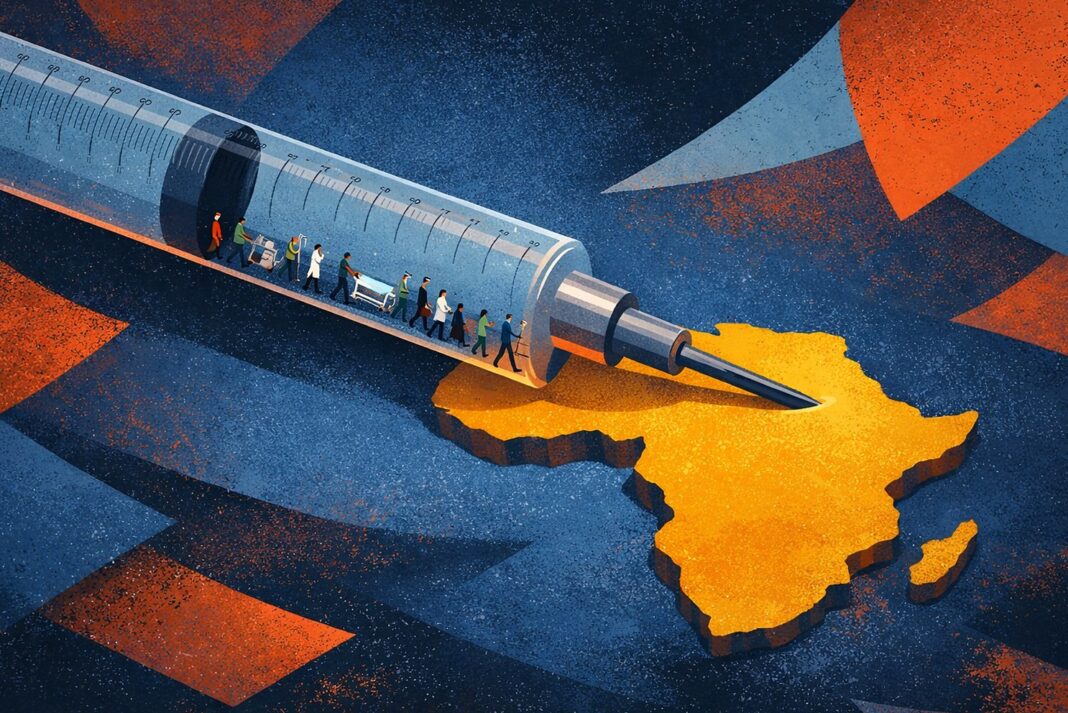
First CSA call: bridging the digital divide in African Health Systems
With a budget of €18 million to support up to eight projects, this first CSA aims to strengthen the clinical research and innovation workforce. It focuses on enhancing talent retention, facilitating the exchange of best practices, and accelerating the integration of digital tools—such as mobile health platforms, electronic health records, and artificial intelligence (AI)—into national and sub-regional health systems.
Despite rapid technological advances globally, sub-Saharan Africa (SSA) risks falling further behind. Digital tools in the region remain fragmented and incompatible, while AI models are often developed without representative data from SSA populations. This call seeks to address these disparities by uniting national governments, regional bodies, researchers, healthcare providers, and private sector partners. The goal is to build the coordinated infrastructure needed for scalable and inclusive digital health ecosystems.
Second CSA Call: strengthening ethics, regulation, and safety
Allocated €15 million to support up to 10 projects, the second CSA targets a fundamental pillar of health research: governance. Ethics committees, regulatory agencies, and pharmacovigilance (PV) systems across sub-Saharan Africa continue to face significant hurdles, including limited resources, insufficient training, and fragmented digital infrastructure. These challenges can delay clinical trial approvals, compromise safety reporting, and impede access to life-saving products.
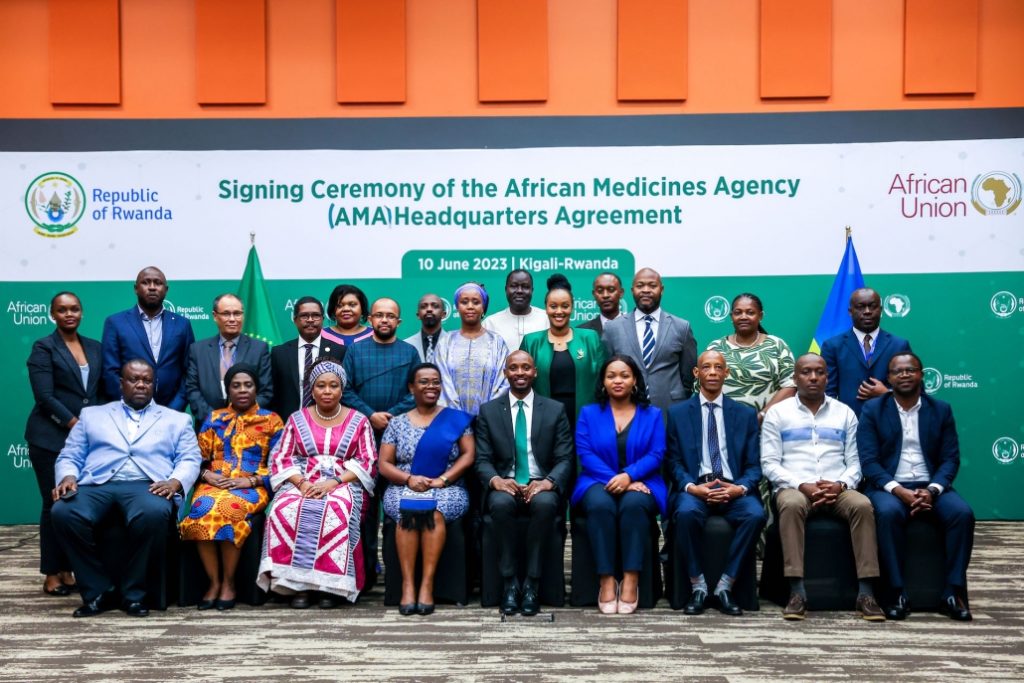
While initiatives like the African Vaccines Regulatory Forum (AVAREF) and the African Medicines Agency (AMA) have made strides, this call aims to scale and sustain these efforts. It will establish training networks, twinning programmes, and innovation hubs to bolster workforce capacity and harmonise regulatory processes. A core component is the development of a robust digital health ecosystem—including the strategic use of AI—to enhance collaboration, streamline approvals, and accelerate the delivery of health solutions across the continent.
A legacy of partnership and progress
This latest funding cycle is the newest chapter in a partnership that spans more than two decades. Since its establishment in 2003, the European & Developing Countries Clinical Trials Partnership (EDCTP) has evolved from a pioneering vision into the world’s largest health research funding partnership between Europe and Africa. Its core principle has remained constant: that equitable, African-led research is essential to addressing the continent’s unique health challenges.
The impact of this collaboration is measurable and profound. EDCTP-supported research has already delivered nine major innovations that are saving lives, ranging from the first malaria vaccines to new paediatric formulations for HIV, TB, and neglected tropical diseases. Beyond product development, the programmes have empowered over 3,000 African scientists and health professionals. Many of these researchers have gone on to lead major institutions and research programmes across the continent, creating a durable legacy of scientific leadership.
Now in its third iteration, Global Health EDCTP3 continues this mission, funding clinical trials in areas of high unmet medical need, training the next generation of researchers, strengthening clinical research ecosystems, and bolstering global health security. The emphasis remains on fostering a partnership of equals, where African and European institutions collaborate on shared priorities.
Strategic response to global challenges
The need for such a partnership has never been more urgent. Despite some progress, the Global Action Plan for Healthy Lives and Well-being for All, launched at the United Nations General Assembly in September 2019, noted that extra efforts would be required if the health-related Sustainable Development Goals (SDGs) were to be met by 2030. The plan identified research and development (R&D) as a key accelerator of progress and emphasised the importance of global collaboration and alignment.
For infectious diseases that predominantly affect low- and middle-income countries (LMICs), commercial incentives remain limited, discouraging the substantial investment needed to develop and evaluate new vaccines, diagnostics, and treatments. Innovative models of collaboration across public and private sectors, national governments, and regional and global agencies are therefore essential to bridge this gap.
As a strategic partner, the European Union has consistently sought to enhance cooperation with Africa to address challenges that are global in nature yet often hit the continent hardest. The Comprehensive Strategy with Africa, the Global Approach to Research and Innovation, and the AU-EU Innovation Agenda represent the EU’s most recent policy initiatives prioritising research and innovation as a cornerstone of sustainable development. More recently, the EU Global Health Strategy has provided a framework for health policies leading up to 2030, setting policy priorities and guiding principles that include tackling infectious diseases. Within this framework, Global Health EDCTP3 is explicitly recognised as a key initiative for supporting the strategy’s implementation—a testament to the programme’s central role in shaping the future of global health collaboration between Europe and Africa.
Portfolio of impact
Since 2022, Global Health EDCTP3 has funded a total of 107 projects with a combined contribution of €430 million. This portfolio is a testament to the partnership’s balanced and collaborative nature.
The projects include 91 initiatives (€413 million) focused on accelerating medical countermeasures for infectious diseases, and 16 projects (€17 million) dedicated to capacity building, networking, and training. Involving 406 entities from 64 countries, the partnership is a true model of equitable cooperation: 49% of participants are based in Africa and 44% in Europe, with the remaining 7% coming from other regions. Education and research organisations make up 65% of the participants, while small and medium-sized enterprises (SMEs) and private for-profit institutions are involved in nearly 60% of the projects.
Funding priorities: a data-driven snapshot
An analysis of the funded portfolio reveals a clear strategic focus on the most pressing disease burdens. Malaria receives the largest share of funding at €92 million, accounting for 21% of the total. It is closely followed by neglected infectious diseases (NIDs) at €80 million (19%), and emerging and re-emerging infectious diseases (EIDs) at €53 million (12%). Tuberculosis (TB) and HIV are each allocated €49 million, representing 12% and 11% respectively.
Smaller portions are dedicated to cross-disease research and other childhood infectious diseases (7% each), lower respiratory tract infections (LRTIs) (6%), and diarrhoeal diseases (4%). Sexually transmitted infections (STIs) and other co-infections receive 1% of the total funding.
Strong investment in therapies, diagnostics and vaccines
When examining the type of health intervention, a strong emphasis on treatment is evident. Therapies receive by far the largest share of funding, with €169 million, accounting for 39% of the total. This indicates a major focus on developing and improving treatments for diseases. Diagnostics represent the second largest category, with €75 million (17%), highlighting the importance of detecting diseases accurately and early.
Vaccines account for €63 million, or 15% of the total, reflecting continued investment in preventive immunization strategies. Surveillance tools receive €54 million (13%), supporting efforts to monitor and track disease outbreaks and trends. A smaller portion of the budget is allocated to other prevention tools, which receive €44 million (10%), while cross-intervention and non-specific activities receive the least funding, with €26 million, corresponding to 6%.
This distribution highlights a comprehensive strategy: while a clear priority is placed on developing and improving treatments, significant investments in diagnostics, prevention, and surveillance ensure a balanced approach to strengthening health systems and tackling infectious diseases at every level.