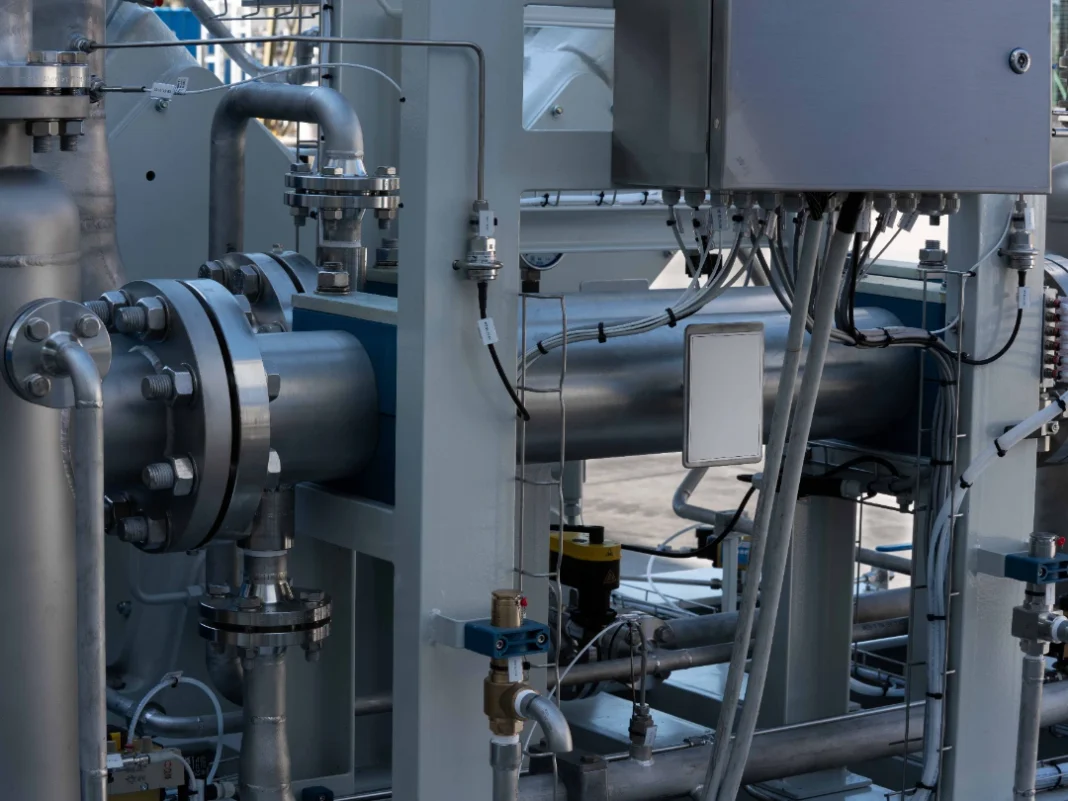
For TECNOCRYO, sustainability also depends on the ability to maintain the efficiency, reliability and value of its systems over time.
When we talk about sustainable innovation, the focus is often on new technologies, alternative energy sources or reducing emissions. However, there is a less obvious, and deeply industrial, aspect of sustainability: ensuring that what has already been designed and built operates better, and for longer.
In this sense, the maintenance, repair and efficiency of systems take on a significance that goes beyond mere technical intervention. Extending the service life of a piece of equipment means preserving the investment made in its construction, reducing premature replacements, limiting the use of new components and materials and, at the same time, maintaining performance and safety over time. This principle is particularly relevant in the cryogenic sector, where reliability and precision are essential requirements.
TECNOCRYO, an Italian company founded in 1992 and specialising in the design, manufacture and installation of machinery, plants and equipment for the treatment of cryogenic fluids, operates across the industrial supply chain for technical, pure, medical and food-grade gases, whilst also developing solutions for applications such as LNG and new hydrogen-related systems.
Sustainability through longevity
In an industrial system, sustainability does not necessarily mean introducing new technology. It can also mean preventing equipment that is still technically sound from being replaced before it is necessary. Proper maintenance enables the equipment to retain its intended operating conditions over time, by addressing component wear and tear before it leads to machine downtime or a more serious breakdown. Repair, where technically feasible and appropriate, allows functionality and value to be restored, avoiding the automatic resort to complete replacement. It is an approach that combines technical and economic sustainability: making better use of an industrial asset also means maximising the value of the resources, capital and expertise used to produce it over a longer period.
In the cryogenic sector, this principle takes on even greater significance. A loss of efficiency is not merely a maintenance issue; it can lead to product loss, reduced performance, increased operating costs and, in the most critical cases, it can compromise the reliability and safety of the system.
From breakdown maintenance to scheduled maintenance
It is precisely in this area that after-sales service becomes an integral part of the technology. TECNOCRYO has structured its support services to include preventive maintenance, unscheduled repairs, spare parts supply and predictive maintenance, the latter supported by the monitoring of equipment operating hours and the scheduling of maintenance work in accordance with specific maintenance schedules.
The principle is simple yet strategic: not necessarily waiting for a breakdown to occur before acting. Moving from a predominantly reactive approach to a planned management strategy means being able to organise maintenance interventions before wear and tear compromises the machine’s operation. This results in greater operational continuity, better planning of downtime and a greater ability to maintain the system’s efficiency over time.
Added to this is remote control. Using PLC and HMI systems, TECNOCRYO technicians can provide remote assistance and, where technically feasible, monitor and operate the systems in real time. This, too, helps to ensure more timely support and avoid on-site visits when they are not necessary.
Repairing also means conserving resources
This is where maintenance and repair truly align with the concept of sustainability. Industrial equipment comprises materials, manufacturing processes, energy, transport, design and labour hours. Properly extending its operational life means utilising all these resources for longer, spreading the financial and material investment over a longer period. It does not mean keeping a machine running at any cost. When performance, safety or technology make replacement necessary, renewal remains essential. Rather, it means avoiding replacement as a matter of course and introducing a technical assessment: maintaining when needed, repairing when possible, replacing when truly necessary. This is a practical form of resource conservation and, for an industrial company, also of economic sustainability. Durability thus becomes a hallmark of product quality: not merely the ability to perform a function correctly at the time of purchase, but the capacity to preserve its performance, safety and value over time.
Sustainability that also begins with the production process
This approach is reflected in several decisions taken directly by the company. At its production site in Basiano, TECNOCRYO has been using energy from solar panels for over ten years and sends 100% of its packaging waste for recycling.
These actions go beyond routine maintenance but are rooted in the same principle: reducing waste and making more efficient use of available resources. This is probably one of the most tangible examples of ecological innovation in the industrial sector. It is not a single project designed to solve every environmental problem, but a series of technical, production-related and organisational decisions capable of progressively improving the use of resources.
Innovation also means designing with time in mind
In an industrial market increasingly driven by the pace of innovation, there is therefore one factor that retains its value: durability. For TECNOCRYO, design, support, maintenance and technical expertise form part of the same cycle. A system does not reach the end of its life cycle the moment it is installed: it continues to generate value to the extent that it can be kept running efficiently, monitored, serviced and, where necessary, repaired. It is a less spectacular view of sustainability, but perhaps all the more concrete for that.
Because producing better is important. But ensuring that what has been produced well lasts just as long can be equally important.