The revolution starts in warehouses and where tasks are structured. Domestic adoption will follow slowly, shaped by cost and trust
Social robotics has moved beyond the experimental phase and is entering industries, hospital corridors, classrooms, logistics hubs, and public services. As is often the case in major technological transitions, the real question is not whether the solution works, but how and where it will be integrated.
This is the belief of Paolo Dario, Professor Emeritus at the Sant’Anna School of Advanced Studies in Pisa and Scientific Director of the ARTES 4.0 robotics competence center: social robots, or companion robots, represent a new dimension of our daily lives. Factories, hotels, fields, schools, shopping malls, airports, hospitals: social robots are and will increasingly become an integral part of these environments, working alongside humans without replacing them.
Confirming this are reports such as “Social Robots and Society: Global Pathways to Acceptance”, recently published by the UAE Centre for the Fourth Industrial Revolution in collaboration with the Dubai Future Foundation. Professor Dario serves there as Chief Scientist. In the healthcare sector alone, nearly 280 use cases have been mapped across 33 countries, with over 50 different models already deployed in real-world settings.
From emerging applications to a strategic industrial opportunity
The study is the result of an international research effort developed in recent years, in which Dario participated. «Social robotics is one of the most advanced expressions of the convergence between technology and human needs. Today, we have systems capable of operating in complex environments, understanding people, and supporting them in sensitive areas such as healthcare, education, and public services. The growth of applications globally demonstrates that social robots are a concrete reality contributing to well-being, inclusion, and the quality of services. They can also be an effective lever to boost European manufacturing, which can become a leader in this field. We already have everything we need to do so. We just have to want to seize this challenge, which is cultural before it is economic».
Diffusion and acceptance
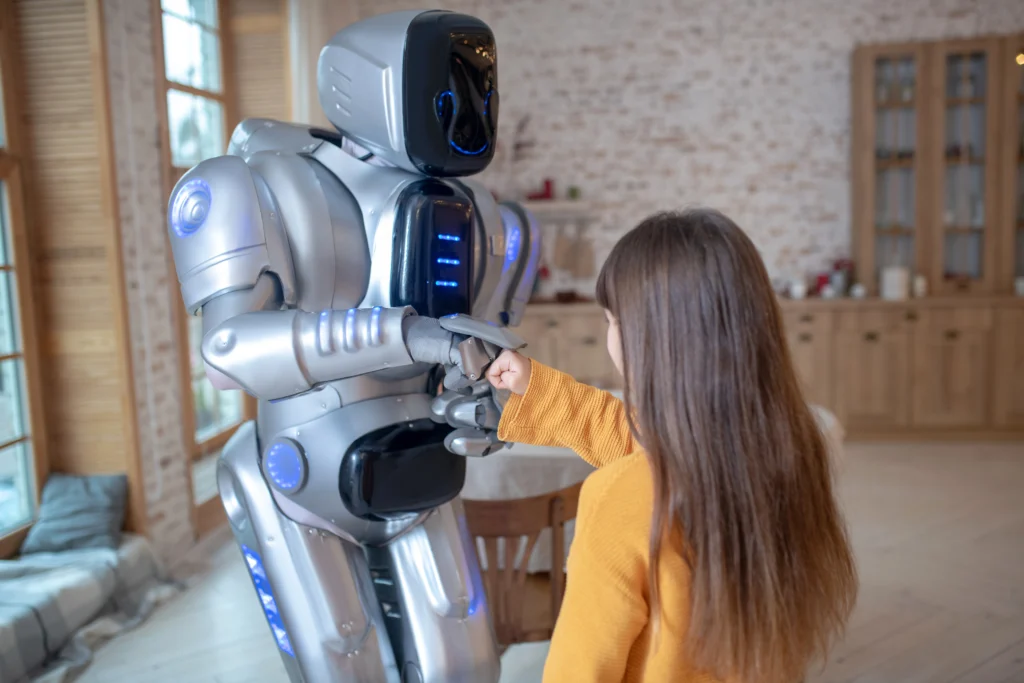
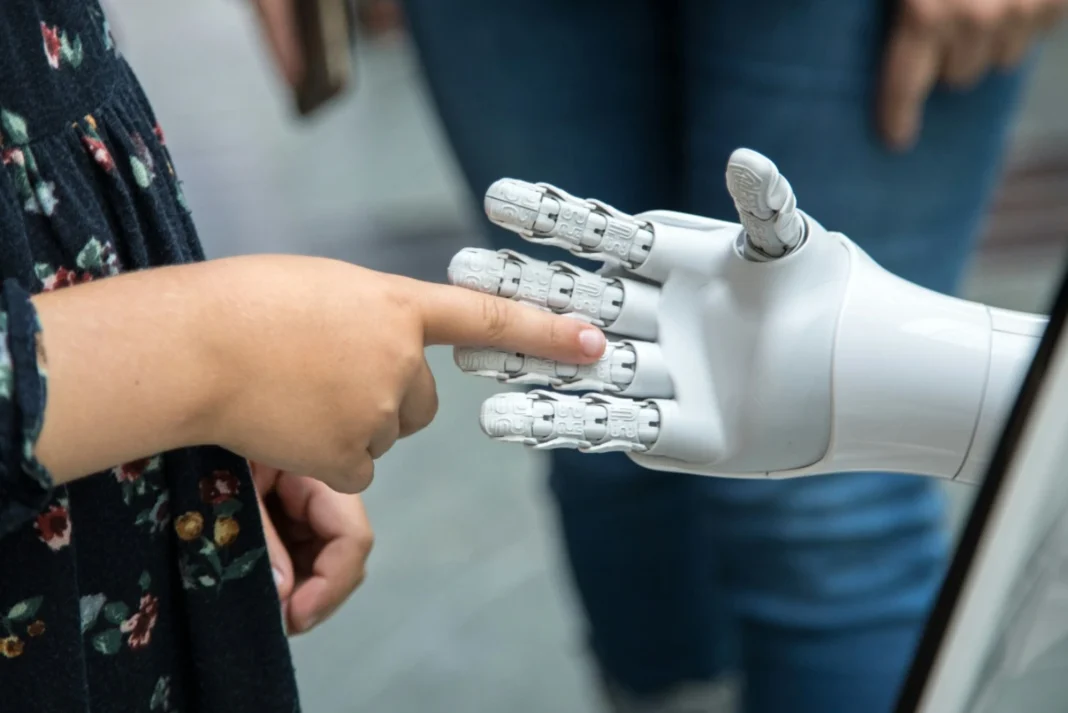
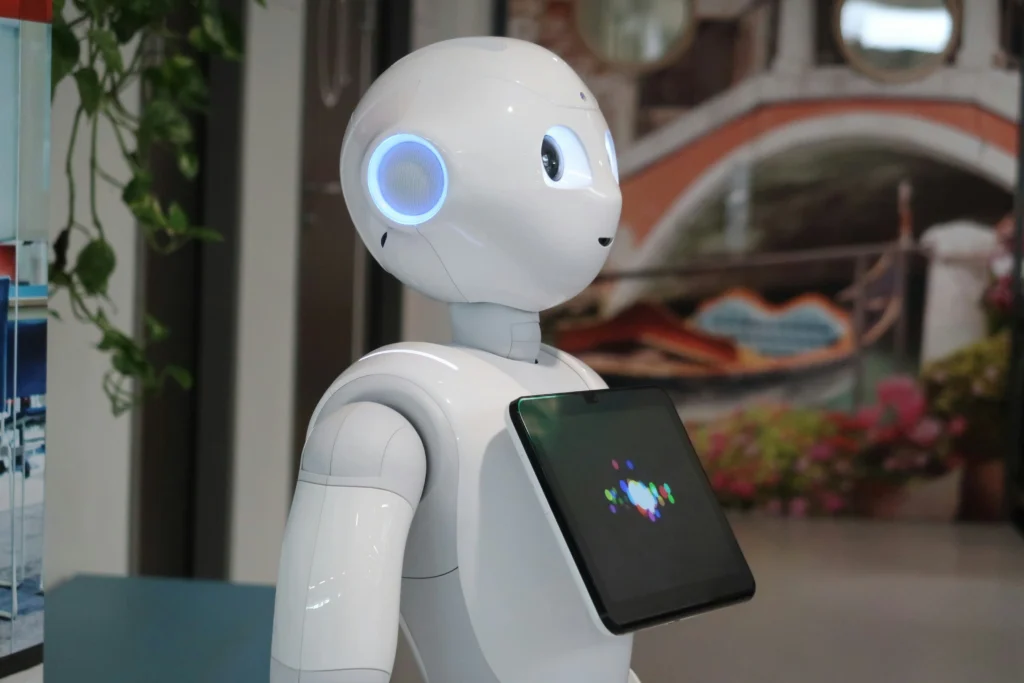
Unlike industrial machines, confined for decades within defined production perimeters, these robots are designed to interact. They are true companion robots, also thanks to the use of artificial intelligence. They speak, recognise faces, respond to contextual stimuli, and modulate their behaviour and expression. They sit at the intersection of robotics, cognitive sciences, and social psychology, transforming the machine into a relational interface.
According to the report, the healthcare sector is currently the main driving force. During the COVID-19 pandemic, more than 85 models of social robots were used in hospitals and care facilities for medication delivery, patient monitoring, environmental disinfection, and psychological support. In countries like Japan, demographic ageing has necessitated a structural rethinking of care models. There, social robotics has become a systemic component of the healthcare ecosystem. Education also shows promising signs, with increased student engagement, benefits in inclusive settings, and support for language learning.
A survey conducted by the Dubai Future Labs on over a thousand residents highlights an interesting dynamic: anthropomorphic robots are perceived more positively than digital avatars. A humanoid design that is still recognizable as robotic is preferred. Commercial contexts are found to be more acceptable compared to hospitals and schools, where greater resistance emerges. The most appreciated functions are information provision, wayfinding, and multilingual support. Less well-received are activities involving conflict management or a strong emotional component.
Europe’s ethical approach as a pathway to responsible adoption
Penetration in Europe, however, remains more uncertain. The reasons are well-known: stringent regulatory constraints and a different cultural sensitivity towards the automation of areas with high relational intensity. «Here, the ethical values and our history, which make European culture great in the world, also act as a deterrent to radical innovation», explains Professor Dario. «In Europe, the issue is not to slow down innovation, but to guide it. Our values, our history, and our attention to the ethical dimension are a strategic resource. If we can integrate them from the design phase of social robots, we will be able to define more responsible, reliable, and sustainable models of human-machine interaction. This is Europe’s opportunity: not to chase other models, but to propose its own vision, in which technology, society, and industry grow together».
A $5 trillion annual market by 2050
Investment bank Morgan Stanley also views humanoid robots as an emerging mega-industry that could impact labour, production, and finance more than the market currently recognises. According to the Wall Street financial institution, the bulk of the value will be generated first in professional settings, where tasks are more structured and the economic return is more measurable, and only later in homes. The estimates in the report Humanoids: 1bn Robots and $5tn Revenues by 2050, China is in Pole Position indicate that by 2036, cumulative adoptions will be approximately 23.7 million units. By 2040, they will rise to about 134.4 million. By 2044, they will reach approximately 428 million. And by 2050, the global figure will hit 1.019 billion humanoid robots. In terms of annual revenue, Morgan Stanley indicates around $211 billion in 2035, $1.2 trillion in 2040, and $4.7 trillion in 2050.
The projected growth in humanoid robot adoption would not be linear. Morgan Stanley does not envision an immediate mass diffusion. Rather, it predicts a still-modest start in the 2020s and early 2030s, followed by a sharp acceleration between the second half of the 2030s and the 2040s. The report links this acceleration to three converging forces:
- The first is the improvement of technology, both hardware and software, with artificial intelligence models better suited to handling general tasks in the physical world.
- The second is the decline in prices, driven by economies of scale and maturing supply chains.
- The third is the increase in social and political acceptance, which is still a constraint today but, according to Morgan Stanley, will tend to grow over time.
Why commercial adoption is expected to outpace the home
Another crucial point in the report is the distinction between commercial and domestic use. Morgan Stanley analysts predict that in 2050, the vast majority of humanoids will be employed in professional and productive settings. The estimate is approximately 935 million commercial humanoids compared to about 84 million domestic humanoids. In other words, around 92% of the projected adoptions would be linked to the world of work, while 8% would involve households. In Morgan Stanley’s view, the business and adoption of humanoids will be found in their use in factories, logistics, warehouses, services, infrastructure, and other commercial environments. Homes will come later and with more caution. The investment bank also offers an estimate – albeit with conservative assumptions – on diffusion in domestic settings: 84.2 million domestic humanoids by 2050. The reasons are threefold: price, social acceptance, and the greater complexity of artificial intelligence required in the home.
Industrial base, demand, production capacity
From a geographical perspective, the financial services firm expects that the largest share of cumulative adoptions by 2050 will be concentrated in the East Asia & Pacific region. This would account for approximately 43% of the global total. Following are Europe and Central Asia with about 16%, South Asia with about 12%, Latin America and the Caribbean with about 10%, and North America with about 9%.
Looking at individual countries, China alone would reach approximately 302 million humanoid robots adopted by 2050, while the USA would reach about 77.7 million. The distribution by income bracket is also indicative. Morgan Stanley estimates that by 2050, about 50% of cumulative adoptions will occur in upper-middle-income countries, 29% in high-income countries, 20% in lower-middle-income countries, and just 1% in low-income countries. In practice, the humanoid revolution, at least in the report’s view, will concentrate where industrial base, demand, and the capacity for cost-competitive production exist together.
For analysts, China is currently in pole position. Beijing starts from a strong position in the humanoid race thanks to the depth of its manufacturing base, its control over large portions of component manufacturing, its ability to scale production, and the integration between industry, industrial policy, and supply chains.
Labour economics and the scale of the humanoid opportunity
To estimate the professional market, Morgan Stanley starts from human labour. For the USA and China, it assigns to each type of occupation a certain degree of adoptability by a humanoid. From there, it builds a terminal estimate for 2050 and then distributes diffusion over time with an adoption curve that is slow at the beginning and subsequently much faster. The investment bank hypothesises that, by 2050, the number of commercial humanoids could equate to 41.3% of the 2023 workforce in the USA and 39% in China. For high-income countries, excluding the USA, the estimated share is 35%, for upper-middle-income countries 30%, for lower-middle-income countries 15%, and for low-income countries 5%.
To gauge the magnitude of the leap, the report argues that the humanoid market could become larger than the current global automotive industry, at least when looking solely at final vehicle sales. If supply chains, maintenance, repairs, and support services were added, the economic scale would be even broader. Morgan Stanley presents humanoids as a technology capable of reshaping manufacturing, productivity, supply chains, and even geopolitical balances. In practice, whoever controls the humanoid supply chain, they reason, will control a substantial part of the next automated physical economy.
Price declines as a driver of mass adoption
With their resemblance to humans in structure and proportions, humanoid robots have long exerted a strong fascination on the imagination. They also open up the vision of a future where they will find space in environments built to a human scale. Humanoids can be employed in numerous contexts: from assembling components on production lines to transporting goods in warehouses, from supporting nurses in hospitals to restocking shelves in stores, and assisting in elderly care and household activities. The potential of humanoid robots is real, but their diffusion on a commercial scale still depends on advancements in safety, autonomy, physical capabilities, and cost containment. If dexterity and safety measure their effectiveness, cost determines their sustainability.
According to Morgan Stanley’s estimates, by 2050, approximately 1 billion humanoid robots could be operational worldwide, with an annual market capable of generating between $4.7 and $5 trillion in revenue.
Underpinning the model is also the hypothesis of a gradual reduction in average selling prices. For high-income countries, the investment bank estimates an initial cost of around $200,000 associated with robots still largely intended for research. The price is then expected to decline to around $150,000 by 2028 and to approximately $50,000 around 2040. Beyond this temporal threshold, price reductions should continue at a moderate pace, around 1% per year, because the benefits of technological maturation would be partially absorbed by inflation and the reorganisation of supply chains. For middle and low-income countries, Morgan Stanley assumes lower starting prices, around $50,000 initially, falling to about $15,000 by 2050, thanks to mass production, localisation of supply chains, and manufacturing in the most cost-effective countries.
Trust and integration as the real long-term challenge
Social and humanoid robotics are not just a new market: they represent a new infrastructure for daily life. The real challenge lies not in technological capability, but in integration: building machines that earn trust, not just perform tasks. Europe’s ethical approach, often seen as cautious, may prove strategic. In a future where robots share our spaces, the ones that are trusted will matter more than those that are merely advanced.