

A System Under Pressure: The Textile Waste Bottleneck
The European textile industry is entering a critical phase in its transition toward circular economy models. The exponential growth of post-consumer waste, combined with the increasing structural complexity of modern materials, is exposing the structural limitations of current recovery and recycling infrastructure.
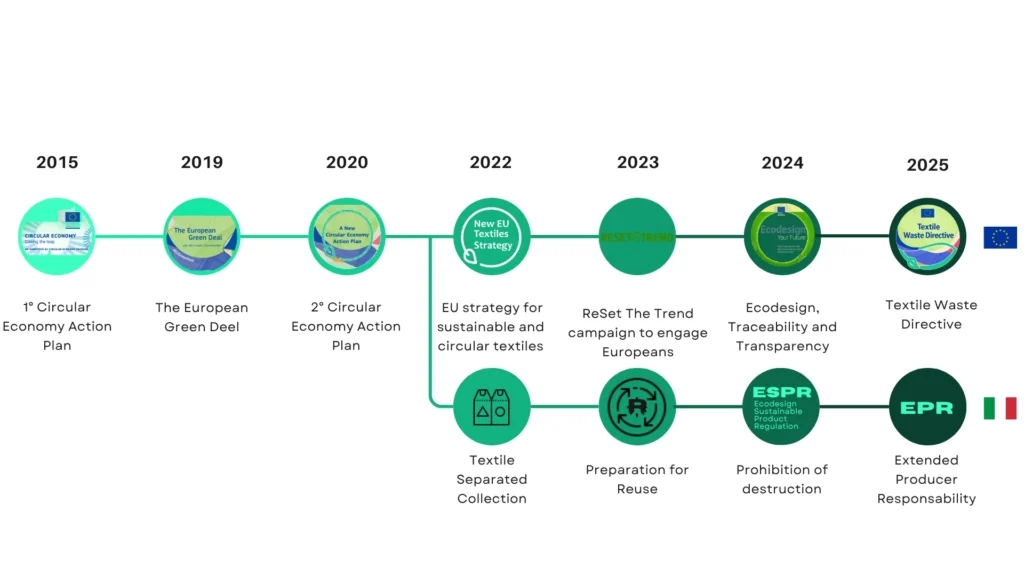
Despite a robust regulatory push—including strict ecodesign requirements and the phased introduction of Extended Producer Responsibility (EPR) schemes across the EU—the supply chain still struggles to transform highly heterogeneous waste streams into high-quality secondary raw materials.
To address this issue, Rete CAUTO (based in Brescia, Italy) is driving systemic change. Through its pioneer project TEC-TES—supported by the Lombardy Region via the RI.CIRCO.LO funding initiative—the social enterprise is piloting cutting-edge technological solutions designed to revolutionize the textile recovery supply chain.
The Strategic Nexus of the Supply Chain: Preparing Textiles for Recycling
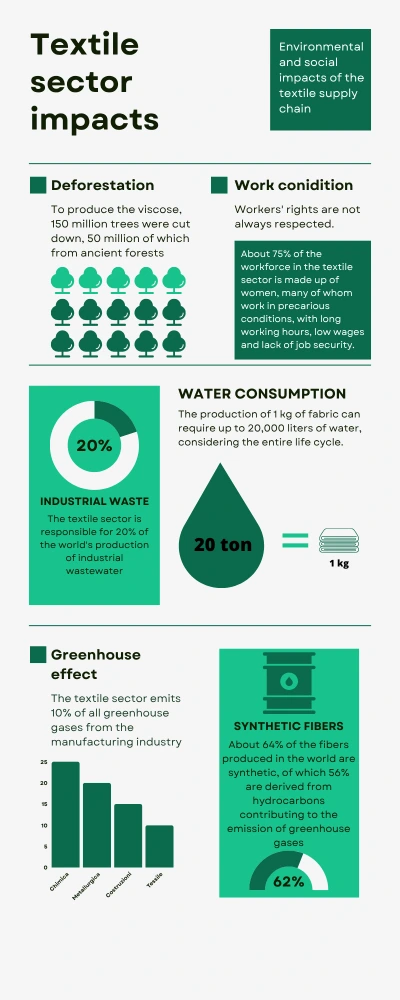
While EU regulations mandate an increasingly circular lifecycle, efficient collection systems remain scarce, and current technologies for textile sorting and recycling are inadequate for true circularity. Today, collected waste is rarely pre-sorted. Instead, it arrives at facilities as an extremely heterogeneous mix of material compositions, colors, and product categories (including apparel, home textiles, workwear, etc.).
In addition, these streams blend reusable and non-reusable garments, accessories (such as bags, belts, and shoes), contaminants, and non-textile fractions. To effectively route these materials into high-value reuse, recycling, and recovery streams, a highly precise sorting and selection phase is mandatory to homogenize the inputs.
Currently, sorting facilities rely almost exclusively on manual labor performed by specialized operators—a workforce that is increasingly difficult to source in today’s labor market.
This heavy reliance on manual operations severely restricts the overall throughput capacity of waste treatment plants. Furthermore, it bottlenecks downstream recycling, as the industry cannot consistently output clean, single-fraction material streams. To date, automated solutions applied to post-consumer textile sorting have lacked the scalability and maturity required to handle continuous, highly variable flows in real-world industrial environments.
THYSAR: Transforming Sorting from Manual Labor to Hyperspectral Automation
To overcome these structural sorting bottlenecks, Rete CAUTO has developed an innovative machinery concept: THYSAR (Textile HYperspectral Sorting Automation for Recycling). This system automatically selects and categorizes textile waste based on a multi-layered matrix of physical characteristics: fiber composition, color, and fabric weave texture.
The traditional standard for identifying fiber types relies on one-dimensional Near-Infrared technology (1D-NIR). While other circular sectors (such as plastic recycling) widely adopt 1D-NIR, the technology presents significant limitations when analyzing complex textile blends. Consequently, Rete CAUTO stepped beyond these limitations by integrating advanced Hyperspectral Imaging (HSI) techniques.
For this technological leap, they partnered with NEXT-TECHNOLOGY (NTT), a leading research center located in the historic textile district of Prato, Tuscany. NTT bypassed traditional sorting limits, allowing the machine to interpret infinite textile combinations with an accuracy rate over 90%.
The Anatomy of THYSAR: A Two-Block Industrial System
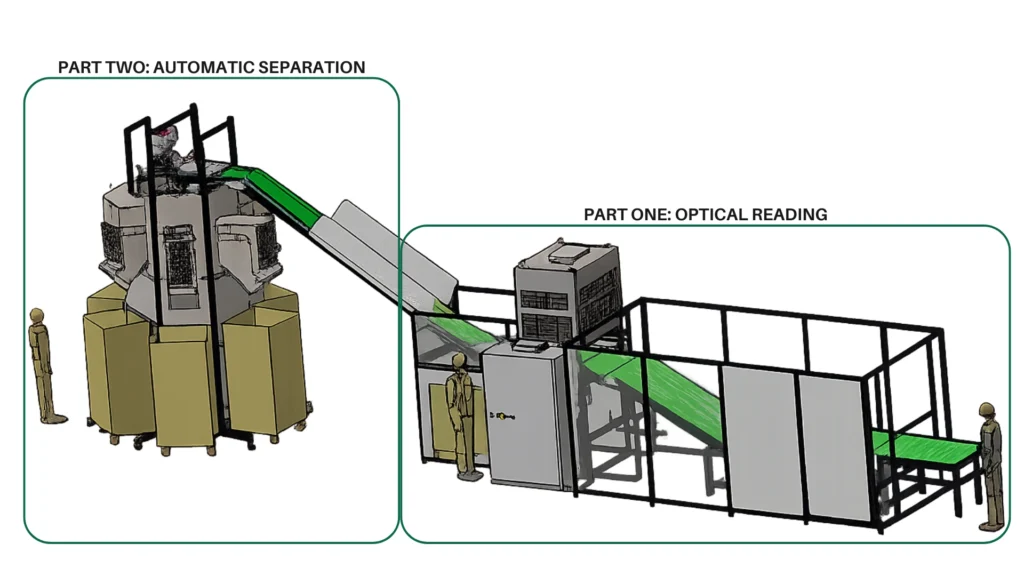
The THYSAR architecture is divided into two distinct, interconnected macro-blocks:
- 1. Optical Detection and Classification: This first block consists of an automated system that reads and classifies singularized textile items. It generates a comprehensive data vector for each piece, capturing composition class, color class, and the precise x-y coordinates for robotic gripping within the garment’s silhouette. The system maintains a stable, coherent output at conveyor belt speeds of up to 2 m/s, translating to an indicative throughput of 1 garment per second.
- 2. Automated Sorting and Routing: Once the items pass under the optical scan portal, they advance toward a proprietary gravity-drop sorting system. Unlike conventional systems that deflect items while still on the belt, THYSAR separates items during free fall at a single terminal sorting junction. After elevating the item to a height of 3 meters, the incline conveyor releases it into a rotating vertical duct. Using an oriented, high-precision air jet, the system alters the trajectory of the falling textile, directing it seamlessly into its designated collection bin.
THYSAR Technical Specifications & Core Capabilities
| Classification Parameter | Target Operational Capabilities & Classes |
| Mono-Material Classes | 100% Cotton, 100% Wool, 100% Polyester, 100% Viscose, 100% Acrylic, 100% Polyamide (Nylon) |
| Blended Fiber Classes | Cotton-rich (>70% cotton), Poly-rich (>70% polyester), Wool-blends (50% < x < 90%), Multilayer (Under active development) |
| Color Spectrum Classes | 9 distinct streams: White, Yellow, Brown, Red, Blue, Green, Grey, Black, and Multicolor (Advanced optimization ongoing) |
| Throughput & Accuracy | 1 garment/second at 2 m/s belt speed | >90% average reliability for target classes |
As an integrated system, THYSAR allows facilities to sort all types of textile waste by choosing specific combinations of fibers, colors, and textures based on the precise feed requirements of downstream recyclers.
Scaling Up to Industrial Viability (TRL 8)
The innovation introduced by THYSAR extends far beyond incremental performance metrics; it systematically resolves a structural failure in the textile value chain. As a result, operators can:
- Scale the sorting of highly complex, post-consumer textile streams to an industrial volume;
- Generate fully homogeneous, standardized, and traceable batches of secondary raw materials;
- Integrate real-time composition data directly into downstream manufacturing and chemical/mechanical recycling processes;
- Drastically reduce industry dependence on manual, non-replicable sorting skills.
Consequently, the sorting phase is transformed from a severe operational bottleneck into a core enabling infrastructure for global textile circularity. The technology currently operates at an advanced Technology Readiness Level of TRL 8, undergoing final validation in operational environments ahead of full commercialization.
Macro-Impact on the Textile Value Chain
The integration of automated sorting systems like THYSAR triggers positive cascading impacts across multiple socio-economic layers:
- Environmental: Substantially increases global fiber-to-fiber recycling rates while minimizing landfill and incineration fractions.
- Economic: Upgrades the market value of waste textiles by delivering high-purity, predictable output streams tailored to recycler specifications.
- Industrial: Boosts processing efficiency, operational scalability, and digital end-to-end traceability.
- Social: Elevates traditional manual labor roles into high-tech technical positions, aligning with modern inclusive cooperation models.
The project offers plug-and-play replicability for sorting facilities, cooperatives, and waste hubs, aligning perfectly with upcoming mandatory EU-wide EPR frameworks.
Rete CAUTO: Bridging Technology and Social Enterprise
Amid tightening regulations and complex technical challenges, Rete CAUTO uniquely unites advanced technology, social inclusivity, and supply chain development.
THYSAR serves as proof that operational bottlenecks can be engineered into systemic innovation opportunities. By turning waste into highly structured data and materials, it lays down a concrete, scalable foundation for Europe’s green transition.
Contact & Site Visits:
Companies, research centers, and European partners interested in developing advanced solutions for textile waste treatment are invited to connect with Rete CAUTO. Schedule a site visit to explore THYSAR’s operational capabilities and discuss future development perspectives.
Official Website: cauto.it/raccolta-e-riciclo-tessile