How interactive 3D models are transforming B2B sales and industrial processes
In industrial manufacturing, there is a paradox that companies know well: the more sophisticated a product is, the harder it becomes to describe. Complex machinery, articulated plants, and highly engineered solutions require technical explanations that are rarely effective outside of R&D offices. The result is a concrete distance between those who design and those who must sell—and, above all, between those who sell and those who must buy.
It is precisely within this gap that the evolution of the digital twin fits, being less and less confined to engineering simulation and increasingly oriented toward business.
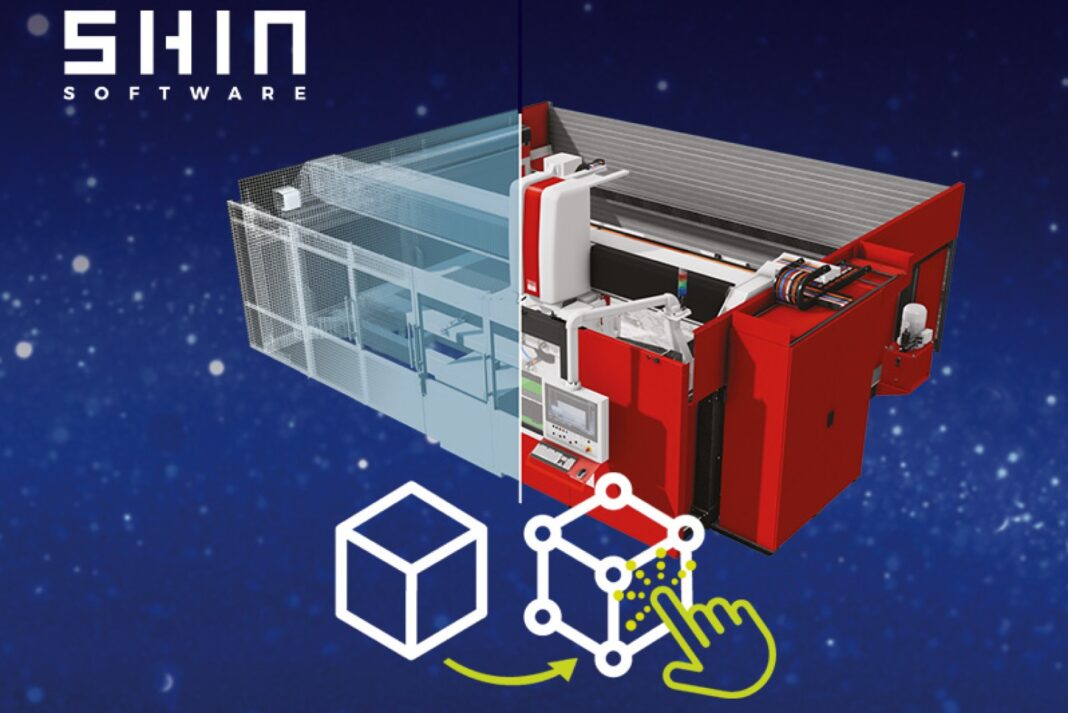
“Our digital twin 3D is a digital double that helps companies present their product even before they have built it,” explains Pasquale Raheli, Sales Manager at Shin Software. “But stopping at the presentation would be reductive: the true distinguishing element is the possibility to interact.”
This interaction marks a paradigm shift. It is no longer about showing a product, but about making it explorable and understandable.
When the catalog is no longer enough
For years, product storytelling in B2B has relied on static tools: catalogs, technical data sheets, renderings, and videos. These tools work up to a certain point, but they show all their limits when the level of complexity grows.
A two-dimensional CAD file may be perfectly clear to an engineer, but it becomes opaque to a non-technical decision-maker. Similarly, physically bringing a machine to a trade fair involves costs, risks, and logistical complexities that are increasingly unsustainable, especially in a context where margins are shrinking and pressure on sustainability increases.
“Often, those who make decisions do not have the tools to interpret a technical drawing,” observes Raheli. “This creates misunderstandings and slows down the decision-making process.”
In this scenario, the digital twin 3D proposes itself as a response that is not only technological but communicative.
From technical model to interactive experience
Shin Software’s proposal starts from a clear assumption: the value lies not in creating new models, but in making existing ones usable.
“We do not perform engineering simulation,” clarifies Raheli. “We start from what has already been designed to transform it into a tool usable in other corporate contexts.”
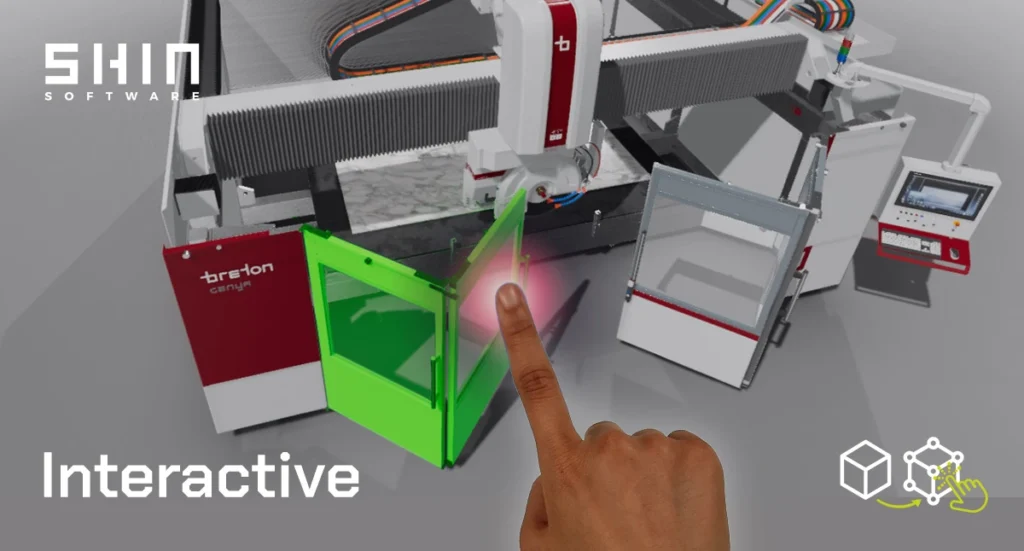
This transition is crucial. The 3D model, born in the technical field, is reinterpreted in an interactive key and made accessible to marketing, sales, training, and assistance. This is where the digital twin 3D changes its nature: from an engineering asset, it becomes a corporate interface.
According to Emanuele Zinna, Marketing Manager, the point is not the technology itself, but its role in processes: “We do not develop experiences as an end in themselves, but solutions that integrate into corporate processes to concretely improve them.”
Sell better, sell sooner
The most immediate impact manifests in the commercial process. In a context where B2B is also starting to absorb logics typical of the consumer world, the ability to engage becomes a competitive factor.
“Giving the sales force a tool that captures attention is increasingly important,” emphasizes Raheli. “It’s not just about aesthetics, but about making understandable what would otherwise remain abstract.”
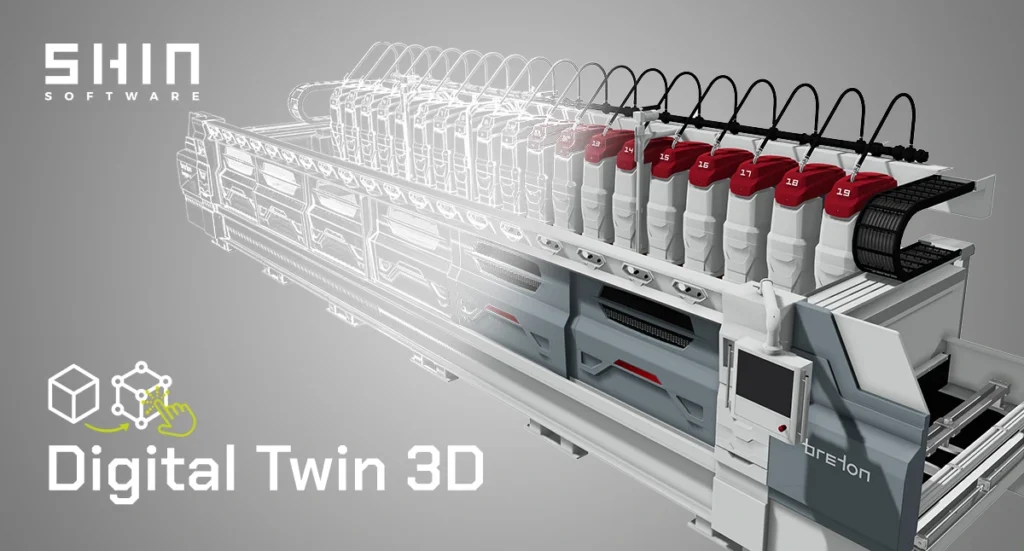
The digital twin 3D allows one to enter the product, show its internal functioning, and simulate scenarios and configurations. This approach not only improves the quality of the presentation but drastically reduces the risk of misunderstandings.
“It is possible, for example, to virtually ‘open’ a machine and show its internal components,” explains Zinna. “A level of transparency that is simply impossible with traditional tools.”
The logistical knot and sustainability pressure
Alongside the commercial dimension, the operational one emerges strongly. The logistical management of complex products today represents one of the main cost centers for many companies.
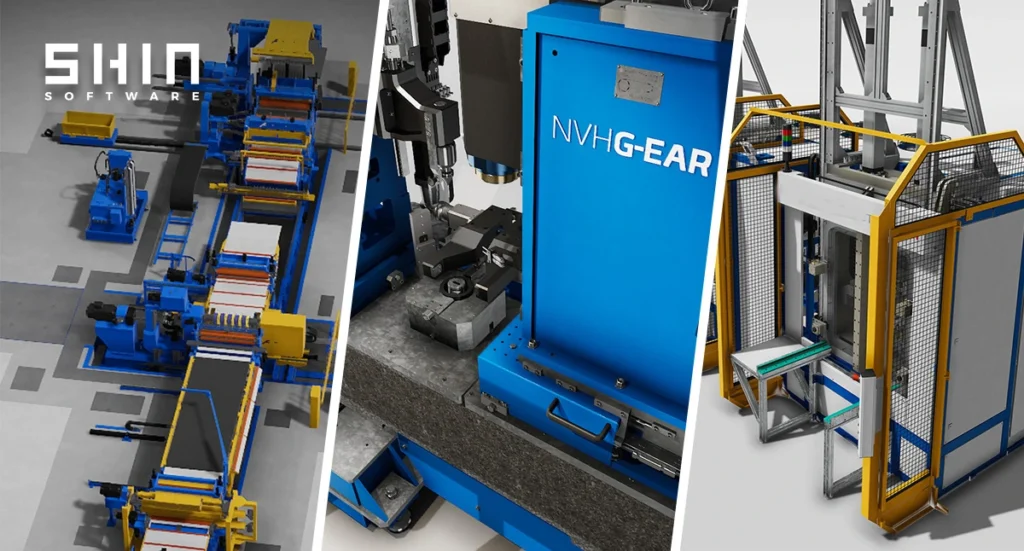
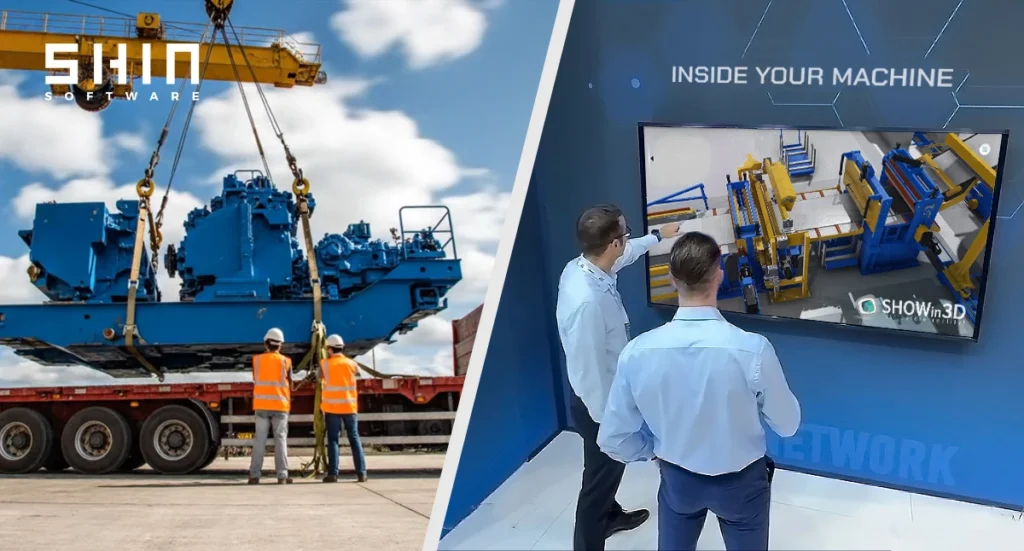
Transporting a plant, installing it, securing it, and making it operational for a demonstration requires time, resources, and significant investments. In a context where reducing the carbon footprint is no longer optional but a necessity, these dynamics become even more critical.
The digital twin 3D offers a concrete alternative, allowing the replacement of physical presence with an interactive digital representation. According to data shared by the company, this approach can lead to cost reductions of up to 32% on an annual basis, in addition to obvious benefits in terms of sustainability.
Beyond sales: training and assistance
The value of the digital twin does not end at the moment of the sale. On the contrary, its most interesting potential emerges in its continuity of use.
In training, it allows staff to be prepared even before the product is physically available, reducing errors and learning times. In after-sales, it becomes an operational support tool, facilitating problem diagnosis and guiding interventions.
“Explaining a malfunction remotely is often complex,” observes Raheli. “Having a digital twin makes everything more immediate and understandable.”
The real leap: from content to process
The real turning point is not in the quality of the visualization, but in the ability to transform the digital twin into an operational tool. It is no longer evolved content, but an active component of corporate processes.
The platform developed by Shin Software integrates data, configuration logic, and operational information into a single environment, enabling a continuous flow between design, sales, and after-sales. From dynamic price list management to collecting insights on user behavior, the digital twin becomes a convergence point between execution and analysis.
“The value lies not in the visual effect, but in the ability to insert these solutions into corporate processes and generate measurable results,” emphasizes Emanuele Zinna.
In this scenario, adoption is not so much a technological issue as an organizational one. The companies that achieve the most significant results are those that manage to involve key functions—from marketing to sales, up to IT—right from the start, transforming the digital twin 3D into a shared lever.
“Often the need emerges in the commercial area,” observes Zinna, “but the value is fully expressed when the use is extended to multiple corporate levels.”
Even aspects related to security and intellectual property protection, often perceived as critical in the initial phase, find consolidated answers today. Proprietary formats and advanced management systems maintain control over data, enabling extensive use of the digital twin 3D without compromising strategic assets.
An inevitable evolution
The digital twin 3D is progressively establishing itself as a tool capable of connecting worlds that, until recently, were separate: design, communication, and sales.
Its strength lies not only in the quality of the representation, but in the ability to transform the product into an interactive experience, accessible and integrated into corporate processes.
In a market where complexity is destined to increase, the real difference will no longer be between those who have the best product, but between those who are able to tell its story, make it understood, and make it immediately usable.