
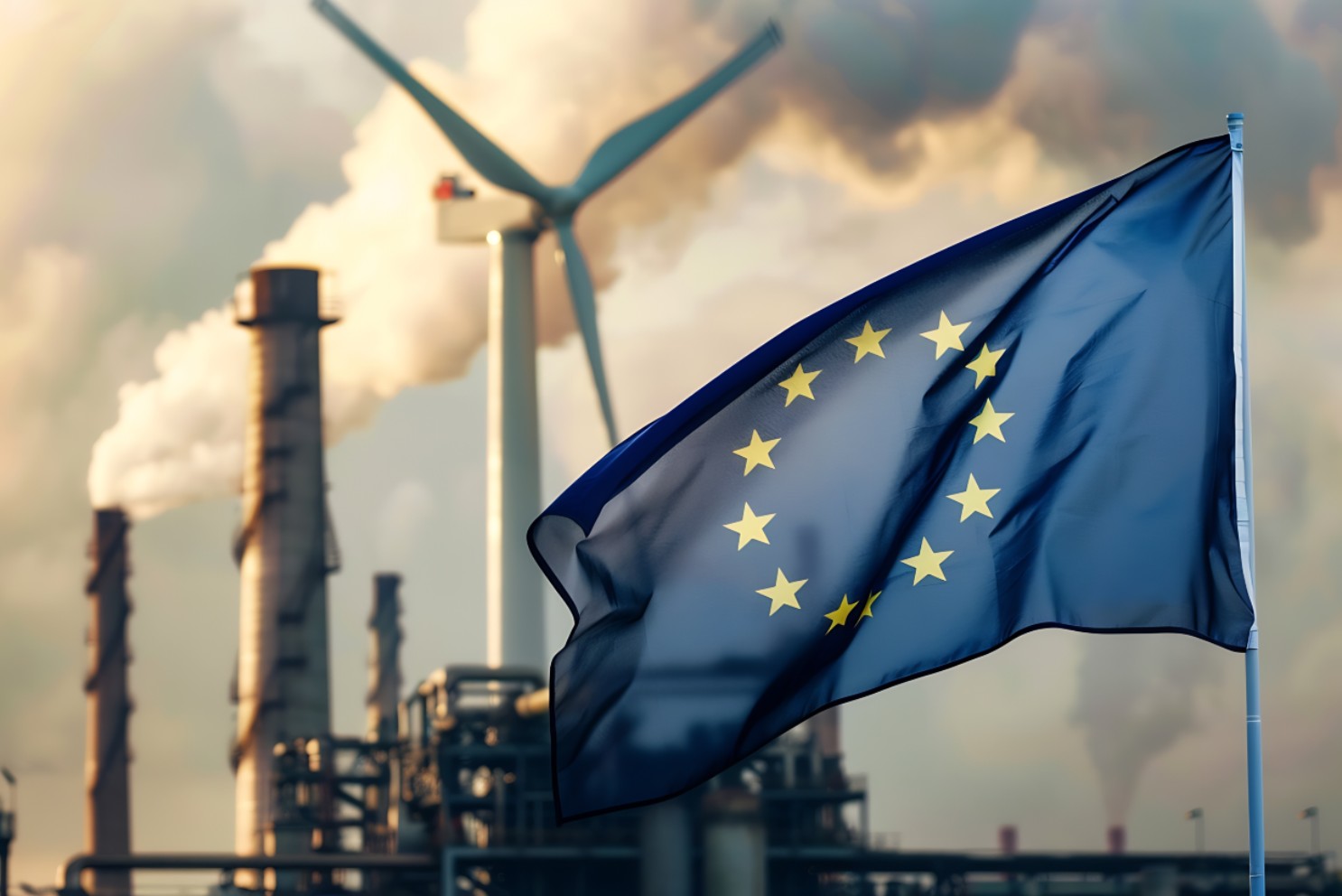
Confusing simplification with a green light for inaction would be a strategic mistake. The advantage lies in having integrated it already, as it’s now a market must
In recent months, the European framework for corporate sustainability has undergone a profound transformation. With the Omnibus package and the revision of the CSRD (Corporate Sustainability Reporting Directive) and CSDDD (Corporate Sustainability Due Diligence Directive), the European Commission has chosen a different path from the one taken in recent years: reducing the scope of obligations, postponing deadlines, and simplifying compliance requirements. A choice that has sparked mixed reactions and, at first glance, may appear as a step back from the trajectory set by the Green Deal.
In reality, what is happening is more complex: we are not facing a renunciation of sustainability goals, but a change of phase. After years where attention focused mainly on building the regulatory framework and reporting standards, the European legislator now seems poised to correct certain critical issues that have emerged in the concrete application of the rules: information overload, disproportionate costs for smaller companies, operational difficulties in implementing standards. The message from Brussels is clear: the goal remains the same—sustainability—but less bureaucracy and more proportionality are needed.
In recent years, many companies have experienced sustainability primarily as a compliance exercise. The entry into force of the CSRD and the ESRS (European Sustainability Reporting Standards) had reinforced this perception: new obligations, new data points, new processes for collecting and validating information. Particularly for SMEs, sustainability has often been perceived as an administrative cost, rather than a development lever.
Less reporting, more strategic focus
The Omnibus package marks a clear discontinuity. The size thresholds for CSRD application are raised, the number of obligated companies is drastically reduced, and timelines are extended. The CSDDD is also being recalibrated and focused on groups of truly systemic size. This regulatory lightening does not mean that sustainability matters less, but that an effort is being made to better distinguish between the tools used and the goal to be achieved, preventing compliance from taking the place of real change. Reporting is not the end, but one of the means. The end remains the ability of companies to understand and govern the risks and opportunities linked to the environmental transition and the social dimension.
The financial system accelerates while regulations slow down
If the scope of reporting obligations narrows, the financial context moves in the opposite direction. From January 1, 2026, the new guidelines from the European Banking Authority (EBA) come into force, requiring European credit institutions to structurally integrate ESG factors into risk management, governance, and credit assessment processes. Sustainability is no longer considered a reputational or optional element but becomes a prudential component.
This means that, in assessing creditworthiness, one no longer looks only at historical economic-financial data. Exposure to physical and transition risks, the quality of governance, the solidity of business plans in medium-to-long-term scenarios, and the company’s ability to adapt its business model become relevant. In this framework, even companies not subject to the CSRD are still required to provide ESG information, because the financial market needs it to correctly assess risk.
SMEs and dialogue with banks: less fragmentation, more consistency
Precisely to prevent SMEs from being overwhelmed by uncoordinated requests of all kinds, the document on the “Sustainability Dialogue between SMEs and Banks” was updated in December 2025, with the introduction of an interoperability table with the voluntary VSME standard (Voluntary Sustainability Reporting Standard for non-listed Small and Medium Enterprises) developed by EFRAG (European Financial Reporting Advisory Group). This is a very significant step, even though it is still too little discussed. The document does not introduce new obligations, but helps companies and banks speak the same language and collect data in a simpler and more useful way for information exchange.
This update marks an important change in perspective: sustainability is no longer requested as a formal compliance exercise, but as a coherent set of information useful for understanding the risk profile and the value creation capacity of the company. For SMEs, adopting a voluntary standard like the VSME means building a reusable information asset, not only in relations with banks, but also in supply chain relationships and with institutional stakeholders.
Investing in sustainability without obligations: why it makes sense
This is where the most concrete question arises: if obligations are reduced, does it still make sense to invest in sustainability? The answer is not found in the directives, but in the economic mechanisms that are redefining competition. Sustainability has now entered supplier selection criteria, investment policies, bank assessments, and the choices of qualified workers. Ignoring it does not mean avoiding a cost, but exposing oneself to a loss of positioning.
Investing today means above all strengthening the operating model: energy efficiency, supply chain resilience, ability to read risks, organizational attractiveness. All elements that directly impact profitability and stability over time. It is not an abstract “ethical” investment; it is an industrial choice.
The real advantage doesn’t come from being forced to practice sustainability, but from having already integrated it by the time it ceases to be an external request and becomes an implicit condition for remaining in the market. In this phase, the difference between those who anticipate and those who wait is not narrative: it is economic.

The return of materiality as a guiding criterion
Another sign of the system’s maturation is the return to the concept of materiality as a filter for information. After a phase of hyper-production of data, the idea that not everything is relevant for all companies is reasserting itself. Effective sustainability does not consist of reporting everything, but of governing and communicating what is truly significant for the business and for the impacts generated.
The recent simplifications of the EU Taxonomy should also be read in this light: materiality thresholds, possibilities for temporary opt-outs, reduction of detailed burdens. This is not a step back on environmental goals, but an attempt to make the tools more usable and less distant from the operational reality of companies.
Fewer obligations, more responsibility
The biggest risk of this phase is not regulatory, but cultural. Confusing simplification with a green light for inaction would be a strategic mistake. Companies that use this time to build solid foundations, information systems, decision-making processes, and integration between strategy, risks, and investments will be better prepared to face future market and regulatory developments. Others risk finding themselves unprepared again when demands intensify once more.
Sustainability is moving out of the “storytelling” dimension and definitively entering that of “governing”. It is in this transition that the competitiveness of the coming years will be played out.
The Omnibus package does not mark the end of European sustainability. It marks the end of a season in which it was thought that regulating alone was enough to transform. A more demanding phase begins, in which companies are asked for less in terms of formal compliance, but much more in terms of strategic responsibility, and it is precisely in this apparent contradiction that the real opportunity lies.