Make vibration control simple, combining technical expertise, attention to the individual, and strong rooting in the territory.
Digisystem is a family business, right?
Yes. Digisystem was founded in 1979 by my father, Franco Barzanti, who worked as an electronic engineer for Silectron at the time. When he decided to start his own business, he found the support of Renato Taino, founder of Silectron and IMA, who believed in his entrepreneurship. In fact, IMA and Silectron were amongst the first clients of Digisystem.

In the beginning Digisystem was an artisanal reality in the literal sense: my parents designed and assembled electronic boards in a room of our apartment. They were meant to manage different functions of automatic packaging machines, both food and pharmaceutical. My memories in those years are those of a home where work and family life co-existed naturally. A few months ago I found a diary from when I was eleven: in one of the pages I proudly wrote “today I assembled a board all on my own”. Those were different times, today something like this would not be possible anymore.
Stefania Barzanti
Today Digisystem is a highly specialized company. How did this transformation happen?
This evolution had a double drive: product and organization.
From the technological point of view, a key turning point was the development, mid 80s, of a driver for vibratory conveyors based on inverter technology: a then innovative solution, able to optimize mechanical performance reducing energy consumption. In the following years drivers for vibratory conveyors became our benchmark product.
In regards to the organization, in 1986 the company moved in the current location, with spaces dedicated to production, storage and designing/administration. The first employees were hired. In the 90s Digisystem became an established industrial company, maintaining however the attention to detail typical of artisanship.


Your career path for many years unfolded outside of the company, though.
That’s true. While I was studying at university I collaborated part-time with Digisystem, managing amongst other things the introduction of the new ERP and the component coding that we still use today. After my degree I chose to start in a multinational corporation in the packaging sector, where I worked for thirty years.
In 2020 I attended the Executive MBA at Bologna Business School and I felt the need to bring back what I had learnt into the family company. Since 2024 me and my sister are part of the BoD and I am actively involved in the growth of Digisystem.
And the results are proving you right.
Yes, we are very satisfied. In 2024 sales registered a growth of +23% in comparison to the average of the prior two years, and in 2025 we solidified this increase with a boost of +8% over 2024. A meaningful result if we consider that, at the same time, we faced a time of tough organizational issues.
What are you referring to?
To the sudden loss of our workshop manager, a longstanding figure that had been working for us for thirty years. It was a difficult time, emotionally and professionally. Our priority was to grant continuity to the clients: we worked as a team, redistributing responsibilities and relying on in-house expertise. In this situation Monia Bellini, production manager, played a fundamental role.
Once we had overcome the most critical stage, we took the opportunity to reorganize the company, welcoming new experienced employees and strengthening both our production and designing area. Today we move forward with renewed determination and awareness.
In the market of drivers for electromagnetic vibratory feeders big players are involved too. What distinguishes Digisystem?
Our answer is easy: we want to make vibration control simple for our clients.
To do this we assist them in every step: from the choice of the driver best suited for its future application, to the optimization of working parameters to maximize the performance and reduce consumption, as well as the management of a flexible and reliable supply. This approach leverages the expertise built in over forty years of field work.
Today, amongst our clients there are many of the main companies in Emilia-Romagna’s Packaging Valley, along with big Italian and European groups. We also collaborate with multiple manufacturers of vibratory feeders, highly competent from the mechanical point of view: the integration of this with our electronical know-how allows to offer at the final client a complete and particularly appreciated solution.
From a technical point of view, how important is it to choose the right driver?
It’s fundamental. A first distinction can be made between fixed and variable frequency drivers. The first ones allow you to adjust the amplitude of the vibration, while the second ones make it so you can manage both amplitude and frequency.
Variable frequency drivers, based on inverter technology, offer numerous perks: more than 50% power saving, optimized performance even in variable conditions and possibility to use the same device in the whole world without mechanical adjustments on the vibratory feeder. In easier and more stable conditions, instead, a fixed frequency driver can represent an efficient and economically convenient solution.
Which role do working parameters have regarding overall performance?

A key role. Electromagnetic vibratory feeders are extremely versatile systems, used to transport, orient and singularize components in complex equipment. Their performance influences directly the entire system’s efficiency.
For this reason, it’s essential to use a driver designed to control work parameters in a precise and reliable way, maximizing the mechanics of the vibratory conveyor.
You often talk about flexibility and agility: what do they mean, practically?
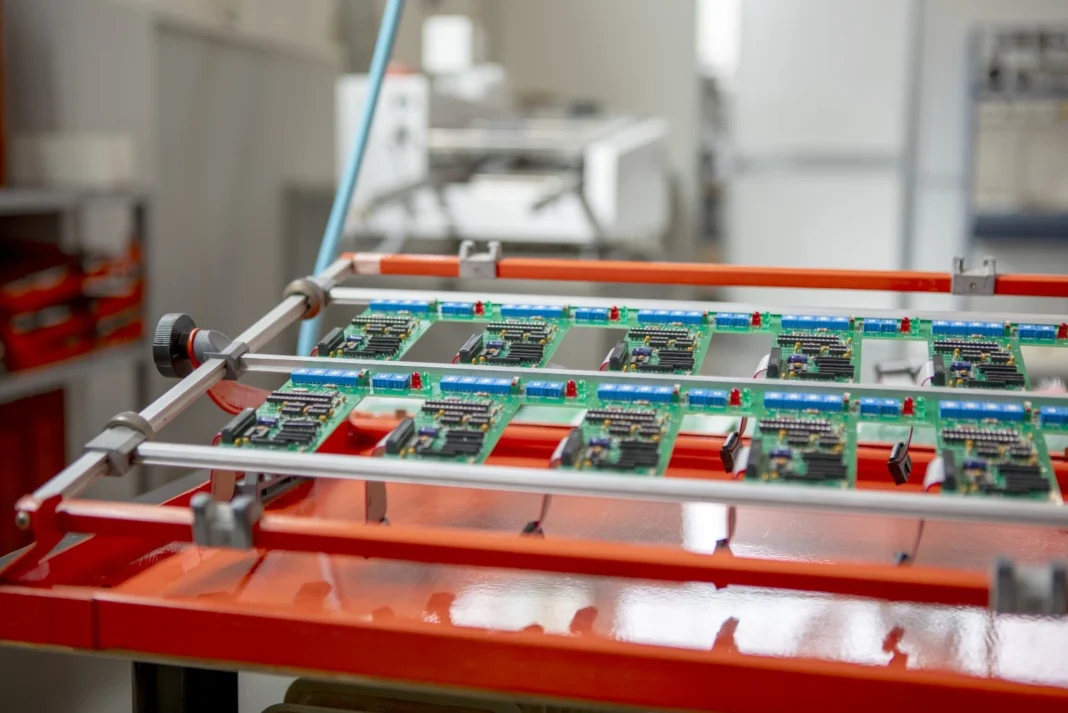
They mean, first of all, direct control of the process. At Digisystem all production phases are in-house – from assembling to the final testing – and this allows us to have an average delivery time of 2–3 weeks for all the items in our production.
But flexibility also means being able to quickly adapt in complex situations. For instance, a couple years ago the global supply chain faced well known disruptions: we managed to keep our delivery time nearly the same, while competitors registered lead times of several months.
Which role does territory have in your company?
A fundamental one. We are born and raised in the Packaging Valley, an area that boasts a deeply rooted mechanical and technical culture. This heritage is part of our DNA, and it reflects in the competence we offer our clients. Even in the choice of our suppliers, where possible, we favor local realities, with benefits even in terms of logistic sustainability.
Today being green is a key issue for many companies. What is Digisystem’s approach?
For us, it’s not a slogan, but one of the criteria guiding what we do and how we do it. In our business we are very attentive to the management of materials and waste, favoring recovery and recycling. About 40% of our packaging, for example, is made from reused material.
But above all, for us, repairability has always been a design requirement: being able to replace a worn-out component means to significantly extend the lifespan of the driver and reduce RAEE waste.
Sustainability is a value that drives the way we do business, and we should learn to talk about it more.
We were born and raised in the Packaging Valley, a district with a deep-rooted mechanical and technical culture. This heritage is part of our DNA and is reflected in the expertise we share with our clients.