Addressing Urethral stricture, a common disorder with complex consequences
Urethral dysfunction is a common condition in men, with one particular problem standing out due to its prevalence and impact on quality of life: urethral stricture. A urethral stricture is a condition in which a section of the urethra becomes narrowed due to various causes. These include congenital abnormalities present at birth, injuries from bicycle accidents, sexually transmitted infections such as chlamydia, or damage resulting from medical procedures such as urinary catheterisation or cystoscopy.
An alternative treatment based on 3D bioprinting technology is being developed by the researchers from STRONG-UR. Their goal is to reduce complications associated with traditional surgery through regenerative medicine approaches that support natural healing and regeneration. To test this concept, the team chose to focus on the male urethra, which is a complex tubular organ that carries urine out of the body.
This technology uses advanced 3D printing and biomaterials to create safer, less invasive, and more effective treatments for urethral strictures, offering a promising alternative to traditional surgery for men worldwide. Pablo Pennisi of Aalborg University, project coordinator, explains: «Our goal is to make urethral reconstruction faster, safer and more accessible for patients in need.»
Bioink and the replication of urethral tissue structure
The project uses 3D bioprinting technology to create living urethral tissue by combining patient-derived cells with a specially formulated gelatine-based bioink. This innovative bioink allows researchers to print tissue that closely mimics the natural structure of the urethra, including its multilayered composition of cells, blood vessels, and the sponge-like corpus spongiosum (the erectile tissue which surrounds and protects the urethra during urination and sexual activity).
It works like any other object designed with a 3D printer. Since the gels respond to specific stimuli, the microenvironment of the cells in the bioprinted tissues can be controlled more precisely by this method. This precision is crucial for replicating the complex, multilayered structure of the male urethra. A fundamental step in the development of the bioink is understanding the architecture and composition of the urethral tissue, specifically, which cells comprise the tissue and how they are organised.
A “fast track”and a multistage approach
Two complementary approaches are being developed:
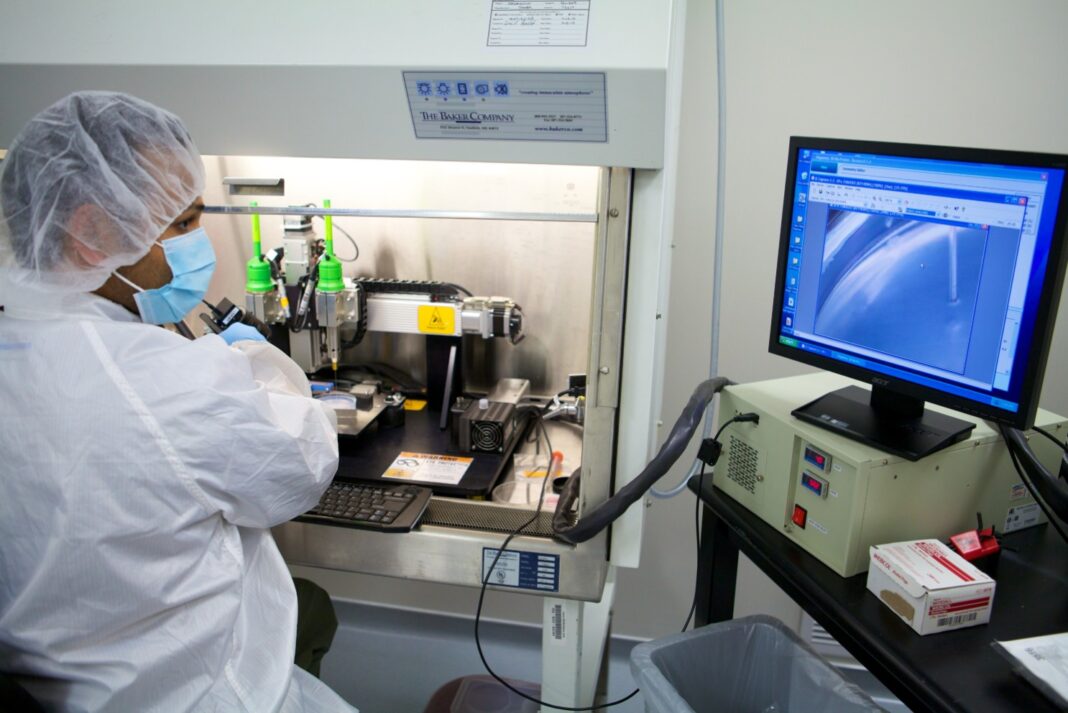
• A single-stage method using the BioPen® to directly bioprint tissue into the affected area for precise, minimally invasive repair;
• A multistage method for complex or longer strictures, involving bioprinted grafts that replicate the urethra’s natural structure and elasticity.
Clinical applications and early treatment results
At the Catholic University of the Sacred Heart (UCSC) in Rome, Italy, pioneering successful treatments were performed that demonstrate the huge value of bioprinting in the clinical settings. The team at UCSC treated patients with intractable fistulas (i.e. abnormal openings between tubular structures). These often involve reoperations, complications and prolonged hospital stays, poor healing, and increased patient morbidity. The team successfully treated a chronic oesophago-pleural fistula, an abnormal connection between the oesophagus and trachea, in a patient for whom conventional treatments had failed.
Their method involved extracting the patient’s own fat tissue and reinjecting it into the fistula, a technique known as Stromal Vascular Fraction (SVF) treatment. This treatment has also been used in patients with chronic perianal fistulas in inflammatory bowel disease (Crohn’s disease). In one case, a 74-year-old patient with a recurrent rectovesical fistula (between the bladder and the rectum), received a personalised 3D-bioprinted tissue implant made from his own cells. The implant was inserted via an endoscopy into natural openings. After just fourteen days, new vascularised tissue growth was observed, demonstrating the success of the procedure.
The method described above provides a less invasive and faster alternative to traditional surgery by promoting natural tissue regeneration. For this reason, STRONG-UR team has chosen to replicate this fast-track approach to treat fistulas that may develop from urethral strictures.
Multistage reconstruction and regulatory pathway
For larger or longer strictures, a multistage approach will be used. This approach uses bioprinted tissue grafts produced in the operation room with bioinks tailored to match the structural and mechanical properties of the urethral tissue. Two types of repairs are being tested: an “onlay” reconstruction, for partial urethral repair, and a tubular reconstruction, for complete urethral replacement. Both procedures use customised 3D bioprinters from STRONG-UR partner Brinter AM, adapted specifically for graft production.
The project partners are currently conducting preclinical studies to ensure safety, biocompatibility and regulatory compliance under the European Medicines Agency’s framework for Advanced Therapy Medicinal Products (ATMPs).
To achieve regulatory approval, the pathway demands rigorous pre-clinical and clinical evidence. Pre-clinical work must include in vitro chemical and physical characterisation, as well as biocompatibility testing with toxicity assessments to ensure the product poses no harm to living cells. It should also involve an evaluation of local and systemic responses in one or more reliable animal models, guided by ISO 10993 standards for biological evaluation.
Once robust pre-clinical evidence is established, clinical trials become necessary. At this stage, regulatory requirements diverge significantly: a single, large-scale clinical trial may suffice for CE approval of a medical device, whereas medicinal or combinatorial products typically require multiple trial phases, larger participant groups and longer timelines before market authorisation. Once validated, this technology could transform the future of reconstructive urology by bridging the gap between laboratory innovation and real-world medical application.
STRONG-UR consortium and project scope
Backed by a consortium of 12 partners from six European and one associated member state, STRONG-UR combines expertise from academic institutions, hospitals, and industry. The team includes specialists in cell biology, biomaterials, 3D printing, and urology from leading organisations including Aalborg University, Tampere University, Ghent University, Università Cattolica del Sacro Cuore, Aalborg University Hospital and University Medical Center Utrecht, alongside industry leaders in bioink formulation, medical device manufacturing, and regulatory management such as 4Tissue, Wellspect AB, Brinter AM Technologies, and Adbioink Biosystem Technology. Additionally, the European Association of Urology and META Group provide dissemination expertise to support STRONG- UR’s communication and outreach objectives.
STRONG-UR is an EU-funded Research and Innovation Action with a duration of 48 months focused on developing and testing novel strategies for engineering tissue constructs to advance the treatment of urethral diseases.